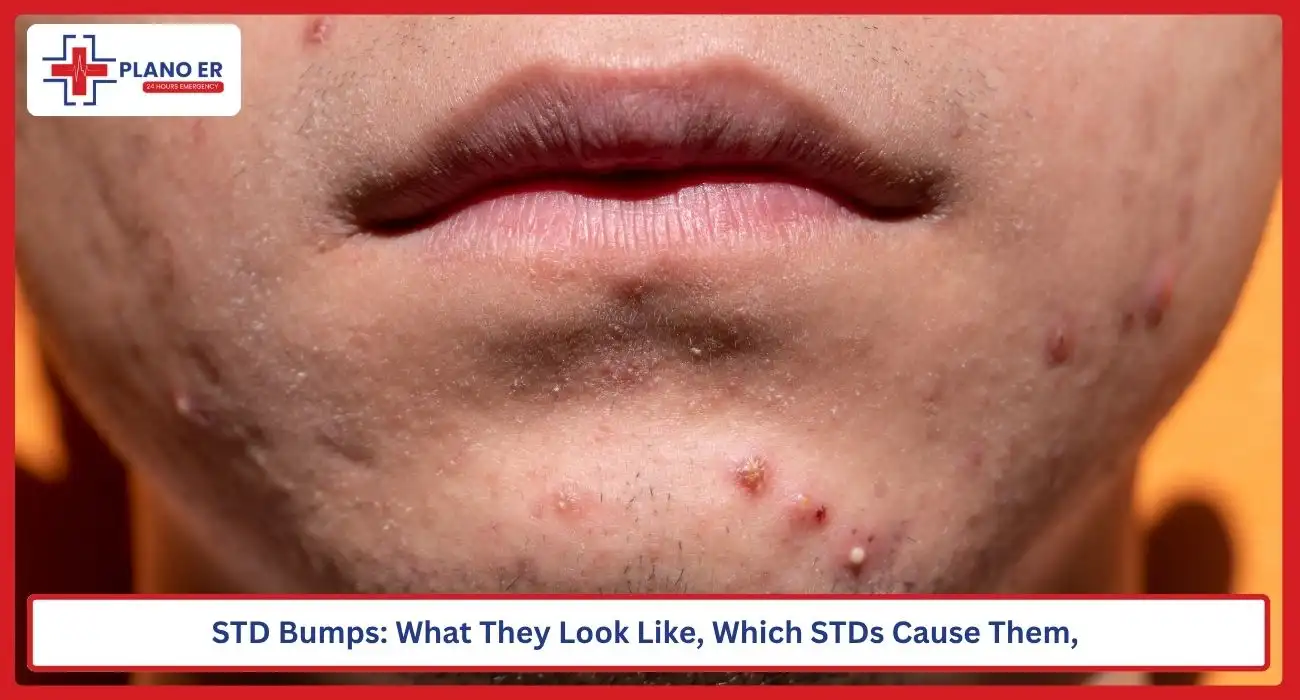
STD bumps are bumps, blisters, or sores caused by a sexually transmitted infection (STI). They usually appear on the genitals, around the anus, or in or around the mouth. The look depends on the infection. Herpes causes clusters of small, painful blisters. Genital warts are soft, skin-colored growths. Syphilis causes a single firm, painless sore, and molluscum contagiosum causes small, smooth bumps with a dimple in the middle. Many genital bumps are not STDs at all, and testing is the only way to know for sure.
Key takeaways
- Herpes, HPV (genital warts), syphilis, and molluscum contagiosum are the STIs most likely to cause visible bumps or sores.
- Chlamydia and gonorrhea usually do not cause bumps. They are more likely to cause discharge, burning when you pee, or no symptoms at all.
- Pimples, ingrown hairs, razor bumps, Fordyce spots, and skin tags are common, harmless lookalikes.
- A bump that heals is not always gone. Some STIs stay in the body after the sore disappears.
- An exam and testing are the only reliable way to tell an STD bump from something harmless.
What Do STD Bumps Look Like?
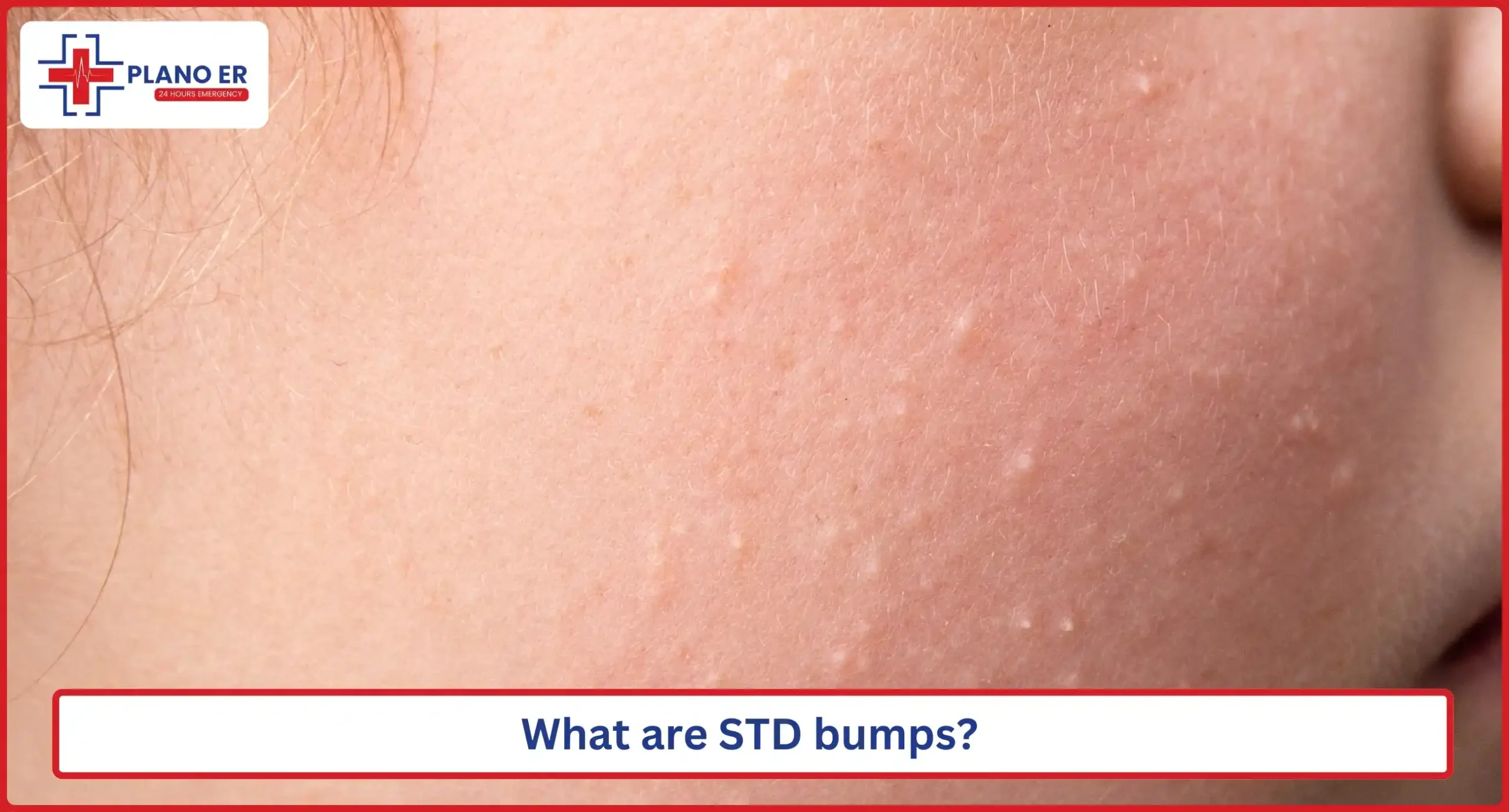
Each infection has its own pattern. This guide covers the most common ones:
| Infection | What it looks like | Where it appears | Painful? |
| Genital herpes | Small, fluid-filled blisters in clusters on a red base. They break open into shallow sores, then crust over. | Genitals, anus, buttocks, inner thighs, mouth | Yes. Often tingling or burning before blisters appear |
| Genital warts (HPV) | Soft, skin-colored or slightly darker bumps. Can be flat or raised, single or in clusters, sometimes cauliflower-shaped | Genitals, anus, groin, sometimes mouth or throat | Usually painless, may itch |
| Syphilis (first stage) | A single round, firm sore, often with a clean base | Genitals, anus, rectum, lips, mouth | Usually painless, so it is easy to miss |
| Syphilis (second stage) | A rough, reddish-brown rash that usually does not itch | Often on the palms of the hands and soles of the feet | Usually painless |
| Molluscum contagiosum | Small, firm, smooth, dome-shaped bumps with a dimple in the center | Genitals, lower belly, inner thighs | Painless, may itch |
| Mpox | Firm or rubbery blisters or pus-filled bumps that scab over | Genitals, anus, mouth, hands, face | Often painful |
| Pubic lice and scabies | Small, very itchy red bumps. Lice and their eggs may be visible on pubic hair | Pubic area, inner thighs, waist | Intensely itchy |
Healthline describes herpes as blisters that break into painful sores, genital warts as flat, raised, or cauliflower-shaped, and a syphilis sore as single, round, firm, and painless.
Can Chlamydia or Gonorrhea Cause Bumps?
Usually not. Chlamydia and gonorrhea are two of the most common STIs, but they rarely cause bumps or sores on the skin. When they cause symptoms, those tend to be:
- Unusual discharge from the penis or vagina
- Burning or pain when you pee
- Pain or swelling in the testicles
- Pelvic or lower belly pain, or bleeding between periods
- Rectal pain or discharge
Many people with chlamydia or gonorrhea have no symptoms at all. If you have bumps and are worried about chlamydia, testing is the only way to check, because the bumps themselves are likely from something else.
STD Bumps vs. Pimples, Ingrown Hairs, and Other Harmless Bumps
Most bumps in the genital area are not STDs. These lookalikes are very common:
| Bump | What it looks like | Key difference |
| Pimple | A single red bump, sometimes with a white or yellow head | Clears up within a few days to a week |
| Ingrown hair or folliculitis | A red, tender bump around a hair, sometimes with pus | Appears where you shave, wax, or have friction |
| Razor bumps | Small, itchy red bumps in a shaved area | Show up a day or two after shaving |
| Fordyce spots | Tiny pale yellow or white dots | Painless, permanent, and normal oil glands |
| Pearly penile papules | Rows of tiny, smooth, skin-colored bumps around the head of the penis | Harmless, not contagious, do not spread |
| Skin tags | Soft, small flaps of skin on a thin stalk | Painless and do not change over time |
| Cysts | A smooth, round lump under the skin | Usually slow-growing and painless unless infected |
| Contact dermatitis | A red, itchy rash | Follows a new soap, detergent, wipe, or product |
As Evvy notes, a pimple usually clears up within a few days to a week, while a herpes outbreak usually lasts about 2 to 4 weeks. Blisters in clusters, a sore that does not hurt, or bumps that come with discharge or fever point more toward an STI.
STD Bumps in Men
In men, STD bumps most often appear on the shaft or head of the penis, under the head, on the scrotum, in the pubic area, or around the anus. Other signs that can come with them include:
- Discharge from the penis
- Burning when peeing
- Pain or swelling in the testicles
- Swollen glands in the groin
Not every bump on the penis is an STD. Pearly penile papules and Fordyce spots are common and harmless, and they are often mistaken for warts.
STD Bumps in Women
In women, STD bumps can appear on the vulva, the labia, around the vaginal opening, on the inner thighs, or around the anus. Sores can also form inside the vagina or on the cervix, where you cannot see them. Other signs include:
- Unusual discharge that is yellow, green, gray, or has a strong smell
- Itching or burning in the genital area
- Pain during sex
- Bleeding between periods
- Pelvic or lower belly pain
These symptoms can overlap with yeast infections and urinary tract infections, which is another reason testing matters.
STD Bumps on the Mouth, Lips, and Tongue
Some STIs spread through oral sex and can cause bumps in or around the mouth:
- Oral herpes: cold sores or blisters on or around the lips
- Oral HPV: small, soft, wart-like bumps in the mouth or throat
- Syphilis: a firm, painless sore on the lips, tongue, or inside the mouth
Most bumps on the tongue are not STDs. Small bumps on the back of the tongue are usually normal taste buds or papillae. Swollen bumps after biting your tongue or eating something hot are also common and harmless.
Can STD Bumps Appear on Other Parts of the Body?
Yes. Herpes can appear on the buttocks and thighs. Molluscum contagiosum often spreads to the lower belly and inner thighs. Second-stage syphilis can cause a rash on the palms of the hands and soles of the feet, sometimes with fever, sore throat, and swollen glands.
How Long Does It Take for STD Bumps to Appear?
It depends on the infection:
- Herpes: often within 2 to 12 days of exposure, though many people do not notice a first outbreak
- Syphilis: a sore usually appears about 3 weeks after exposure, but it can take from 10 to 90 days
- Genital warts: can take weeks to months to appear
- Molluscum contagiosum: usually weeks to months
Do STD Bumps Go Away on Their Own?
Sometimes the bump does, but the infection may not:
- Herpes sores heal in a few weeks, but the virus stays in the body and outbreaks can return.
- Genital warts can shrink or disappear, but they can also grow, spread, or come back.
- A syphilis sore heals on its own in a few weeks, but the infection keeps progressing without treatment.
- Molluscum contagiosum often clears within months to a couple of years, but it can spread in the meantime.
A bump fading away is not proof you are in the clear.
How STD Bumps Are Diagnosed
A clinician can often tell a lot from looking at a bump, but testing confirms it:
- A physical exam of the bumps and the surrounding skin
- A swab of a blister or sore, used for herpes and other infections
- Blood tests, used for syphilis, HIV, and in some cases herpes
- Urine tests or swabs, used for chlamydia and gonorrhea
Plano ER offers on-site lab testing, so many results are available during your visit.
How STD Bumps Are Treated
Treatment depends on the cause. Some STIs, such as syphilis, can be cured with the right treatment. Others, such as herpes, cannot be cured but can be managed to reduce outbreaks. Warts and molluscum bumps can be removed by a clinician. Your recent partners should also be tested, and it is best to avoid sexual contact until your clinician says it is safe.
[H2] Caring for Bumps While You Wait for Results
- Do not pop, squeeze, or pick at the bumps.
- Avoid shaving or waxing over them.
- Keep the area clean and dry, and wear loose cotton underwear.
- Wash your hands after touching the area.
- Avoid sexual contact, including oral sex, until you know what the bumps are.
[H2] How to Lower Your Risk
- Use condoms or dental dams every time. They lower the risk but do not fully protect against infections spread by skin-to-skin contact, such as herpes and HPV.
- Get tested regularly if you have new or multiple partners.
- Talk openly with partners about testing before having sex.
- Do not share razors or towels.
[H2] Plano ER
Plano ER is open 24/7, with board-certified emergency physicians and on-site testing. Some infections come with symptoms such as a high fever, a painful spreading rash, or severe belly pain. Our team provides high fever treatment, rash treatment, and abdominal pain care, along with a full range of emergency services.
Visit our emergency room in Plano at 7940 Custer Rd, Plano, TX 75025, or call (972) 527-3000. No appointment needed.
[H2] Frequently Asked Questions
[H3] Can STD bumps look like pimples?
Yes. Some STD bumps, especially herpes in its early stage, can look like pimples. A pimple usually clears within a week, while STD bumps tend to last longer, cluster, blister, or come back.
[H3] Are STD bumps itchy?
Some are. Herpes often tingles or itches before blisters appear, and warts, molluscum, pubic lice, and scabies can itch. Syphilis sores usually do not hurt or itch.
[H3] Can you have an STD without bumps?
Yes. Many STIs, including chlamydia, gonorrhea, and often herpes and HPV, cause no visible symptoms. Regular testing is the only way to know.
[H3] Does chlamydia cause bumps?
Usually not. Chlamydia is more likely to cause discharge, burning when you pee, or no symptoms at all.
[H3] Do STD bumps go away on their own?
Some bumps fade on their own, but the infection behind them can stay in the body or keep progressing. Testing is the only way to know.
[H3] Where do STD bumps usually appear?
Most often on the genitals, around the anus, and in or around the mouth. Some can also appear on the thighs, buttocks, lower belly, hands, or feet.