
Sharp pain in your back or side that comes in waves, will not let you sit still, or arrives with fever, vomiting, or blood in your urine points to a stone that needs the kidney stone emergency room. Plano ER stays open 24 hours a day, takes walk-ins with no appointment, and runs CT, bedside ultrasound, and a full lab on-site. Most patients see a doctor in about 2 to 3 minutes and leave with answers and real pain relief the same visit.
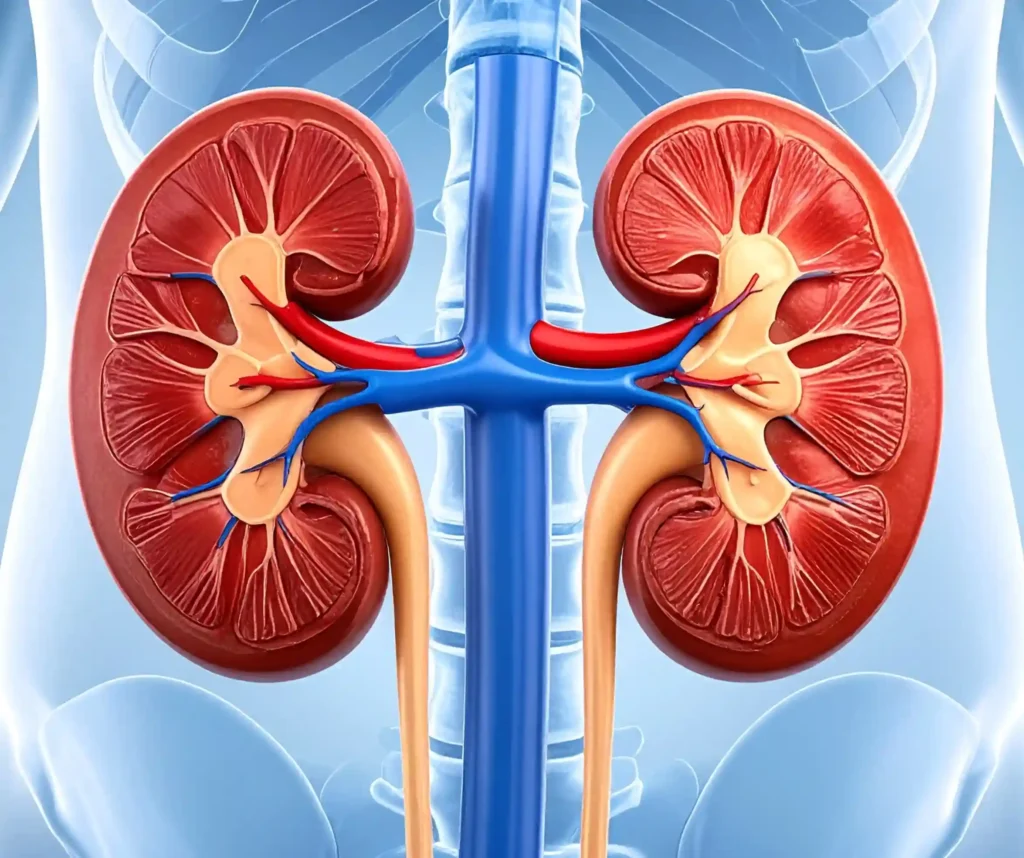
A kidney stone becomes an emergency when it blocks urine flow, triggers a fever, or causes pain and vomiting you cannot control at home. Any of these signs means it is time for the kidney stone emergency room, because a blocked or infected kidney can swell and lose function within hours if the blockage stays in place.
Many small stones pass on their own with water and time. The trouble starts when a stone lodges in the ureter, the narrow tube between the kidney and bladder. Urine backs up, the kidney swells, and the pain climbs fast. That backed-up pressure, called hydronephrosis, is what turns a painful stone into a medical emergency. A stone paired with fever is more urgent still, since it can signal an infection sitting behind the blockage. Left untreated, that kind of infection can spread quickly, which is why fever plus flank pain is one of the clearest reasons to head in without delay.
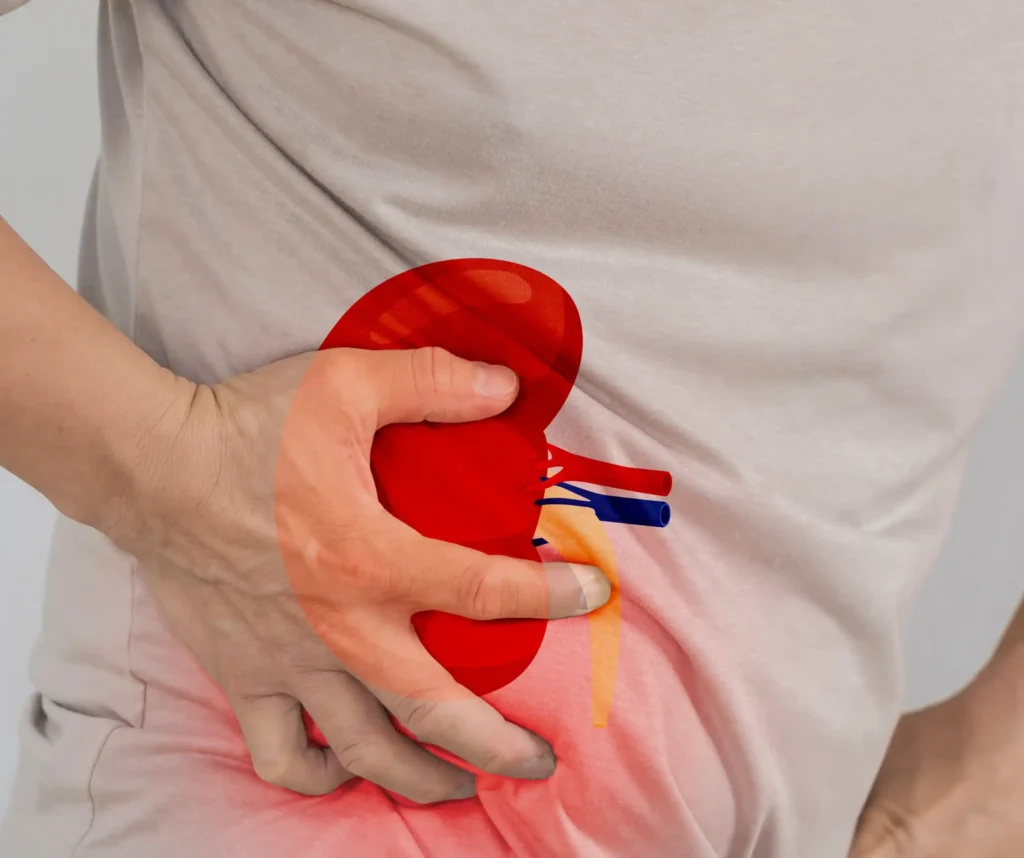
Kidney stone pain is sharp, comes in waves, and radiates from the flank down toward the groin, often with blood in the urine and a constant urge to urinate. That wave pattern, along with urinary symptoms, is what sets a stone apart from a muscle strain or an infection. The table below sorts the most common causes.
| Condition | Pain pattern | Other clues | What to do |
|---|---|---|---|
| Kidney stone | Sharp, wave-like, moves to the groin | Blood in urine, nausea, urgent need to urinate | ER if severe, feverish, or vomiting |
| Muscle strain | Dull, steady, worse with movement | No urinary symptoms, tender to touch | Rest, or see your doctor |
| Bladder infection | Burning, frequency, low belly ache | Cloudy urine, low fever | See your doctor, ER if fever or vomiting |
| Kidney infection | Deep back pain, high fever, chills | Nausea, vomiting, feeling very unwell | ER, needs prompt IV antibiotics |
| Appendicitis | Pain shifts to lower right belly | Fever, no appetite, worsens over hours | ER |
When the cause is not obvious, that uncertainty is a good reason to get checked. A walk-in visit with on-site imaging and labs answers the question in a couple of hours instead of days of guessing at home.
Go to the kidney stone emergency room immediately if your back or side pain comes with any of the warning signs below. These point to a blocked or infected kidney, and both need fast treatment.
Mild discomfort with no fever, and still able to drink fluids, can often be watched at home with plenty of water. If any sign above shows up, do not wait it out.
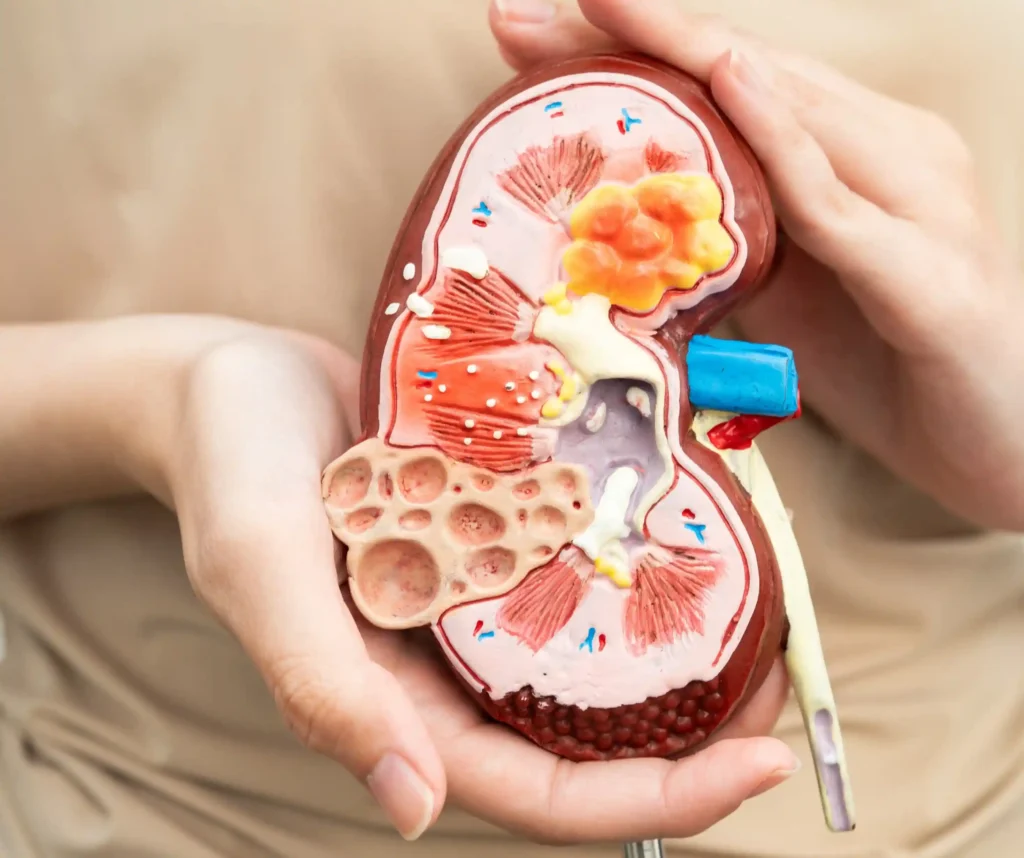
At the Plano ER kidney stone emergency room, you are roomed and seen right away, not left in a crowded lobby. Because Plano ER is walk-in only with no appointment, most patients meet a board-certified emergency physician in about 2 to 3 minutes. Here is how a typical visit runs.
A nurse records your vital signs and main symptoms the moment you arrive. There is no appointment and, in most cases, no wait.
The doctor checks your back and belly and asks when the pain started, whether you have had stones before, and whether you see blood, fever, or nausea.
A urine sample checks for blood, infection, and crystals. Because the lab sits on-site, results come back in minutes.
Kidney stone pain is intense, so IV pain and anti-nausea medication usually start early, before every test is finished.
A CT scan or bedside ultrasound confirms the stone's size, location, and whether it blocks urine flow. All imaging happens on-site.
Blood tests check kidney function and look for signs of infection, which matters most when fever is present.
Most patients go home with pain control, anti-nausea medication, and instructions to strain their urine and follow up with a urologist.
As a freestanding emergency room, Plano ER focuses on fast diagnosis and emergency stabilization. We do not admit patients or perform surgery on-site. If your stone needs a procedure, hospital admission, or specialist care, we stabilize you first, then arrange a transfer to a partner hospital or a referral to a urologist.

A CT scan for kidney stones is the standard test because it finds stones of nearly any size and location without contrast dye, and it takes only a few minutes. Since Plano ER reads the scan on-site during your visit, you get answers the same day instead of waiting for results from another facility.
The scan tells your doctor three things that shape treatment: the stone’s size, which predicts whether it will pass on its own; its exact spot in the urinary tract; and whether it has caused the kidney to swell. A single low-dose CT carries a small, well-studied amount of radiation, and for a painful stone the benefit of ruling out a dangerous blockage outweighs that risk.
Pregnant patients get bedside ultrasound instead, since it uses no radiation and is the preferred first look during pregnancy. Tell the triage nurse right away if you are or might be pregnant. Having ultrasound on-site means you are scanned in the same room, with no referral to an outside imaging center.
Emergency kidney stone pain relief starts with IV medication that calms the pain and the nausea that rides along with it. Most stones under about 5 millimeters pass on their own, so the goal is to control the pain, rule out infection, and set you up to pass the stone safely at home. Kidney stone treatment without surgery covers the large majority of visits.
To control pain that pills cannot touch during the worst waves.
Since stone pain often triggers vomiting.
When you are dehydrated or cannot keep liquids down.
In some cases, so the stone moves through more easily.
So you can catch the stone, which lets a urologist study it and guide prevention.
On the exact symptoms, such as fever or no urine output, that mean come back now.
Stone-removal procedures happen in a specialist setting, not the emergency room. When a stone is too large to pass or the blockage is severe, your Plano ER doctor refers you to a urologist, sometimes the same day.
Kidney stones form in four main types, and the type you make shapes how you stop the next one. Calcium oxalate stones are by far the most common, and the others each trace to a different cause, which is why a urologist analyzes any stone you manage to catch.
The emergency room does not need the exact type to treat your pain. Catching the stone and following up for analysis is how one painful night turns into a real prevention plan.

Most kidney stone risk factors trace back to fluid, diet, and family history, and many are within your control. Low water intake is the single biggest driver, since concentrated urine lets minerals clump into stones. The list below covers the factors that raise your odds.
One stone raises your odds of a second to roughly one in two, so the prevention steps later on are worth the effort once you recover.
As a freestanding emergency room, Plano ER does not balance bill patients, so you are not charged the gap between our billed amount and what your plan pays. Texas law requires freestanding ERs to be clear about billing, and our team works with most major insurance plans, files your claim for you, and reviews your coverage before treatment when possible.
Kidney stone treatment in Plano, TX runs through your insurance, and our billing team walks you through what is covered before care begins whenever they can. The federal No Surprises Act protects patients from surprise bills for emergency care, so you do not have to check network status while you are in pain. For patients without insurance, payment plans are available through Sunbit, and self-pay is welcome. Call ahead and the team can walk you through what to expect.


The best defense against another stone is steady hydration, since pale-yellow urine through the day keeps minerals too dilute to clump. Prevention also depends on the stone type, which is why urologist follow-up matters after the emergency is over.
You do not need to do anything elaborate before you come in, though a few small things smooth out the visit if you have a minute. None of this should slow you down when the pain is severe.

Go when pain is severe, when you have fever or chills, when vomiting keeps you from holding down fluids, when you see blood in your urine, or when you can barely urinate. These signs can mean a blocked or infected kidney.
Yes. The kidney stone emergency room diagnoses the stone with CT or ultrasound and a urine test, controls pain with IV medication, treats nausea and dehydration, and decides whether the stone can pass or needs a urologist.
Expect a urine test, a CT scan or ultrasound, and IV pain and anti-nausea medication. If imaging shows infection or a large blocking stone, the team arranges urgent urology follow-up or a transfer.
Most stones under about 5 millimeters pass on their own with fluids, pain control, and sometimes a medication that relaxes the ureter. Kidney stone treatment without surgery covers most cases. Larger stones may need a urologist.
Cost depends on your insurance and the care you need. Plano ER does not balance bill patients, files your claim for you, welcomes self-pay, and offers payment plans through Sunbit. Call ahead for details.
Sharp back or side pain that comes in waves, pain that moves toward the groin, blood in the urine, nausea or vomiting, and a frequent or urgent need to urinate, sometimes with burning.
Smaller stones often pass in one to three weeks, though some take four to six. Your doctor can estimate based on the size and spot seen on your scan, along with signs that should bring you back sooner.

The kidney stone emergency room at Plano ER stays open 24 hours a day, takes walk-ins with no appointment, and runs CT, bedside ultrasound, and lab testing on-site, so you get answers and relief in one visit. We serve Frisco, Allen, McKinney, Richardson, Carrollton, and The Colony, with a second location in Plano. If sudden back or side pain hits, walk in and let our board-certified physicians get you comfortable fast.
Call Now: +1 972-527-3000
Hours: 24/7/365
Walk-In: 7940 Custer Rd, Plano, TX 75025
Related Emergency Conditions

We are dedicated to providing prompt, attentive, and high-quality emergency medical care delivered by highly qualified, emergency-specialized physicians. Equipped with cutting-edge imaging technology and a certified full-service laboratory, we ensure you receive accurate diagnoses and effective treatment every time.
Disclaimer: All information available on this site is offered for educational purposes and should not be relied upon as medical advice. Viewing this content does not establish any physician–patient relationship. If you are experiencing a medical emergency, dial 911 or seek care at your closest emergency room right away.
Developed by Digital Linkage © 2026 All Rights Reserved