
A hit to the head that brings confusion, repeated vomiting, a worsening headache, or any loss of consciousness belongs in the concussion emergency room, not on the couch with an ice pack. Plano ER stays open 24 hours a day as a no-wait walk-in ER, and runs a full neurological exam and on-site CT the moment you arrive. Most patients see a doctor in about 2 to 3 minutes, so you learn fast whether this is a concussion or something more serious.
A head injury turns into an emergency when it comes with loss of consciousness, repeated vomiting, worsening headache, confusion, slurred speech, one-sided weakness, a seizure, or clear fluid draining from the nose or ears. Any of these signs means the concussion emergency room, and it means now, not in the morning.
Most bumps to the head are minor. The problem is that a concussion is a brain injury, and the outside of the head gives you almost no information about what happened inside it. A person can walk, talk, and insist they feel fine while bleeding slowly around the brain. That gap between how someone looks and what is actually happening is why head injuries with any warning sign get checked rather than watched at home. The riskiest bleeds are the slow ones, which can take hours to build enough pressure to cause symptoms. By the time the headache turns severe or the confusion sets in, the window for an easy fix has often narrowed, so the point of coming in early is to catch that pattern before it declares itself.

Concussion symptoms fall into four groups: thinking, physical, emotional, and sleep. Headache, confusion, dizziness, and feeling foggy are the most common. Symptoms can show up right away or take hours to surface, which is why the first 24 hours after a head hit deserve close attention.
| Category | What it looks like |
|---|---|
| Thinking | Confusion, fogginess, trouble concentrating, memory gaps around the injury |
| Physical | Headache, dizziness, nausea, blurred vision, light or noise sensitivity, balance trouble |
| Emotional | Irritability, sadness, anxiety, feeling more emotional than usual |
| Sleep | Sleeping more or less than normal, trouble falling asleep, drowsiness |
Losing consciousness is not required for a concussion. Most people who have one never black out at all. Memory trouble around the moment of impact, such as not recalling the hit itself or the minutes right after, is a stronger clue than whether someone passed out. Ask the person what they remember about the seconds before and after. A blank gap there points to a concussion even when everything else looks normal.

If you hit your head and wonder when to worry, these are the signs that answer it. Each one can point to bleeding or swelling in the brain, and each one is a reason to head to the concussion emergency room right away or call 911.
Older adults and anyone taking a blood thinner should be evaluated after a head hit even when symptoms seem mild, since bleeding can build slowly and quietly in both groups. The same caution applies after a fall from standing height, which people tend to shrug off. A ground-level fall is one of the most common causes of serious head injury in adults over 65, so the low drama of the fall says nothing about the risk that follows it.
Concussion symptoms in children look different from adults because young kids cannot always describe what they feel. Watch behavior instead of waiting for words: constant crying that will not settle, refusing to eat or nurse, unsteadiness on their feet, or a child who simply is not acting like themselves.
Our pediatric emergency team sees head injuries from playgrounds, bikes, trampolines, and youth sports across Plano and Collin County. In infants and toddlers, look for a bulging soft spot, a lump that keeps growing, or a child who is unusually hard to wake. In school-age kids, watch for a headache that will not quit, sensitivity to light, trouble with homework they normally handle, or a change in mood that showed up after the hit.
Bring any child in after a head injury when they lost consciousness, vomited more than once, seem confused, or fell from a height greater than their own. Parents are welcome to stay with their child through the entire visit.

At the Plano ER concussion emergency room, you are roomed and evaluated right away, not left waiting while symptoms build. Because Plano ER is walk-in only, most patients meet a board-certified emergency physician in about 2 to 3 minutes. Here is how a typical visit runs.
A nurse records vital signs and asks what happened, how the head was hit, and whether anyone saw a loss of consciousness.
The doctor asks about the mechanism, the fall height or speed, whether you remember the moment of impact, and what symptoms started when.
A check of memory, speech, pupils, eye movement, strength, reflexes, balance, and coordination builds a picture of how the brain is working right now.
Based on the exam and your risk factors, the doctor decides whether a CT scan is warranted. Not every concussion needs one.
Imaging happens in the building, and results are read during your visit, with no transfer and no wait for outside results.
Some patients are watched for a period so the team can catch any change in symptoms as it happens.
Most patients go home with written return precautions, rest guidance, and a plan for follow-up care.
As a freestanding emergency room, Plano ER is built to evaluate a head injury quickly and safely: immediate neurological assessment, on-site imaging when it is needed, and stabilization, 24 hours a day. In the rare case a scan shows an injury that needs neurosurgical or inpatient care, we stabilize you first and coordinate a direct transfer to a hospital equipped for it, so you reach the right level of care without losing time.
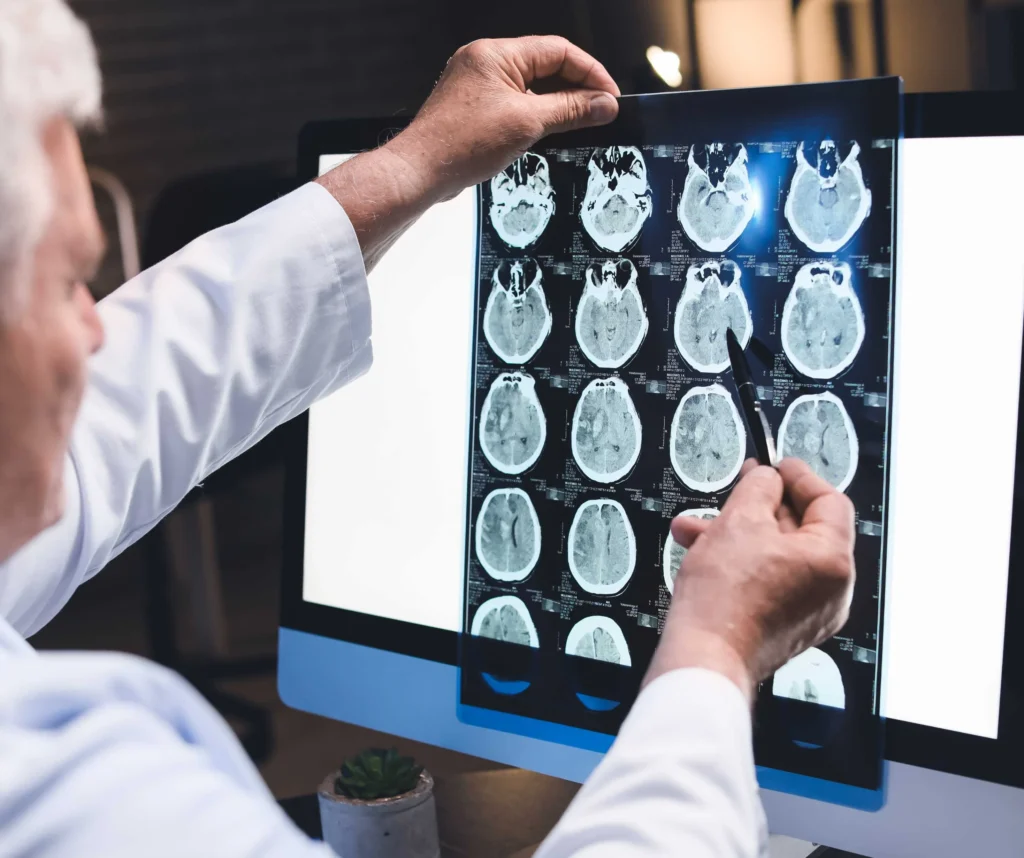
The concussion emergency room does not scan every head injury, and that is deliberate. A CT scan for concussion looks for bleeding, swelling, or a skull fracture, not the concussion itself, since a concussion does not appear on imaging. Doctors reserve it for patients whose exam or risk factors point toward a serious injury.
Emergency physicians use validated decision rules to make that call. Age, loss of consciousness, repeated vomiting, the severity of the mechanism, a suspected skull fracture, and blood thinner use all push toward imaging. A young adult who bumped their head with no red flags and a normal exam often needs no scan at all, which saves them radiation exposure and time.
When imaging is warranted, a normal CT scan for concussion is genuinely good news. It means no bleeding or fracture is present. It does not mean nothing happened, since a concussion can be real and still leave a clean scan. Your diagnosis comes from the exam and your symptoms, and the scan rules out the emergencies that sit alongside it.
Concussion treatment starts with rest and a controlled return to normal activity, since there is no medication that repairs a concussion. The brain heals on its own timeline, and the job of care is to protect it during that window and catch any complication early.
Most people recover within one to four weeks. Recovery takes longer for some, especially those with a history of prior concussions, migraines, or anxiety. Symptoms that stick around past a month deserve a specialist conversation rather than more waiting. Lingering trouble with focus, mood, sleep, or balance is treatable, and a concussion specialist has tools an emergency visit does not, so the handoff to follow-up care is part of the plan rather than an afterthought.

Return to activity works in stages, not in a single leap. The rule that matters most is that no athlete goes back to contact play while any concussion symptom remains, because a second impact on a healing brain can cause serious harm.
Most schools and youth leagues across Plano and Collin County follow a stepwise protocol: light activity first, then sport-specific drills, then non-contact practice, then full contact, with a symptom check at every stage. If symptoms return at any step, the athlete drops back a level. Clearance to return to contact sports comes from a doctor who can follow the recovery over time, not from a single emergency visit. School and work returns follow the same logic, with shortened days and lighter loads until the brain tolerates a full schedule.
As a freestanding emergency room, Plano ER does not balance bill patients, so you are not charged the gap between our billed amount and what your plan pays. Texas law requires freestanding ERs to be clear about billing, and our team works with most major insurance plans, files your claim for you, and reviews your coverage before treatment when possible.
Concussion treatment in Plano, TX runs through your insurance, and our billing team explains what is covered before care begins whenever they can. The federal No Surprises Act protects patients from surprise bills for emergency care, so no one has to check network status after a head injury. For patients without insurance, payment plans are available through Sunbit, and self-pay is welcome. Call ahead and the team can walk you through what to expect.

A minute of prep helps the visit go faster, though none of it should delay you when red flags are present. If someone is confused, vomiting, or hard to wake, leave now and sort the rest out here.
Our emergency care resource hub covers what to expect across the conditions we treat most often.
Go for any loss of consciousness, worsening headache, repeated vomiting, confusion, slurred speech, one-sided weakness, a seizure, or fluid from the nose or ears. Head injuries on blood thinners always warrant a visit.
The concussion emergency room takes an injury history, runs a full neurological exam covering memory, pupils, strength, and balance, decides whether imaging is needed, and sends you home with return precautions and a follow-up plan.
Only when the exam or risk factors point to bleeding or a fracture. A CT scan for concussion rules out those emergencies rather than showing the concussion, so many patients with a normal exam need no scan.
Symptoms can start right away or surface hours later, and some appear a day or two after the injury. That delay is why the first 24 hours after a head hit call for close watching.
Concussion symptoms in children show up as behavior changes: inconsolable crying, refusing to eat, unsteadiness, excess sleepiness, or simply not acting like themselves. Older kids may report headache, light sensitivity, or trouble focusing.
Yes. The old advice about keeping someone awake all night is outdated. Sleep helps the brain heal. What matters is that the person can be woken normally, so check on them as your doctor directs.
Only after every symptom clears and a doctor who has followed the recovery gives clearance, moving through a stepwise return protocol. Going back while symptoms remain risks a far more serious second injury.
The concussion emergency room at Plano ER stays open 24 hours a day, takes walk-ins with no appointment, and pairs a full neurological exam with on-site CT so you know fast whether a head injury is a concussion or something that needs more. We serve Frisco, Allen, McKinney, Richardson, Carrollton, and The Colony from our Plano and Mesquite ER locations. If you or your child took a hit to the head, walk in and let our board-certified physicians check it properly.
Address: 7940 Custer Rd, Plano, TX 75025 | Call: +1 972-527-3000
Related Emergency Conditions
This page is for educational purposes and does not replace emergency medical evaluation. For a life-threatening emergency, call 911.


We are dedicated to providing prompt, attentive, and high-quality emergency medical care delivered by highly qualified, emergency-specialized physicians. Equipped with cutting-edge imaging technology and a certified full-service laboratory, we ensure you receive accurate diagnoses and effective treatment every time.
Disclaimer: All information available on this site is offered for educational purposes and should not be relied upon as medical advice. Viewing this content does not establish any physician–patient relationship. If you are experiencing a medical emergency, dial 911 or seek care at your closest emergency room right away.
Developed by Digital Linkage © 2026 All Rights Reserved