
A seizure lasting more than five minutes, a second seizure before the person wakes up, or any first-time seizure means the seizure emergency room right now. Call 911 for a seizure that will not stop. For everything else, Plano ER stays open 24 hours a day as a no-wait walk-in ER, and runs a neurological exam, on-site CT, and lab testing to find out what triggered it. Most patients see a doctor in about 2 to 3 minutes.
A seizure is an emergency when it lasts longer than five minutes, when a second one starts before the person fully wakes, when breathing does not return to normal, when it happens in water, or when it is the person’s first seizure. Any of these means call 911 or head to the seizure emergency room immediately.
Not every seizure is an emergency. Someone with diagnosed epilepsy whose seizure follows their usual pattern, stops on its own within a couple of minutes, and who wakes up normally afterward may not need an ER visit at all. Their neurologist has already built a plan for exactly that. The five-minute mark carries the most weight of any single detail. Most seizures stop on their own inside two minutes, so one that keeps going past five is unlikely to stop without help, and the longer it runs, the harder it becomes to stop and the greater the strain on the brain and body.


Head to the seizure emergency room, or call 911, when a seizure carries any of these signs. Each one raises the odds of injury, oxygen loss, or a serious underlying cause that needs finding now.
Any seizure that leaves someone injured deserves a look, even when the seizure itself was brief, since a fall during a seizure can cause a head injury the person will not remember. The person who had the seizure is usually the last one able to tell you what hit what.
A first-time seizure always warrants an emergency evaluation, because a seizure is a symptom, not a diagnosis. The first-time seizure emergency room visit exists to answer one question: what caused it? Low blood sugar, low sodium, infection, dehydration, a head injury, and bleeding in the brain can all trigger one.
Many first seizures turn out to have a reversible cause that shows up on a basic workup. That is exactly why the workup happens. Finding a treatable trigger, such as a metabolic problem or an infection, changes the plan entirely and can stop the next seizure before it starts. A first seizure also carries practical weight in Texas, since driving rules and work safety depend on what is found, so getting a documented evaluation matters beyond the medical picture.

At the Plano ER seizure emergency room, you are roomed and evaluated right away. Because Plano ER is walk-in only, most patients meet a board-certified emergency physician in about 2 to 3 minutes. Here is how a typical evaluation runs.
The team checks airway, breathing, oxygen level, blood pressure, and heart rhythm the moment you arrive.
This comes early because low blood sugar is one of the most common reversible seizure triggers and one of the fastest to fix.
The doctor asks what the seizure looked like, how long it lasted, what came before it, and how the person acted afterward. A witness account is gold here.
A check of alertness, speech, strength, reflexes, and coordination shows how the brain is recovering.
On-site labs check sodium, glucose, kidney function, and signs of infection, with results back in minutes rather than days.
Imaging looks for bleeding, a mass, or injury from a fall during the seizure.
IV fluids and, when needed, anti-seizure medication are given, and the team watches for any repeat while the workup comes together.
Most patients go home with a plan and a neurology referral once the cause is clear and they are back to baseline.
As a freestanding emergency room, Plano ER is built to respond to a seizure quickly: immediate assessment, treatment to stop or prevent another, and a workup to find the cause, 24 hours a day. Ongoing epilepsy management and long-term testing belong with a neurologist, so once you are stable we coordinate that referral. If a seizure will not stop or the workup uncovers something that needs inpatient care, we stabilize you first and arrange a direct transfer to a hospital.
What to do during a seizure comes down to protecting the person and timing it. Ease them to the floor, turn them on their side, clear hard objects away, cushion the head, and look at the clock. Never put anything in their mouth and never hold them down.
During the seizure:
After the seizure:
Here is the short version worth memorizing before you ever need it.
| Do this | Never do this |
|---|---|
| Time the seizure from the first movement | Put anything in their mouth |
| Turn them onto their side | Hold them down or restrain movement |
| Cushion the head and clear hard objects | Try to stop the shaking |
| Loosen tight clothing at the neck | Give food or water until fully alert |
| Stay with them until they are fully awake | Leave them alone to sleep it off unchecked |
| Call 911 past five minutes | Wait to see if a long seizure stops on its own |
Two myths cause real harm. Nothing goes in the mouth, ever, since a person cannot swallow their tongue and objects break teeth or block the airway. And holding someone down does not stop a seizure, it just causes injury to both of you. Your job is not to stop it. Your job is to keep the person from getting hurt while it passes and to watch the clock.

A febrile seizure is a convulsion triggered by a fast-rising fever in a young child, most often between six months and five years. They are frightening to watch and usually harmless, but a febrile seizure in a child is an emergency when it lasts more than five minutes, repeats, or leaves the child not returning to normal.
Our pediatric emergency team sees these often, and the reassuring part is that most simple febrile seizures cause no lasting harm and do not mean the child has epilepsy. The evaluation focuses on the fever behind the seizure rather than the seizure itself, since the source of the infection is what needs finding and treating.
Bring your child in after any first febrile seizure, when the seizure ran long or repeated, when the child is unusually hard to wake, when a stiff neck or rash appears, or when the child is under six months old. One detail surprises most parents: how high the fever climbs matters less than how fast it rose. Parents are welcome to stay through the entire visit.
Seizures trace back to anything that disrupts the brain’s electrical activity, and a fair share of triggers are correctable. Finding the trigger is the point of the workup, because a reversible cause changes the treatment completely.
More than one trigger often stacks up at once. A person who skipped a dose, slept badly, and got dehydrated in the Texas heat has three strikes rather than one, and untangling which mattered most is part of what the evaluation sorts out.

As a freestanding emergency room, Plano ER does not balance bill patients, so you are not charged the gap between our billed amount and what your plan pays. Texas law requires freestanding ERs to be clear about billing, and our team works with most major insurance plans, files your claim for you, and reviews your coverage before treatment when possible.
Seizure treatment in Plano, TX runs through your insurance, and our billing team explains what is covered before care begins whenever they can. The federal No Surprises Act protects patients from surprise bills for emergency care, so nobody needs to check network status during a seizure emergency. For patients without insurance, payment plans are available through Sunbit, and self-pay is welcome. Call ahead and the team can walk you through what to expect.
If you are bringing someone in after a seizure, a few details make the evaluation much sharper. None of this should slow you down when the seizure will not stop or breathing is affected.
Our emergency care resource hub covers what to expect across the conditions we treat most often.
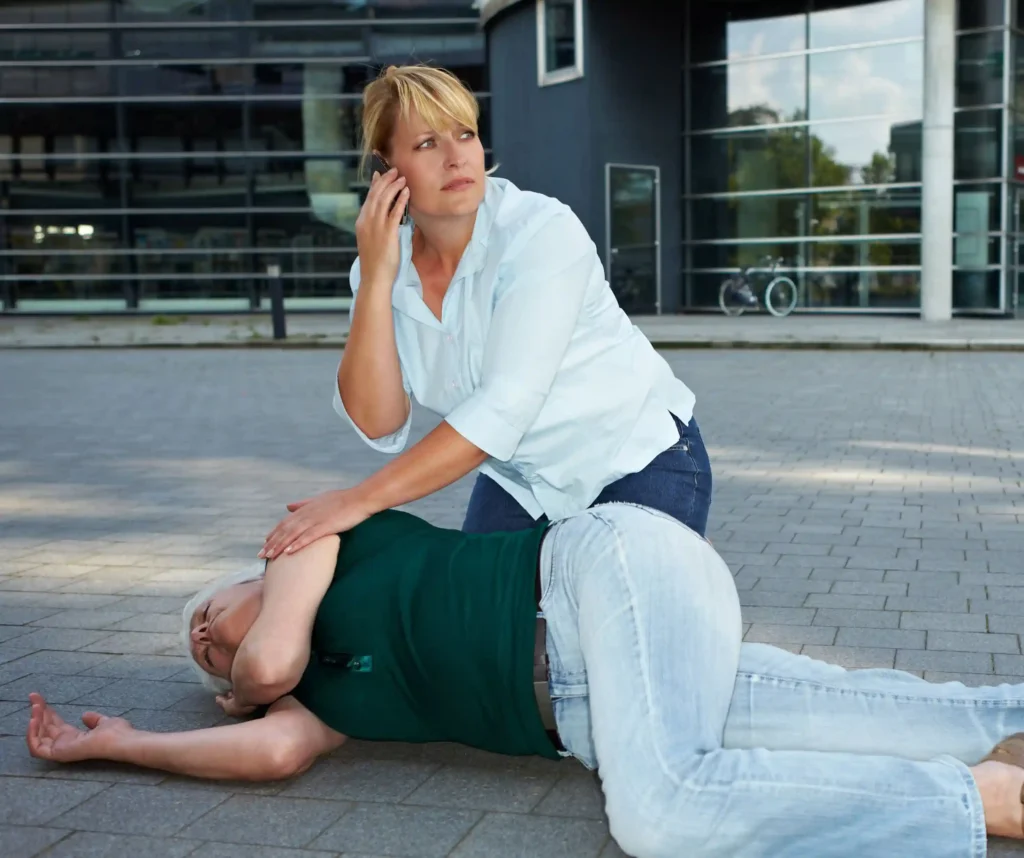
A seizure is an emergency when it lasts over five minutes, when another starts before the person wakes, when breathing is affected, when it happens in water, or when it is a first-time seizure. Call 911 for a seizure that will not stop.
Yes. A first time seizure emergency room visit finds the cause, since a seizure is a symptom rather than a diagnosis. Low blood sugar, low sodium, infection, or a head injury can all trigger one, and several are reversible.
The seizure emergency room checks your airway and blood sugar, takes the event history, runs a neurological exam, orders on-site labs and CT when indicated, gives IV fluids or anti-seizure medication as needed, and arranges neurology follow-up.
A febrile seizure in a child is an emergency when it lasts more than five minutes, repeats, or the child does not return to normal. Any first febrile seizure warrants a visit so the fever source gets found.
Time it, ease them to the floor, turn them on their side, cushion the head, and clear hard objects away. Never put anything in their mouth and never hold them down. Call 911 past five minutes.
Past five minutes. Most seizures stop within one to two minutes on their own. One running longer than five is unlikely to stop without treatment and needs emergency care right away.
Yes. Low blood sugar and the low sodium that can follow dehydration are both recognized triggers, and both are reversible once found. That is a main reason the workup starts with a blood sugar check and labs.
The seizure emergency room at Plano ER stays open 24 hours a day, takes walk-ins with no appointment, and pairs a neurological exam with on-site labs and CT to find what triggered the seizure rather than just noting that one happened. We serve Frisco, Allen, McKinney, Richardson, Carrollton, and The Colony from our Plano and Mesquite ER locations. After a seizure, walk in and let our board-certified physicians sort out the cause.
Address: 7940 Custer Rd, Plano, TX 75025 | Call: +1 972-527-3000
Related Emergency Conditions
This page is for educational purposes and does not replace emergency medical evaluation. For a life-threatening emergency, call 911.


We are dedicated to providing prompt, attentive, and high-quality emergency medical care delivered by highly qualified, emergency-specialized physicians. Equipped with cutting-edge imaging technology and a certified full-service laboratory, we ensure you receive accurate diagnoses and effective treatment every time.
Disclaimer: All information available on this site is offered for educational purposes and should not be relied upon as medical advice. Viewing this content does not establish any physician–patient relationship. If you are experiencing a medical emergency, dial 911 or seek care at your closest emergency room right away.
Developed by Digital Linkage © 2026 All Rights Reserved