
A racing, fluttering, or pounding heartbeat that arrives with chest pain, breathlessness, fainting, or dizziness belongs in the heart palpitations emergency room now. Call 911 for chest pain with a fast heartbeat. Plano ER stays open 24 hours a day as a no-wait walk-in ER, and runs an EKG within minutes of your arrival, backed by cardiac enzyme testing and on-site labs. Most patients see a doctor in about 2 to 3 minutes.
Go to the heart palpitations emergency room when the fluttering comes with chest pain, shortness of breath, fainting, or severe dizziness. Go when a racing heart will not slow after several minutes of rest, and go for any palpitations in someone with known heart disease. Those combinations point to a rhythm problem rather than a harmless skip.
Palpitations on their own are extremely common and usually harmless. Nearly everyone feels an occasional flutter, skip, or thud at some point, and caffeine, stress, poor sleep, and exercise all produce them in perfectly healthy hearts. What changes the picture is the company they keep. A skipped beat by itself is a nuisance. A skipped beat with chest pressure and breathlessness is a different event entirely, and it is the pairing that decides urgency, not the sensation alone. How long an episode runs matters just as much. A flutter lasting a few seconds and gone is a different animal from a heart that has been racing for twenty minutes and shows no sign of settling, since a sustained fast rate gives the heart less time to fill between beats and gradually cuts how much blood reaches the rest of you.


Head to the heart palpitations emergency room, or call 911, when a racing or irregular heartbeat carries any of these signs. Each raises the chance that the rhythm itself is the problem.
Chest pain with a fast heartbeat means call 911 rather than drive yourself. That pairing sits at the top of the list for a reason, and driving yourself puts you behind the wheel during the exact window when fainting is most likely. Paramedics can start monitoring your rhythm in the ambulance, which means treatment begins before you arrive rather than after.
A racing heart that won’t slow down traces to either the heart’s electrical system misfiring or the body demanding a faster rate. Rhythm problems such as AFib, dehydration, fever, thyroid trouble, blood loss, anxiety, and stimulants all drive the rate up, and they need very different treatment.
| Cause | What it often looks like |
|---|---|
| AFib or another rhythm problem | Chaotic, irregular beat, sometimes fast, may come and go |
| Dehydration or blood loss | Fast but steady beat, dizziness on standing, thirst |
| Fever or infection | Fast beat alongside feeling unwell, temperature up |
| Thyroid trouble | Ongoing fast rate, weight change, heat intolerance, tremor |
| Anxiety or panic | Fast beat, tingling, sense of dread, normal EKG afterward |
| Caffeine, nicotine, or stimulants | Fluttering after a trigger, settles as it wears off |
| Anemia | Fast beat with fatigue and pallor, worse on exertion |
| Some medications | New palpitations after a dose or medication change |
The reason these get sorted with testing rather than instinct is that several feel identical from the inside. A rate driven by dehydration and a rate driven by a rhythm problem both feel like a pounding chest, and only one of them settles with fluids. Texas summers make dehydration a genuine contender here, since a long afternoon outdoors in Plano heat can push a heart rate up on its own. That does not make it the answer, though. It makes it one candidate the workup has to rule in or out alongside the rest.
AFib is an emergency when it comes with chest pain, breathlessness, fainting, or a very fast rate that will not settle. AFib emergency treatment starts with an EKG to confirm the rhythm, then cardiac monitoring and stabilization while the team checks for what triggered the episode and what it is doing to your circulation.
AFib matters beyond the discomfort because the upper chambers of the heart quiver rather than squeeze cleanly, which lets blood pool and raises stroke risk. That is why a new or newly irregular rhythm gets taken seriously even when the person feels only mildly off. Some people feel every second of an episode. Others have no symptoms and learn about it from an EKG run for a different reason. Both versions carry the same underlying concern, which is why documenting the rhythm while it is happening is so valuable.
Plano ER evaluates the rhythm, runs cardiac enzyme testing to check for heart strain, monitors your heart continuously, and stabilizes you. Definitive rhythm care belongs with a cardiologist, and we coordinate that handoff.
One question comes up constantly, and it is worth answering plainly: how long has the episode been going? That single detail shapes the entire plan, because the treatment path for a rhythm that started an hour ago differs from one that has been running for days. If you noticed when it began, say so at triage. If you did not, say that too, since an honest uncertainty is more useful than a guess.
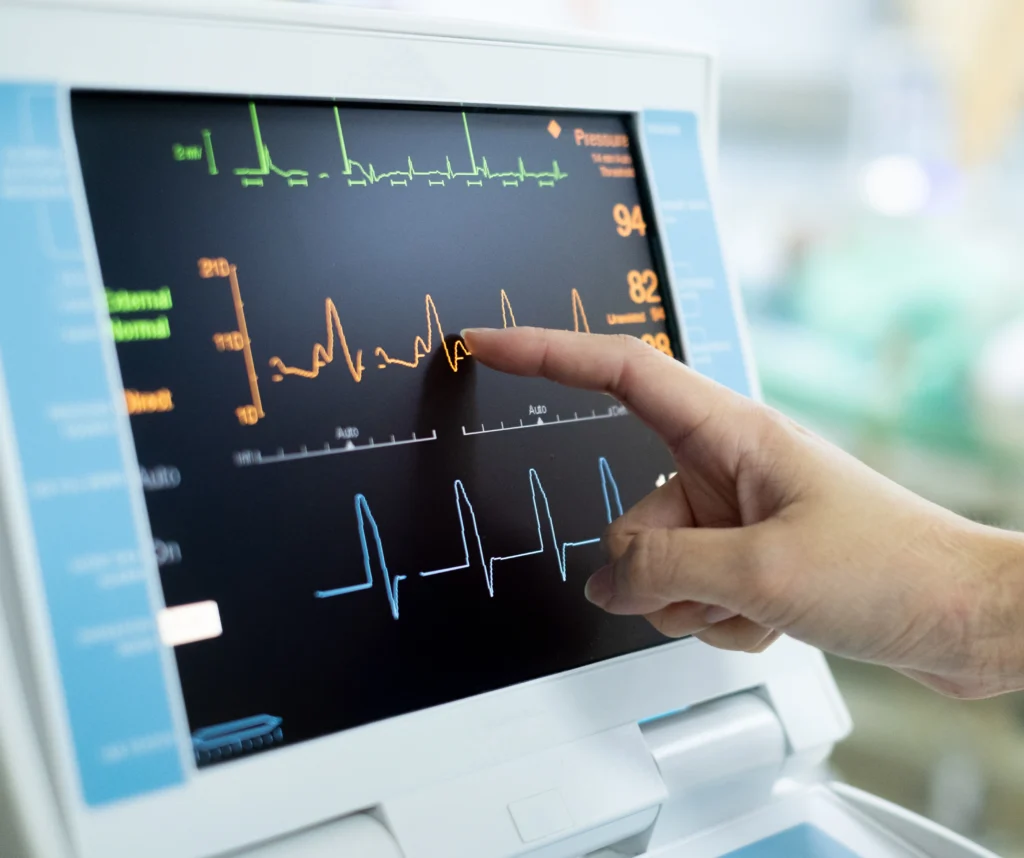
An EKG for irregular heartbeat records your heart’s electrical activity through stickers on your chest, arms, and legs, and it takes about a minute. It shows the rhythm, the rate, signs of strain, and evidence of a current or past heart attack, which is why it runs early in every cardiac visit.
The catch with palpitations is timing. An EKG captures what your heart is doing during those seconds, so an episode that ended in the car may leave a normal tracing behind. A normal EKG after symptoms stop is genuinely reassuring for the dangerous causes, though it does not always identify a rhythm that comes and goes. That is why continuous monitoring during your visit adds value, and why a cardiologist may later recommend longer-term monitoring you wear at home.
If you can, capture the episode while it happens. A smartwatch tracing or even a note of your pulse rate and whether the beat felt regular or chaotic gives your doctor real data to work with. Consumer wearables are not diagnostic on their own, and they produce false alarms, but a tracing recorded during symptoms is still a genuinely useful starting point that no amount of describing it afterward can replace.
At the Plano ER heart palpitations emergency room, cardiac symptoms move to the front. Because Plano ER is walk-in only, you are roomed immediately and most patients meet a board-certified emergency physician in about 2 to 3 minutes. Here is how a typical visit runs.
Anyone reporting palpitations with chest symptoms gets an EKG within minutes of walking in.
Heart rate, rhythm, blood pressure, and oxygen go on continuous monitoring so the team sees changes as they happen.
The doctor asks what the beat felt like, how long it lasted, what you were doing when it started, and what medications or stimulants were involved.
On-site blood work checks for markers of heart strain or injury, with results back in minutes.
Electrolytes, thyroid function, blood counts, and hydration status often explain a fast rate.
IV fluids, oxygen, and other supportive care start based on what the workup shows.
Many patients stabilize and go home with a cardiology referral and clear return precautions.
As a freestanding emergency room, Plano ER is built to respond fast to a cardiac symptom: immediate EKG, cardiac testing, continuous monitoring, and stabilization, 24 hours a day. Definitive rhythm treatment and any cardiac procedure are performed by a cardiologist in a hospital setting, so we stabilize you first and coordinate a referral or a direct transfer to a cardiac unit, with the handoff arranged on your behalf.
Anxiety absolutely causes heart palpitations, and they are real physical events rather than imagination. A surge of adrenaline speeds the heart, sharpens the sensation of each beat, and often brings chest tightness and tingling along with it. The trouble is that a panic episode and a rhythm problem can feel identical.
That overlap is why a first episode deserves testing rather than a self-applied label. Anxiety is a diagnosis that fits best once the dangerous causes are ruled out, not before. An EKG and a set of labs settle the question quickly, and knowing your heart is structurally fine often reduces the anxiety that fed the cycle in the first place. Once a pattern is documented and you know your triggers, you and your doctor have a baseline to work from. Without that, every episode feels like the first one, and the fear of the next one becomes its own trigger. Breaking that loop starts with knowing what you are actually dealing with.
As a freestanding emergency room, Plano ER does not balance bill patients, so you are not charged the gap between our billed amount and what your plan pays. Texas law requires freestanding ERs to be clear about billing, and our team works with most major insurance plans, files your claim for you, and reviews your coverage before treatment when possible.
Irregular heartbeat treatment in Plano, TX runs through your insurance, and our billing team explains what is covered before care begins whenever they can. The federal No Surprises Act protects patients from surprise bills for emergency care, so nobody has to check network status during a cardiac emergency. For patients without insurance, payment plans are available through Sunbit, and self-pay is welcome. Call ahead and the team can walk you through what to expect.

A few details sharpen a cardiac workup considerably. None of them should delay you when chest pain is involved, in which case call 911 and let the rest wait.
Our emergency care resource hub covers what to expect across the conditions we treat most often.
Go when palpitations come with chest pain, breathlessness, fainting, or severe dizziness, when a racing heart will not slow after rest, or when you have known heart disease. Chest pain with a fast heartbeat means call 911.
The heart palpitations emergency room runs an EKG within minutes, places you on continuous cardiac monitoring, checks cardiac enzymes and labs on-site, treats what it finds, and coordinates cardiology follow-up or transfer when needed.
AFib is an emergency when it brings chest pain, breathlessness, fainting, or a very fast rate that will not settle. Any new or newly irregular rhythm warrants evaluation, since AFib raises stroke risk even when symptoms feel mild.
A racing heart that won’t slow down can come from a rhythm problem such as AFib, or from dehydration, fever, blood loss, thyroid trouble, anemia, anxiety, or stimulants. Testing separates them, since several feel identical.
Yes, and the palpitations are physically real. The problem is that panic and a rhythm problem feel alike, so a first episode deserves an EKG rather than an assumption. Anxiety fits best once dangerous causes are ruled out.
An EKG for irregular heartbeat records your heart’s electrical activity through chest and limb stickers in about a minute, showing rate, rhythm, strain, and signs of a current or past heart attack.
Palpitations alone rarely signal a heart attack, but palpitations with chest pain, breathlessness, cold sweats, or nausea can. That combination is treated as cardiac until testing proves otherwise.
The heart palpitations emergency room at Plano ER stays open 24 hours a day, takes walk-ins with no appointment, and runs an EKG within minutes, backed by cardiac enzyme testing, on-site labs, and continuous monitoring. We evaluate and stabilize, then coordinate a fast handoff to cardiac specialists when your rhythm calls for it. We serve Frisco, Allen, McKinney, Richardson, Carrollton, and The Colony from our Plano and Mesquite ER locations. If your heartbeat feels wrong, walk in and let our board-certified physicians take a look.
Address: 7940 Custer Rd, Plano, TX 75025 | Call: +1 972-527-3000
Related Emergency Conditions
This page is for educational purposes and does not replace emergency medical evaluation. For a life-threatening emergency, call 911.

We are dedicated to providing prompt, attentive, and high-quality emergency medical care delivered by highly qualified, emergency-specialized physicians. Equipped with cutting-edge imaging technology and a certified full-service laboratory, we ensure you receive accurate diagnoses and effective treatment every time.
Disclaimer: All information available on this site is offered for educational purposes and should not be relied upon as medical advice. Viewing this content does not establish any physician–patient relationship. If you are experiencing a medical emergency, dial 911 or seek care at your closest emergency room right away.
Developed by Digital Linkage © 2026 All Rights Reserved