

Abdominal pain is one of the most common reasons people head to the ER, and it is also one of the trickiest to figure out at home. The stomach area holds many organs, and pain in one spot can mean very different things depending on where exactly it hurts, how it feels, and what other symptoms come with it. Knowing when abdominal pain needs the ER, and what the pain location suggests about the cause, can help you make the right call quickly.
When Abdominal Pain Is an Emergency: The Red Flags
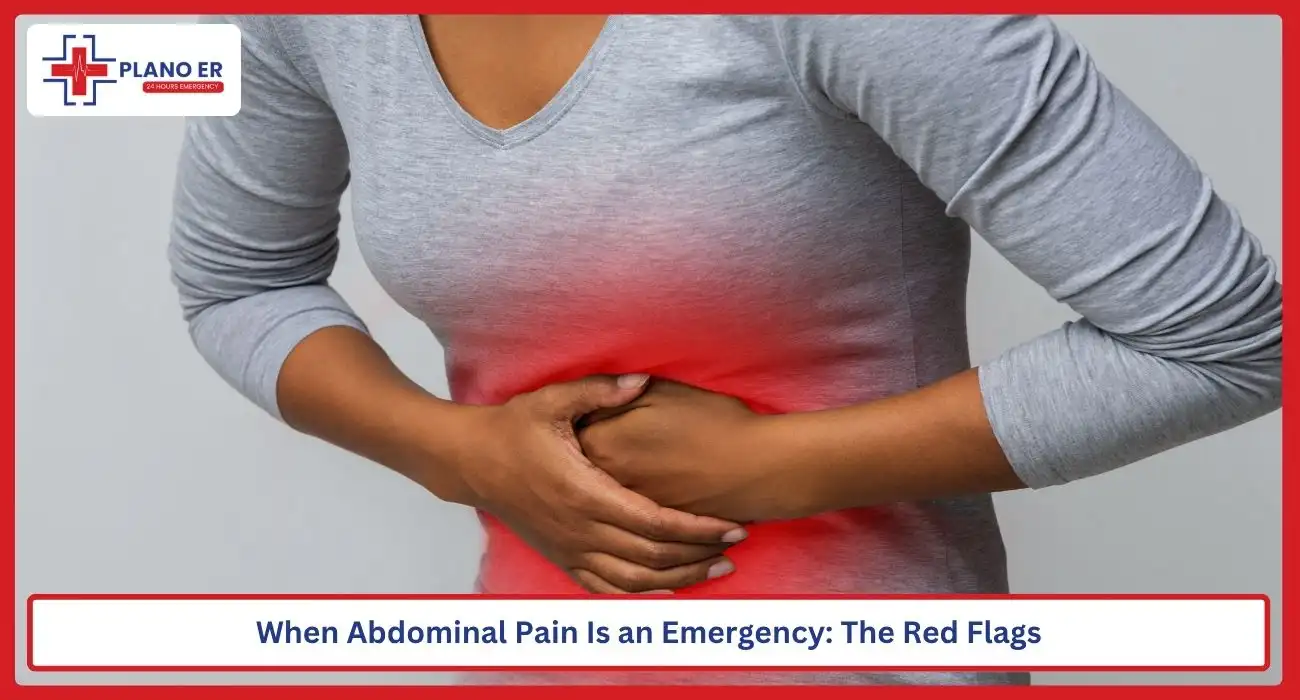
Some abdominal pain is a true emergency that cannot wait. If any of the following apply to you or someone you are caring for, head to Plano ER immediately or call 911.
- Sudden, severe pain that came on within minutes
- Pain so intense you cannot stand, walk, or find a comfortable position
- Pain with vomiting blood, or vomiting that will not stop
- Blood in stool or black, tarry stool
- Pain with a fever above 101°F
- A rigid, board-like abdomen (very tight and painful to touch)
- Pain with chest pain, shortness of breath, or dizziness
- Pain after abdominal trauma, an accident, or a fall
- Pain in someone who is pregnant, especially with bleeding
- Pain after recent abdominal surgery
- Yellow-tinted skin or eyes (jaundice) with pain
- Signs of shock: pale, sweaty, confused, weak pulse
Call 911 if pain is accompanied by chest pain, difficulty breathing, fainting, or signs of shock. Do not drive yourself to the ER in these situations.
What Your Pain Location Says About the Cause

Doctors divide the abdomen into regions to narrow down what might be wrong. Where the pain sits, and where it spreads to, is often the biggest clue about which organ is involved.
According to MedlinePlus, severe pain does not always mean a serious problem, and mild pain does not always mean a problem is minor. Location, timing, and accompanying symptoms all shape the picture.
| Pain Location | Common Causes |
| Upper Right Quadrant | Gallstones, gallbladder infection, liver conditions, hepatitis |
| Upper Middle (Epigastric) | Stomach ulcer, gastritis, pancreatitis, acid reflux |
| Upper Left Quadrant | Stomach ulcer, gastritis, splenic issues, kidney stone |
| Center (Around Belly Button) | Early appendicitis, small bowel obstruction, gastroenteritis, pancreatitis |
| Lower Right Quadrant | Appendicitis, ovarian cyst, ectopic pregnancy, right kidney stone |
| Lower Middle (Suprapubic) | Urinary tract infection, bladder infection, menstrual pain, pelvic infection |
| Lower Left Quadrant | Diverticulitis, ovarian issues, constipation, left kidney stone |
Pain in one region does not always mean the problem is exactly in that spot, but it is a strong starting point. This is why doctors will always ask you to point to where it hurts most.
| 📍 Pain That Moves or Spreads: Classic Patterns
Some abdominal pain patterns strongly suggest specific conditions. If any of these match, seek evaluation: • Appendicitis: Pain often starts around the belly button and shifts to the lower right after several hours • Kidney stone: Pain in the flank or side, often radiating down toward the groin • Gallbladder attack: Right upper pain that can radiate to the right shoulder or between the shoulder blades • Heart attack: Can present as upper abdominal pain, especially in women • Aortic dissection: Sudden, tearing pain that can move from chest to abdomen. Call 911 immediately. |
Pain Patterns That Change the Answer
How the pain feels matters as much as where it is. Different patterns point to different types of problems.
Sharp and localized pain. Sharp pain in one specific spot often signals an inflamed or infected organ. Appendicitis, kidney stones, and pancreatitis often start as sharp, focused pain.
Dull, spreading pain. Pain that covers a larger area, or pain you cannot pin down, often points to more diffuse conditions like gastroenteritis or early bowel obstruction.
Cramping that comes in waves. Colicky pain that builds up, peaks, then eases can be a sign of a hollow organ trying to push against something. Kidney stones passing, gallstones, and bowel obstruction can all cause this pattern.
Pain that gets worse with eating. This suggests a stomach ulcer, gallbladder disease, or pancreatitis. If the pain is worst 30 to 60 minutes after a meal, gallbladder is a likely cause.
Pain that changes with movement or breathing. Pain that worsens with deep breaths, movement, or coughing suggests inflammation of the abdominal lining (peritonitis), which can be an emergency.
Special Groups That Need Extra Caution
Abdominal pain warrants a lower threshold for ER evaluation in certain groups because symptoms can be masked or complications can develop faster.
Children under 3 months. Any abdominal pain, vomiting, or unusual fussiness needs urgent evaluation. Serious causes like intussusception or volvulus can develop quickly.
Children and teens. Appendicitis is a top concern with lower right pain. Pain that starts around the belly button, moves to the lower right, and comes with fever or vomiting needs prompt evaluation.
Pregnant patients. Any abdominal pain during pregnancy needs medical attention. Ectopic pregnancy, miscarriage, and preeclampsia can all present with pain and need immediate care.
Older adults. Symptoms may be milder even with serious conditions. Older adults with new abdominal pain, especially with fever or bloating, should be evaluated even if the pain seems modest.
Post-surgery patients. Pain that develops after abdominal surgery, especially in the first few weeks, can signal infection, hernia, or bowel obstruction. Do not wait.
People on blood thinners. Sudden abdominal pain in someone taking anticoagulants can signal internal bleeding. Get evaluated quickly.
How Plano ER Evaluates Severe Abdominal Pain

Plano ER moves quickly on abdominal pain because delayed diagnosis of conditions like appendicitis or ectopic pregnancy can be dangerous.
Immediate physician assessment. A board-certified emergency physician takes your history, examines your abdomen, and identifies the pain pattern within minutes of walk-in.
Bloodwork. Our emergency lab testing runs complete blood counts, liver enzymes, pancreatic enzymes, kidney function tests, and pregnancy tests. Results come back within about an hour.
Imaging when needed. Our on-site CT scan in the ER identifies appendicitis, kidney stones, bowel obstruction, aneurysm, and abscess. Ultrasound is available for gallbladder, ovarian, and pregnancy-related evaluation.
Pain and symptom management. Pain medications, anti-nausea medications, and IV fluids are started while diagnosis is confirmed. You do not have to wait through the workup in discomfort.
Treatment or transfer planning. Most abdominal pain patients are discharged with a diagnosis and care plan. For conditions needing surgery or admission, we coordinate direct transfer to a partner hospital.
According to the National Institute of Diabetes and Digestive and Kidney Diseases, imaging tests such as CT scan and ultrasound help confirm an appendicitis diagnosis or reveal other causes of abdominal pain.
Frequently Asked Questions
Q: How can I tell if my abdominal pain is serious?
Serious abdominal pain often comes on suddenly, gets worse rather than better, or comes with warning signs like fever, vomiting blood, or bloody stools. Pain that keeps you from walking or lying comfortably needs prompt evaluation.
Q: What is the difference between abdominal pain and stomach pain?
People often use these terms interchangeably. Technically, abdominal pain covers the whole belly area including intestines, liver, kidneys, and reproductive organs. Stomach pain refers to the stomach itself, which sits in the upper left abdomen.
Q: Can stress cause abdominal pain?
Yes. Stress can trigger or worsen conditions like irritable bowel syndrome, indigestion, and functional abdominal pain. Stress-related pain is usually cramping or aching and comes and goes. Sudden severe pain still needs medical evaluation.
Q: Should I eat if I have abdominal pain?
For mild pain, small amounts of bland food may be fine. For moderate to severe pain, avoid eating until you know the cause. Eating can worsen conditions like appendicitis, pancreatitis, and bowel obstruction.
| Concerned About Your Abdominal Pain?
When abdominal pain is severe, sudden, or comes with any of the warning signs above, walk in to Plano ER for immediate evaluation. Our team has on-site CT scan, ultrasound, lab testing, and board-certified emergency physicians ready around the clock. No appointment required. 📍 7940 Custer Rd, Plano, TX 75025 📞 +1 972-527-3000 🕐 Open 24/7 |