

A ruptured appendix is one of the most time-sensitive abdominal emergencies. The appendix can burst within 24 to 72 hours after appendicitis begins, releasing bacteria into the abdomen and setting off a life-threatening chain reaction. Knowing the signs of a ruptured appendix and understanding how appendicitis progresses can help you get medical care before complications like peritonitis or sepsis develop. Learn what happens at each phase and when to head to Plano ER right away.
What Happens When an Appendix Ruptures
The appendix is a small, finger-shaped pouch attached to the large intestine on the lower right side of the abdomen. When something blocks the opening (usually hardened stool or an infection), pressure builds inside. If the blockage is not relieved, the appendix wall weakens and eventually tears open.
Once the appendix ruptures, bacteria and inflammatory material spill into the abdominal cavity. Two dangerous conditions can follow:
Peritonitis. The lining of the abdomen becomes inflamed and infected, causing severe pain, a rigid abdomen, and shock if untreated.
Sepsis. Bacteria from the burst appendix enter the bloodstream, triggering a systemic reaction that can shut down organs.
According to MedlinePlus, a burst appendix can also cause a pus-filled abscess in or around the original site. Timing matters. Patients treated within the first 24 hours of appendicitis have far better outcomes than those who delay.
This is why recognizing appendicitis before rupture, and knowing rupture signs when it does happen, is one of the most important skills for anyone with sudden right-sided abdominal pain.
Signs Before Rupture: The Warning Window
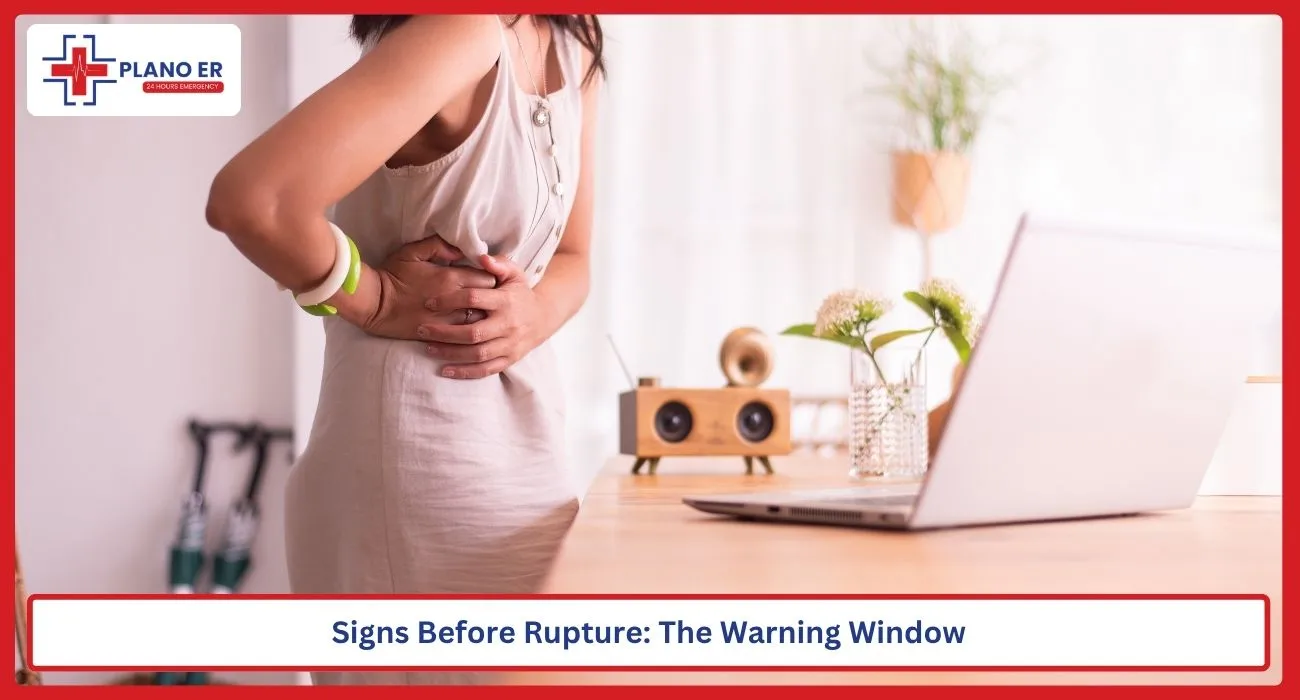
Appendicitis usually follows a predictable pattern in the first 24 to 48 hours. This window is when you can still catch the condition before rupture. Watch for these classic warning signs:
- Pain that starts around the belly button and later shifts to the lower right side (a hallmark pattern)
- Loss of appetite (one of the earliest and most reliable signs)
- Nausea and vomiting that starts after the pain, not before
- Low-grade fever (usually below 101°F in early appendicitis)
- Pain that gets worse with movement, walking, or coughing
- Rebound tenderness (pain increases when pressure is released, not applied)
- Bloating or gas without relief from passing gas
The classic pattern is pain that starts near the belly button, then migrates to the lower right within 6 to 24 hours. This shift is one of the strongest signs that appendicitis is developing.
Not everyone follows the textbook pattern. Children under 5, older adults, and pregnant patients often have atypical symptoms. Anyone taking pain relievers may have symptoms masked, delaying recognition.
If you have persistent right-sided pain that is getting worse rather than better, do not wait to see if it passes. Our expert appendicitis care in Plano service page covers what to expect during evaluation and stabilization.
Signs a Rupture Has Occurred

Rupture usually happens 24 to 72 hours after appendicitis symptoms start. Recognizing rupture quickly is critical because every hour after this point increases the risk of severe complications.
The paradoxical relief. Right after the rupture, pain may briefly decrease. This happens because the pressure inside the swollen appendix drops when it bursts. Do not be fooled by this feeling of improvement.
Sudden worsening. Within an hour or two, pain returns much worse and spreads across the entire abdomen. This is the transition from localized appendicitis to peritonitis.
Signs of peritonitis:
- Severe pain across the whole belly, not just the right side
- Abdomen that feels rigid and hard, like a board
- Extreme tenderness to touch anywhere on the abdomen
- Pain with any movement, including breathing
- Fever above 101°F
- Rapid heartbeat and shallow breathing
Signs of sepsis:
- High fever with chills, or unusually low body temperature
- Rapid pulse and rapid breathing
- Extreme fatigue, confusion, or difficulty staying alert
- Cold, pale, or mottled skin
- Decreased urination
- Low blood pressure or fainting when standing
| 🚨 CALL 911 OR GO TO PLANO ER NOW
If you or someone you are caring for shows signs of peritonitis or sepsis after appendicitis symptoms, this is a life-threatening emergency. Every minute matters. Do not drive yourself. Call 911 if the person is confused, has fainted, or cannot walk. |
Who Is at Higher Risk of Rupture
Some groups face a higher risk of rupture because appendicitis is harder to catch in them. Delayed diagnosis is the single biggest driver of rupture.
Children under 5. Symptoms are often vague. Children may only show fussiness, refusal to eat, or a limp when walking. Rupture rates in this group are much higher than in older kids and adults.
Older adults. Appendicitis in patients over 60 often presents with less pain, lower fevers, and less rebound tenderness. This makes it easy to miss until rupture has occurred.
Pregnant patients. Nausea and abdominal discomfort are common in pregnancy, which can mask appendicitis. The growing uterus also shifts the appendix upward, changing where the pain shows up.
People taking pain medications. Regular use of over-the-counter or prescription pain relievers can mask early appendicitis symptoms, allowing the condition to progress without warning.
People with prior antibiotic use. Occasional patients on antibiotics for other reasons may have partially controlled appendicitis that later flares. Symptoms can be dulled or delayed.
People with chronic conditions. Diabetes and immune-suppressing conditions can blunt the body’s response to infection and mask the classic signs.
Emergency Care and What Happens at Plano ER

Suspected appendicitis or a possible rupture is an emergency that needs immediate evaluation. Plano ER moves quickly on this specific presentation because time to diagnosis directly affects outcomes.
Rapid physician assessment. A board-certified emergency physician examines the abdomen, checks for classic signs like rebound tenderness and rigidity, and takes a focused history within minutes.
Diagnostic imaging. A CT scan in the ER is the most reliable way to confirm appendicitis and identify whether rupture has already occurred. Ultrasound may be used first for children and pregnant patients.
Emergency lab testing. Blood counts, inflammatory markers, and metabolic panels identify signs of infection and organ stress. Results come back quickly, often within an hour.
IV antibiotics and fluids. Treatment starts before final diagnosis when clinical suspicion is high. Antibiotics control bacterial spread from a rupture, and IV fluids stabilize blood pressure and prevent shock.
Coordinated surgical transfer. Ruptured appendix cases require surgery. Plano ER stabilizes the patient with fluids, antibiotics, and pain control, then coordinates direct transfer to a partner hospital for appendectomy. This coordination is often faster than starting the workup in a busy hospital ER.
According to the National Institute of Diabetes and Digestive and Kidney Diseases, prompt surgery reduces the risk of a burst appendix and its complications.
Frequently Asked Questions
Q: How fast can an appendix rupture after symptoms start?
Most appendix ruptures happen within 24 to 72 hours of the first symptoms. Some cases rupture faster, especially in children and older adults. Appendicitis symptoms should never be watched at home for more than a few hours.
Q: Can a ruptured appendix heal on its own?
No. A ruptured appendix always requires medical treatment. Even if pain temporarily eases, bacteria continue spreading in the abdomen. Without surgery and antibiotics, complications like peritonitis and sepsis can be fatal.
Q: What does the pain of a ruptured appendix feel like?
Initial appendicitis pain is often sharp and localized in the lower right side. When rupture occurs, pain may briefly ease, then return spread across the entire abdomen with a rigid, board-like feel. Movement makes it much worse.
Q: Can adults survive a ruptured appendix without surgery?
Modern IV antibiotics can control some ruptured appendix cases without immediate surgery, but this decision is made by surgeons after imaging and lab testing. Most cases still need surgical removal to prevent recurrence.
Q: How is a ruptured appendix diagnosed at Plano ER?
Plano ER uses a combination of physical exam, blood work, and CT imaging to confirm rupture and check for peritonitis. Diagnosis is usually complete within an hour of walk-in, and treatment starts immediately after.
| Suspect Appendicitis or a Ruptured Appendix?
Walk in to Plano ER for rapid diagnosis with on-site CT scan, blood work, IV antibiotics, and coordinated surgical transfer when rupture is confirmed. Board-certified emergency physicians on duty 24/7. No appointment needed. 📍 7940 Custer Rd, Plano, TX 75025 📞 +1 972-527-3000 🕐 Open 24/7 |