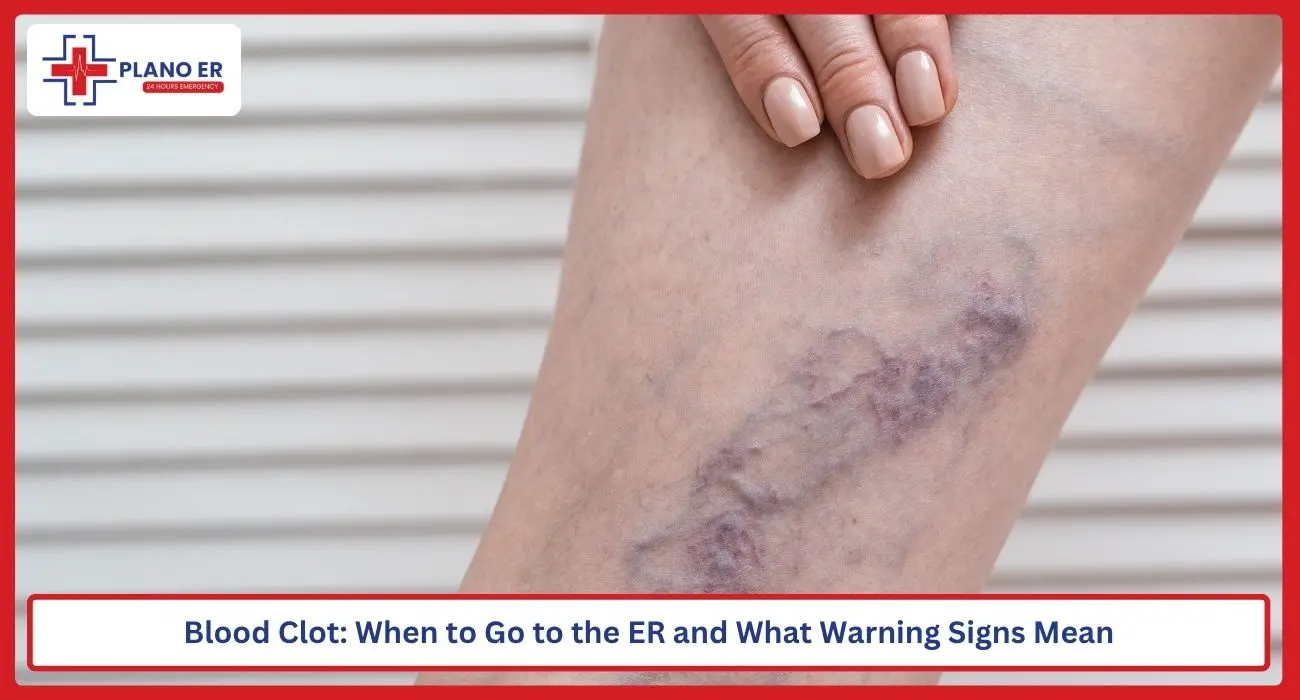
Go to the ER for a blood clot when you have leg swelling with pain and warmth, sudden shortness of breath, chest pain, one-sided weakness, or a severe sudden headache. Blood clots can travel to the lungs, brain, or heart within minutes, so any of these warning signs need emergency evaluation, not a wait-and-see approach.
| BLOOD CLOTS AT A GLANCE | |
| What is a blood clot? | A gel-like mass of blood in a vein or artery that can block circulation |
| Danger level | Life-threatening if it travels to the lungs, brain, or heart |
| Top 3 warning signs | One-sided leg swelling with pain, sudden shortness of breath, one-sided weakness or slurred speech |
| ER window | Every minute matters. Do not wait and see. |
When Blood Clot Symptoms Are a 911 Emergency
Some blood clot symptoms mean the clot has already traveled to a vital organ. Call 911 immediately or head to Plano ER for any of these:
- Sudden shortness of breath, especially at rest
- Sharp chest pain that worsens with deep breathing
- Coughing up blood or pink frothy mucus
- One-sided weakness in the face, arm, or leg
- Slurred speech or difficulty understanding words
- Sudden severe headache with no known cause
- Sudden vision changes in one eye
- Fainting or near-fainting
- Rapid heart rate with dizziness or sweating
- A leg that is suddenly cold, pale, and painful
These signs point to pulmonary embolism, stroke, heart attack, or arterial clot. Waiting can be fatal.
| 🚨 CALL 911 IMMEDIATELY
Signs of pulmonary embolism, stroke, or heart attack from a blood clot need 911. Every minute of blocked blood flow can cause permanent damage or death. Do not drive yourself if you are alone, cannot walk safely, or have chest pain or breathing trouble. |
Warning Signs by Body Location
Where a blood clot forms determines what warning signs to watch for. Different locations produce different symptom patterns, and knowing them helps you act fast.
According to MedlinePlus, blood clots can affect the legs, lungs, brain, heart, and other organs, each with its own presentation.
| Location | Common Warning Signs |
| Leg (Deep Vein Thrombosis) | Swelling in one leg, pain or cramping in the calf, warm skin, redness or bluish color, tenderness when pressing the calf |
| Lung (Pulmonary Embolism) | Sudden shortness of breath, sharp chest pain worse with breathing, coughing up blood, rapid heart rate, fainting |
| Brain (Stroke or CVST) | One-sided weakness, slurred speech, sudden severe headache, vision changes, confusion, difficulty balancing |
| Heart (Coronary Thrombus) | Chest pressure or pain, pain radiating to the arm or jaw, shortness of breath, sweating, nausea |
| Arm (Upper Extremity DVT) | Swelling in one arm, aching or heavy feeling, warmth, visible surface veins, bluish discoloration |
| Abdomen (Mesenteric) | Severe abdominal pain, vomiting, diarrhea, blood in stool, bloating |
A blood clot in one location can move. A leg DVT can break off and travel to the lung as a pulmonary embolism within minutes. That is why any suspected leg clot with new breathing symptoms is treated as a PE until proven otherwise.
Who Is at Higher Risk of a Blood Clot
Some situations make blood clots much more likely to form. If any of these apply to you and you have warning signs, do not delay evaluation.
Recent surgery or hospitalization. Especially orthopedic surgeries like hip or knee replacement. Risk stays elevated for weeks after discharge.
Prolonged immobility. Long flights, long car trips, extended bed rest, or being in a cast. Blood pools when you are not moving.
Pregnancy and postpartum. Hormonal changes and pressure on pelvic veins raise clot risk. The first six weeks after delivery are the highest-risk window.
Cancer and cancer treatment. Many cancers increase clotting risk directly, and chemotherapy can damage vessel walls.
Estrogen-containing medications. Combined birth control pills and hormone therapy can increase clot risk, especially in smokers.
Family history of clots. Inherited clotting disorders like Factor V Leiden run in families. If a close relative had a DVT or PE, share this with any ER team.
Obesity, smoking, and older age. Each independently raises risk, and combinations multiply it.
Previous blood clot. Once you have had one, your risk of another is significantly higher.
Serious infections. Illnesses like COVID-19 and severe pneumonia trigger inflammatory clotting responses that can persist for weeks.
When to Head to Plano ER for a Suspected Blood Clot
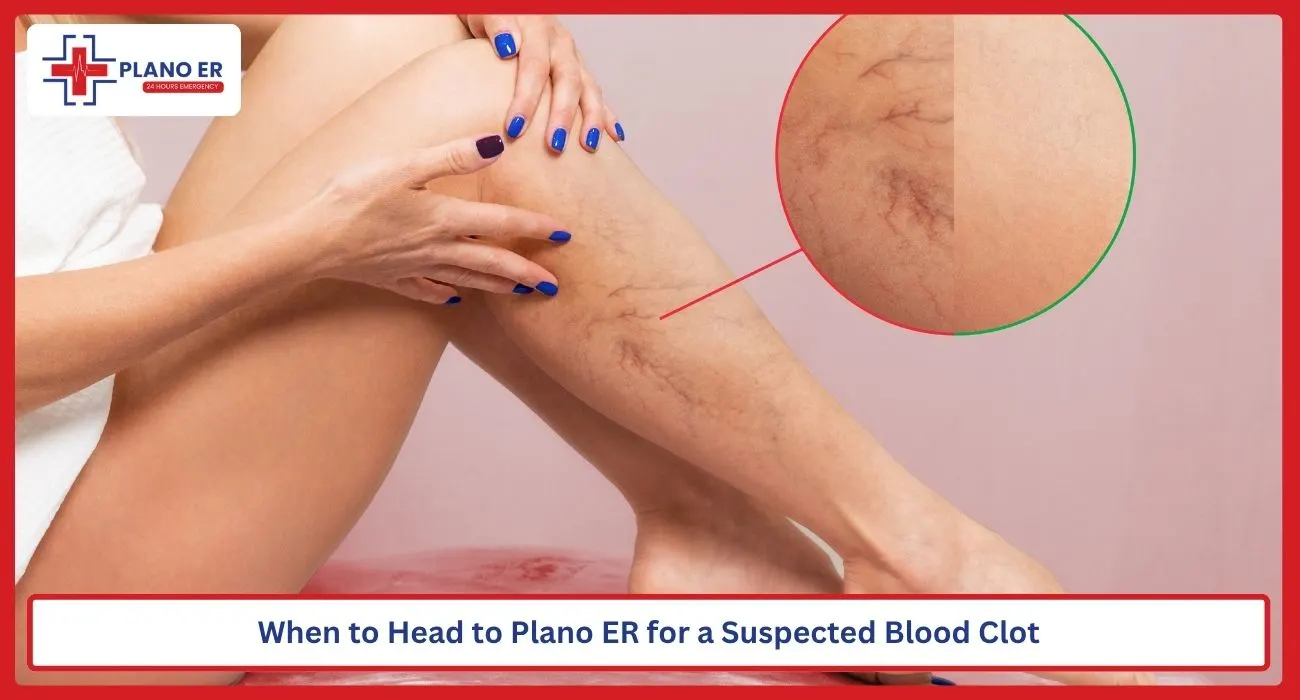
You do not need to wait for a diagnosis to head to the ER. If you have any of the warning signs described above, especially with a risk factor, walk in for evaluation right away.
Head to Plano ER for:
- New leg swelling on one side, with pain or warmth
- Any sudden shortness of breath without explanation
- Chest pain that worsens with breathing
- Coughing up any amount of blood
- Sudden one-sided weakness, numbness, or speech changes
- Severe headache unlike any you have had before
- Any suspected clot symptom in someone taking hormone therapy, recovering from surgery, or with cancer
If you already take blood thinners and have new symptoms of a clot, do not skip the ER thinking your medication is working. Breakthrough clots can happen and need evaluation.
Plano ER provides on-site blood clot treatment with ultrasound, D-dimer testing, and rapid physician assessment. Diagnosis and initial treatment can begin within an hour of walk-in, faster than starting from scratch in a busy hospital ER.
How Plano ER Evaluates a Suspected Blood Clot
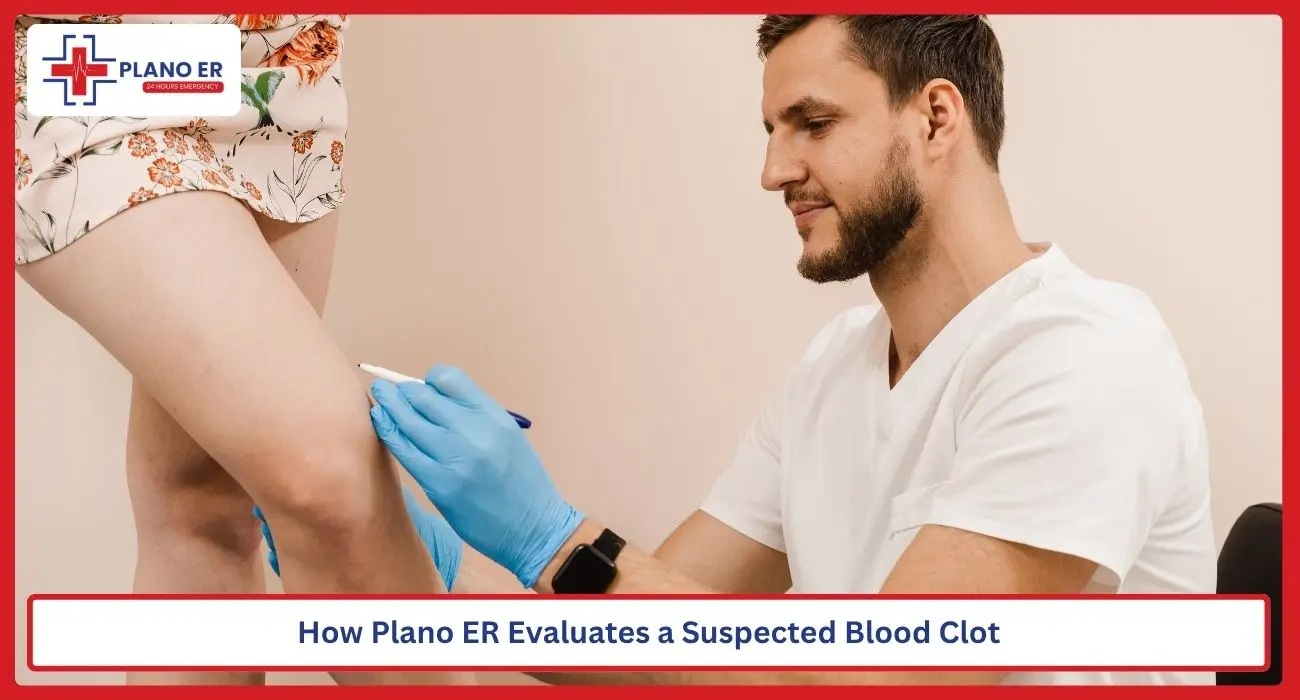
Plano ER uses the same diagnostic pathway that hospital ERs use, delivered without the wait. According to the National Heart, Lung, and Blood Institute, prompt diagnosis and treatment prevent clots from growing or breaking loose.
Rapid physician assessment. A board-certified emergency physician takes your history, examines the affected area, and calculates your clot probability score within minutes.
D-dimer blood test. This blood test measures a protein released when a clot breaks down. A negative result can help rule out active clotting. A positive result triggers imaging.
Ultrasound imaging. For suspected leg or arm DVT, on-site ultrasound is the standard diagnostic tool. Results are available immediately.
CT angiography. For suspected pulmonary embolism, our CT scan in the ER uses contrast to visualize clots in the lung arteries. Diagnosis is confirmed within the hour.
Treatment initiation. Once a clot is confirmed, IV blood thinners start immediately. For large or life-threatening clots, clot-dissolving medications may be given.
Coordinated transfer when needed. For massive pulmonary embolism, large DVT requiring catheter thrombectomy, or stroke cases needing specialized intervention, Plano ER stabilizes the patient and coordinates direct transfer to a partner hospital.
Frequently Asked Questions
Q: Can a blood clot go away on its own?
Small clots can dissolve on their own, but larger clots need medical treatment. Trying to wait out symptoms is dangerous because a growing or traveling clot can become life-threatening within hours.
Q: How long does it take to know if you have a blood clot?
A blood clot workup at Plano ER typically takes 1 to 3 hours. This includes physician exam, D-dimer blood test, ultrasound or CT scan, and starting treatment if a clot is confirmed.
Q: Can you feel a blood clot moving in your body?
Most clots do not cause a sensation of movement. Symptoms come from the blockage a clot causes, not from feeling the clot itself. Sudden new breathing symptoms in someone with a leg clot suggest movement to the lungs.
Q: What does a blood clot in the leg feel like?
Leg blood clots often feel like a deep, cramping ache in the calf or thigh, along with visible swelling in only one leg, warmth, and skin that may look red or bluish. Pain often worsens when standing or walking.
Q: Can young, healthy people get blood clots?
Yes. Long flights, sports injuries, birth control pills, dehydration, and inherited clotting disorders can cause clots in young, otherwise healthy people. Any warning signs deserve evaluation regardless of age.
| Suspect a Blood Clot?
Walk in to Plano ER for rapid evaluation with on-site ultrasound, D-dimer testing, CT angiography, and immediate treatment initiation. Board-certified emergency physicians on duty 24/7. No appointment needed. 📍 7940 Custer Rd, Plano, TX 75025 📞 +1 972-527-3000 🕐 Open 24/7 |