
Feeling dizzy and lightheaded is one of the most common reasons adults visit the ER, yet the cause can range from a skipped meal to a serious heart or neurological condition. Dizziness and lightheadedness feel similar but mean different things medically. Knowing which type you have and what warning signs mean emergency care can help you act quickly and confidently.
Most short dizzy spells resolve on their own with rest, hydration, or a snack. Others point to problems that need medical evaluation within hours. The sections below break down the differences, the common causes behind each type, and how to tell when it is time to head to Plano ER.
Before diving into causes, it helps to clarify the words we use. Doctors treat dizziness and lightheadedness as different symptoms, and sorting out which you are experiencing is the first step toward figuring out why.
| DIZZY (Vertigo) | LIGHTHEADED (Presyncope) |
| What it feels like:
Room spinning around you, or you feel like you are spinning while standing still. Common causes: Inner ear issues (BPPV), vestibular neuritis, Meniere’s disease, migraine, stroke What usually helps: Sitting still, focusing on a fixed point, slow head movements |
What it feels like:
Feeling like you might faint. Vision may darken briefly, or you feel floaty. Common causes: Dehydration, low blood pressure, low blood sugar, medications, heart rhythm issues What usually helps: Lying flat, elevating legs, drinking water, eating something |
Dizzy vs. Lightheaded: Spot the Difference
Dizziness and lightheadedness are different symptoms with different causes, even though people often use the words interchangeably. True dizziness, called vertigo, feels like movement when there is none. Lightheadedness, called presyncope, feels like you might faint. Sorting out which one you have narrows down what is causing it.
Vertigo almost always comes from the inner ear or the brain’s balance system. Presyncope usually comes from reduced blood flow or oxygen reaching the brain. The two require different workups, so describing your symptom accurately helps a physician start in the right direction.
Some people have both at once. If you feel the room spin AND feel faint at the same time, your evaluation may need to cover both systems.
Common Causes of Feeling Dizzy and Lightheaded

Common causes of feeling dizzy and lightheaded range from everyday triggers like skipping meals to urgent conditions like heart rhythm problems. Dehydration, low blood sugar, inner ear issues, medication side effects, anxiety, and cardiovascular conditions are the top drivers for most adults.
According to NIH News in Health, dizziness becomes more common as we age and often has more than one contributing cause.
1. Dehydration
Not drinking enough water, sweating in Texas heat, or losing fluids through illness can drop blood volume, making you feel faint when you stand. This is one of the most common causes year-round in Plano.
Severe dehydration may need IV fluids to recover fast. See how our emergency dehydration treatment works around the clock.
2. Low Blood Sugar
Skipping meals, intense exercise, or diabetes medication can drop glucose levels, triggering dizziness along with sweating and shaking.
3. Low Blood Pressure
Standing up too fast (orthostatic hypotension), chronic low blood pressure, or new medications can leave the brain briefly short on blood supply.
4. Inner Ear Issues
Benign paroxysmal positional vertigo (BPPV), vestibular neuritis, and Meniere’s disease all cause true spinning sensations triggered by head movement or sudden onset.
5. Heart Rhythm Problems
An irregular heartbeat, slow pulse, or heart valve issues can reduce blood flow to the brain, especially during activity or standing.
6. Medication Side Effects
Blood pressure medications, antidepressants, sedatives, and some pain relievers list dizziness as a common side effect. New prescriptions deserve a second look if symptoms start soon after.
7. Anxiety and Panic
Rapid breathing during panic attacks reduces carbon dioxide levels in the blood, which can cause dizziness, tingling, and a sense of unreality.
3 Questions to Ask Yourself Right Now

Three questions can help you decide whether your dizziness is something to monitor at home or something to get checked today. Answer each honestly and let the pattern guide your next step.
Question 1: How Sudden Was It?
Dizziness that comes on gradually over hours or days often has a benign cause like dehydration or medication. Dizziness that hits suddenly, especially with other symptoms, needs urgent evaluation. Sudden severe dizziness can point to stroke, heart rhythm problems, or inner ear emergencies.
Question 2: What Else Is Happening?
Dizziness alone, in a young healthy adult, after skipping lunch, is usually not an emergency. Dizziness with chest pain, shortness of breath, slurred speech, one-sided weakness, severe headache, or fainting is an emergency. Any new symptom alongside dizziness changes the picture.
Question 3: Does It Keep Coming Back?
A one-time dizzy spell that resolves fully may not need emergency care if you have no other symptoms. Dizziness that returns throughout the day, lasts hours, or progressively worsens needs medical evaluation.
If dizziness comes with chest discomfort or heart palpitations, cardiac causes need to be ruled out first. Learn about our on-site cardiac enzyme test and how it helps identify heart-related dizziness fast.
Red Flag Symptoms That Need the ER
Red flag symptoms with dizziness mean the cause may be dangerous and need emergency evaluation right away. These signs often point to stroke, heart problems, severe infection, or internal bleeding, all of which are time-sensitive conditions.
Head to Plano ER or call 911 if your dizziness comes with any of these:
- Sudden one-sided weakness, numbness, or facial drooping
- Slurred speech or trouble understanding words
- Sudden severe headache unlike any before
- Chest pain, pressure, or heart palpitations
- Shortness of breath or difficulty breathing
- Loss of consciousness or near-fainting
- Double vision or sudden vision loss
- High fever with stiff neck or confusion
- Dizziness after a head injury or fall
- Vomiting that will not stop with dizziness
Dizziness in older adults, pregnant patients, people with diabetes, or anyone taking blood thinners deserves a lower threshold for evaluation. Problems can progress quickly in these groups.
At Plano ER, suspected stroke or neurological causes get rapid imaging. A CT scan in the ER can rule out brain bleeds and other serious causes within minutes of walk-in.
How Plano ER Evaluates Feeling Dizzy and Lightheaded
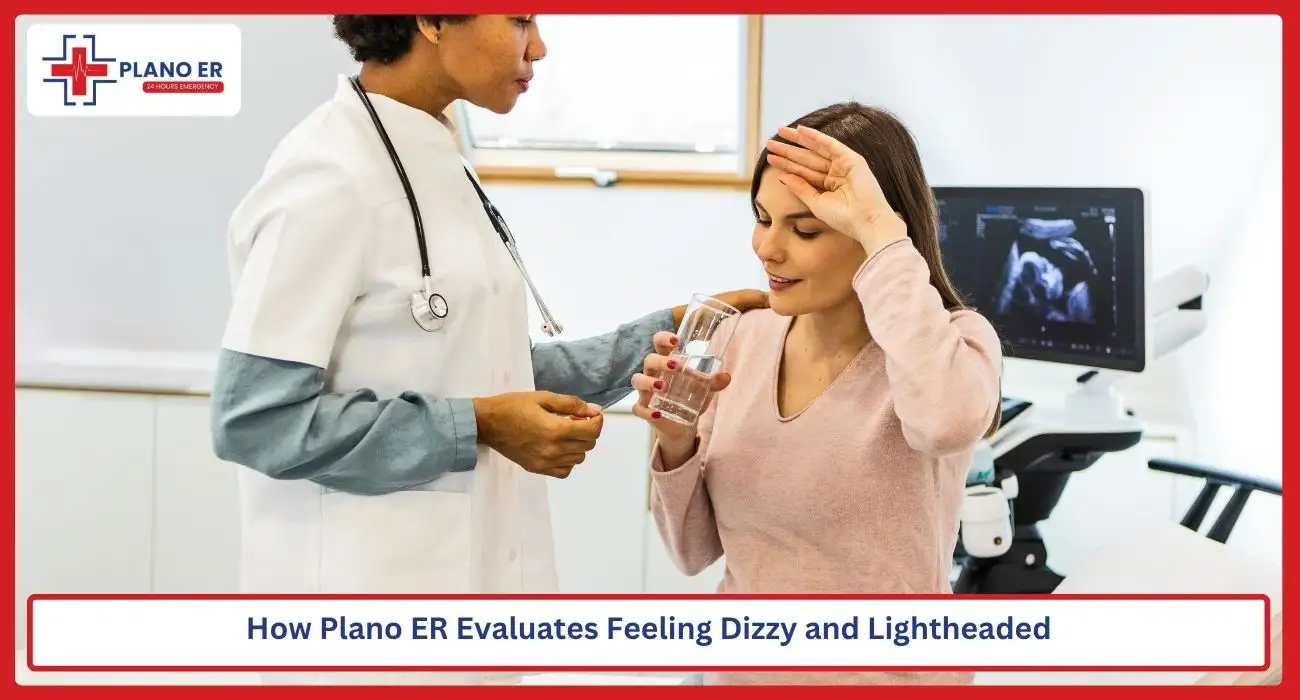
Dizziness evaluation at Plano ER starts with a physician assessment to determine whether the cause is cardiac, neurological, inner ear, or metabolic. Based on initial findings, targeted testing follows, including bloodwork, EKG, imaging, and bedside balance tests. Most patients receive a diagnosis within 1 to 3 hours.
The National Institute on Deafness and Other Communication Disorders notes that balance disorders can involve the inner ear, brain, or multiple body systems, so a thorough workup matters.
Rapid physician assessment. A board-certified emergency physician reviews your history, examines your heart, nervous system, and balance, and identifies likely cause categories within minutes.
Vital signs and orthostatic checks. Blood pressure measured lying down, sitting, and standing can quickly reveal orthostatic drops. Pulse checks catch rhythm issues.
Blood work. Blood counts, glucose levels, electrolytes, and inflammatory markers rule out anemia, infection, dehydration, and blood sugar extremes.
EKG. A quick heart rhythm reading identifies irregular beats, slow pulse, or ischemic changes that may be causing symptoms.
Imaging when indicated. CT scan or ultrasound can be done on-site for suspected stroke, bleeding, or vascular causes. Results come back fast.
Treatment and next steps. Depending on diagnosis, treatment may include IV fluids, medications, breathing exercises, or coordinated transfer for cases requiring hospital admission.
Frequently Asked Questions
Q: What is the most common cause of feeling dizzy and lightheaded?
Dehydration is the single most common cause in otherwise healthy adults, especially in Texas heat. Low blood sugar from skipped meals is a close second. Both usually resolve within an hour of fluids and food.
Q: Should I go to the ER for a single dizzy spell?
A single brief dizzy spell that fully resolves and has no other symptoms rarely needs the ER. Any dizziness with chest pain, weakness, slurred speech, severe headache, or fainting needs emergency evaluation right away.
Q: Can dizziness be a sign of stroke?
Yes. Sudden severe dizziness, especially with one-sided weakness, slurred speech, vision changes, or imbalance, can be a sign of stroke. This is a 911 emergency where every minute of treatment matters.
Q: Why do I feel dizzy when I stand up?
Dizziness on standing often reflects orthostatic hypotension, a drop in blood pressure as you change position. Causes include dehydration, medications, prolonged bed rest, and some chronic conditions. It is worth evaluating if it happens often.
Q: Does Plano ER treat vertigo and dizziness?
Yes. Plano ER evaluates and treats dizziness, vertigo, and lightheadedness around the clock. We rule out dangerous causes first, then start treatment or arrange specialist follow-up based on findings.
| Need Emergency Care for Dizziness?
Plano ER is open 24/7 for same-day dizziness evaluation. Walk in to 7940 Custer Rd or reach us directly: → Visit the Plano ER to learn more about our 24/7 emergency care services → Contact Plano ER for directions, insurance questions, or non-emergency inquiries 📍 7940 Custer Rd, Plano, TX 75025 📞 +1 972-527-3000 🕐 Open 24/7 |