
Medically reviewed by Plano ER Medical Team
Bell’s palsy symptoms usually appear suddenly as weakness or drooping on one side of the face. You may notice difficulty closing one eye, drooling from one corner of your mouth, altered taste, or sounds feeling unusually loud in one ear. The symptoms can be alarming because they look exactly like a stroke.
The difference matters. Bell’s palsy affects the facial nerve and usually resolves on its own over weeks to months. A stroke is a medical emergency measured in minutes. Knowing bell’s palsy symptoms, and knowing the one test that separates them from stroke, is the most important health literacy skill when facial weakness appears.
Before reading any further, the box below walks through how to rule out a stroke right now. Everything after that assumes stroke has already been excluded or evaluation is underway.
| RULE OUT STROKE FIRST: THE FAST + EXTRA CHECK |
| If any FAST sign appears, call 911 immediately. Even if you suspect Bell’s palsy, stroke must be ruled out first.
FACE DROOPING One side of the face hangs or feels numb. Ask the person to smile. ARM WEAKNESS Ask the person to raise both arms. One drifts downward. SPEECH DIFFICULTY Speech is slurred, strange, or they cannot repeat a simple phrase. TIME TO CALL 911 Note the time symptoms started. Stroke treatment is time-sensitive. |
| EXTRA CHECK: THE FOREHEAD TEST
Ask the person to raise both eyebrows and wrinkle their forehead. In Bell’s palsy, the forehead on the affected side cannot wrinkle. In a stroke, the forehead usually still works normally because both sides of the brain control it. This single test often separates the two. |
Bell’s Palsy Symptoms: What You Will Notice First
The first Bell’s palsy symptoms are usually ear pain, mild facial tingling, or subtle weakness on one side of the face within the first 24 hours. Over the next day or two, the weakness rapidly worsens into clear one-sided facial droop, difficulty closing the eye, and drooling. Symptoms peak within 72 hours.
Early signs you may notice first:
- Pain behind or in front of one ear
- A tight or heavy feeling on one side of the face
- Mild difficulty blinking one eye
- Food or drink dribbling from one corner of the mouth
- Drinks taste strange or dull on one side of the tongue
- Sounds feel too loud in one ear
Bell’s palsy can sometimes come with mild dizziness or balance issues. For broader coverage of balance and dizziness symptoms, our guide on feeling dizzy and lightheaded explains when those signs need emergency evaluation too.
The classic Bell’s palsy pattern is one-sided and affects the entire half of the face. Both the top (forehead, eyebrow, eye) and bottom (cheek, mouth) droop together. This is different from a stroke, which usually spares the forehead.
Bell’s Palsy vs. Stroke: The Critical Difference

The critical difference between Bell’s palsy and stroke is which parts of the face are affected. Bell’s palsy weakens the entire half of the face, including the forehead. A stroke usually spares the forehead because both sides of the brain control it. If you can wrinkle the forehead evenly, stroke is less likely.
According to the National Institute of Neurological Disorders and Stroke, Bell’s palsy affects the seventh cranial nerve, which controls muscles on one side of the face. A stroke, by contrast, affects brain tissue, which produces a different pattern of weakness. ¹
| Feature | Bell’s Palsy | Stroke |
| Forehead and eyebrow | Cannot wrinkle forehead or raise eyebrow on affected side | Forehead usually works normally |
| Eye closure | Cannot fully close the eye; eye may stay partly open even during sleep | Eye closure generally intact |
| Cheek | Cheek sags; difficulty puffing out cheek | Cheek may droop mildly |
| Mouth corner | Pronounced droop; drooling possible | Droop present, often less severe |
| Taste (front of tongue) | May be dulled or altered on the affected side | Taste usually not affected |
| Sound sensitivity | Sounds may feel unusually loud in the affected ear | Not typically affected |
| Onset | Hours to 72 hours, often peaks within 48 hours | Sudden, within minutes |
| Associated symptoms | Ear pain behind the ear, headache | Arm or leg weakness, slurred speech, confusion, vision changes |
Stroke is caused by a blood clot in the brain in most cases. For deeper context on recognizing clot-related emergencies, see our guide on when to go to the ER for a blood clot.
If the forehead and eyebrow still work normally and only the lower face droops, treat it as possible stroke until a physician has evaluated you. The cost of being wrong on the stroke side is enormous. The cost of being overly cautious is a quick workup.
How Bell’s Palsy Symptoms Develop and Progress
Bell’s palsy symptoms develop rapidly, usually within 24 to 72 hours from the first subtle signs to full facial weakness. Symptoms peak around day 2 to 3, stabilize for a few weeks, and then gradually improve over 3 to 6 months. The sudden onset is part of what distinguishes Bell’s palsy from slower-developing facial weakness.
| Timeline | What’s Happening to Your Face |
| Hours 0 to 24 | Pain or discomfort behind the ear on the affected side. Mild facial weakness or tingling. Easy to miss or dismiss as fatigue. |
| Day 1 to 2 | Facial weakness rapidly worsens. Eye on affected side becomes hard to close. Drooling may appear. Drinks may dribble from the corner of the mouth. |
| Day 2 to 3 (Peak) | Symptoms peak. Full one-sided facial droop. Taste altered on the affected side. Sounds may feel loud in the affected ear. Headache possible. |
| Week 1 to 3 | Symptoms stabilize. No further worsening. Dry eye and difficulty eating remain challenges. Most patients begin to notice small improvements. |
| Week 3 to 6 Months | Gradual recovery for most. About 70% of patients fully recover without lasting weakness. The remainder have partial recovery. |
Most patients see noticeable recovery starting around weeks 3 to 4. About 70 percent fully recover without any lasting weakness. The remaining patients may have mild residual weakness, dry eye, or occasional involuntary twitches during recovery.
For a broader patient-friendly overview, MedlinePlus provides additional information on Bell’s palsy, including links to related NIH resources. ²
What Causes Bell’s Palsy
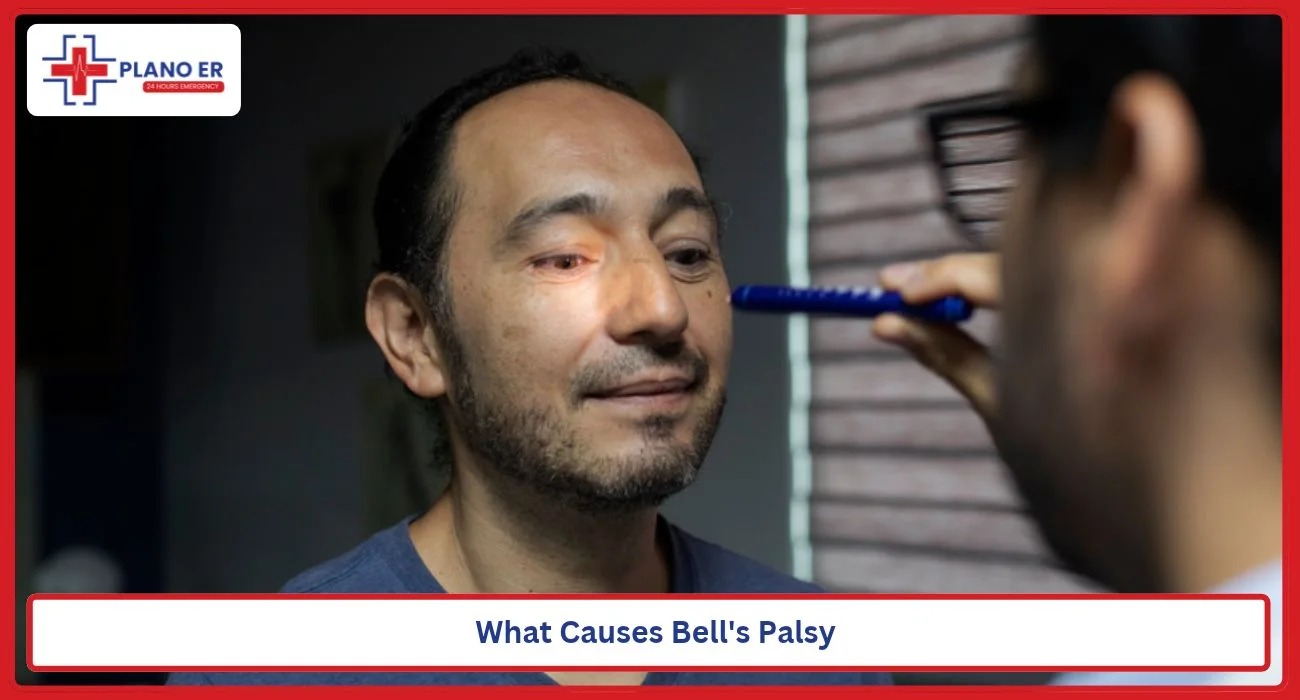
Bell’s palsy is caused by inflammation and swelling of the facial nerve, often triggered by a viral infection. The herpes simplex virus is the most common suspected trigger. Other viruses, stress, pregnancy, diabetes, and recent upper respiratory illness all raise the risk. The exact cause in any individual case is often not confirmed.
Common triggers and risk factors:
Viral infections. Herpes simplex (cold sore virus), Epstein-Barr, influenza, and other viruses can inflame the facial nerve.
Pregnancy. Risk is higher in the third trimester and the first week postpartum, likely due to fluid shifts and hormonal changes.
Diabetes and metabolic conditions. People with diabetes are more likely to develop Bell’s palsy and may have slower recovery.
Recent cold or flu. Many patients report a respiratory illness within 1 to 2 weeks before symptoms begin.
Neurological symptoms can show up in many forms, from dizziness to near-fainting to facial weakness. Our companion article on why do I feel like fainting covers related warning signs worth understanding.
Stress. Prolonged stress may weaken immune response and raise risk, though the direct mechanism is still being studied.
The Mirror Test and When Bell’s Palsy Symptoms Need the ER
Even when you suspect Bell’s palsy, facial weakness always warrants a same-day emergency evaluation. The mirror test below helps you track your symptoms and know what to describe to a physician. Any failed step, especially the arm-raise, means head to Plano ER immediately.
| THE MIRROR TEST: 5-STEP SELF-CHECK
Stand in front of a mirror and try each movement. Watch for one side lagging or failing. Step 1. Raise both eyebrows. Does one side stay flat? Can you still wrinkle your forehead evenly? Step 2. Close both eyes tightly. Does one eye fail to close completely? Step 3. Smile wide. Does one corner of your mouth stay flat or droop? Step 4. Puff out your cheeks. Does one cheek fail to hold air? Step 5. Raise both arms over your head. Does one arm drift down or feel weak? If YES to this step, call 911. This is a stroke sign, not Bell’s palsy. |
Head to Plano ER if you notice any of the following:
- Any failed step on the mirror test, especially arm weakness
- Sudden onset of symptoms within minutes (rather than hours to days)
- Facial weakness plus slurred speech, vision changes, or confusion
- Facial weakness plus severe headache unlike any before
- Facial weakness in a pregnant woman
- Facial weakness in a child or teen
- Fever, severe ear pain, or rash near the ear with facial weakness
- Both sides of the face affected
- Symptoms getting worse after day 3 or returning after improvement
At Plano ER, suspected stroke or complicated facial weakness gets rapid CT scan in the ER to rule out brain bleeds or other serious causes within minutes.
How Plano ER Evaluates Facial Weakness

Plano ER evaluates facial weakness with rapid physician assessment, targeted neurological exam, and imaging and labs as needed. The priority is ruling out stroke first. Once stroke is excluded, Bell’s palsy treatment can begin with instructions for eye protection, pain relief, and, in many cases, prescription support to shorten the illness.
Rapid neurological assessment. A board-certified emergency physician performs a focused neuro exam within minutes, including cranial nerves, motor strength, coordination, and speech.
Bloodwork. Our emergency lab testing rules out infection, blood sugar extremes, and inflammatory markers that may explain or complicate symptoms. Lyme disease testing is included when exposure is suspected.
Imaging. CT scan rules out brain bleeds. When vascular evaluation is needed, emergency ultrasound services can assess carotid blood flow on-site.
Treatment initiation. If Bell’s palsy is confirmed, early treatment within 72 hours improves outcomes. This typically includes oral steroids to reduce nerve inflammation and sometimes antiviral medication. Eye protection is critical if the eye cannot fully close.
Specialist referral or transfer. Patients with atypical features, incomplete recovery, or suspected serious causes are referred to a neurologist or ENT specialist. Severe or unusual cases needing hospital admission are transferred directly.
Frequently Asked Questions
Q: How long do Bell’s palsy symptoms last?
Bell’s palsy symptoms peak within 72 hours and most people begin recovery within 2 to 3 weeks. About 70 percent fully recover within 3 to 6 months. A small percentage have lasting mild weakness.
Q: Can Bell’s palsy affect both sides of the face?
Bell’s palsy affecting both sides at once is rare and usually points to a different cause like Lyme disease, Guillain-Barre syndrome, or sarcoidosis. Bilateral facial weakness always needs emergency evaluation.
Q: Is Bell’s palsy a mini-stroke?
No. Bell’s palsy affects the facial nerve outside the brain. A mini-stroke (TIA) affects brain tissue and causes different symptoms, typically with forehead sparing. Only a medical exam can confirm which is happening.
Q: Can stress cause Bell’s palsy symptoms?
Stress alone does not directly cause Bell’s palsy, but prolonged stress can weaken immune response and reactivate viruses linked to the condition. Many patients report significant stress in the weeks before onset.
Q: Will my Bell’s palsy come back?
Recurrence happens in about 7 to 15 percent of patients. If it returns on the same side or affects both sides, additional workup is needed to rule out other neurological causes. Discuss any recurrence with a specialist.
| Facial Droop? Do Not Assume It’s Just Bell’s Palsy
The only way to know for certain whether facial weakness is Bell’s palsy or a stroke is a medical evaluation. Plano ER provides rapid neurological assessment, imaging, and bloodwork 24/7 to answer that question safely. For more on the full range of emergency services we provide, visit the Plano ER. For directions, insurance questions, or non-emergency inquiries, reach us through our contact .. Address: 7940 Custer Rd, Plano, TX 75025 Phone: +1 972-527-3000 Hours: Open 24/7 |