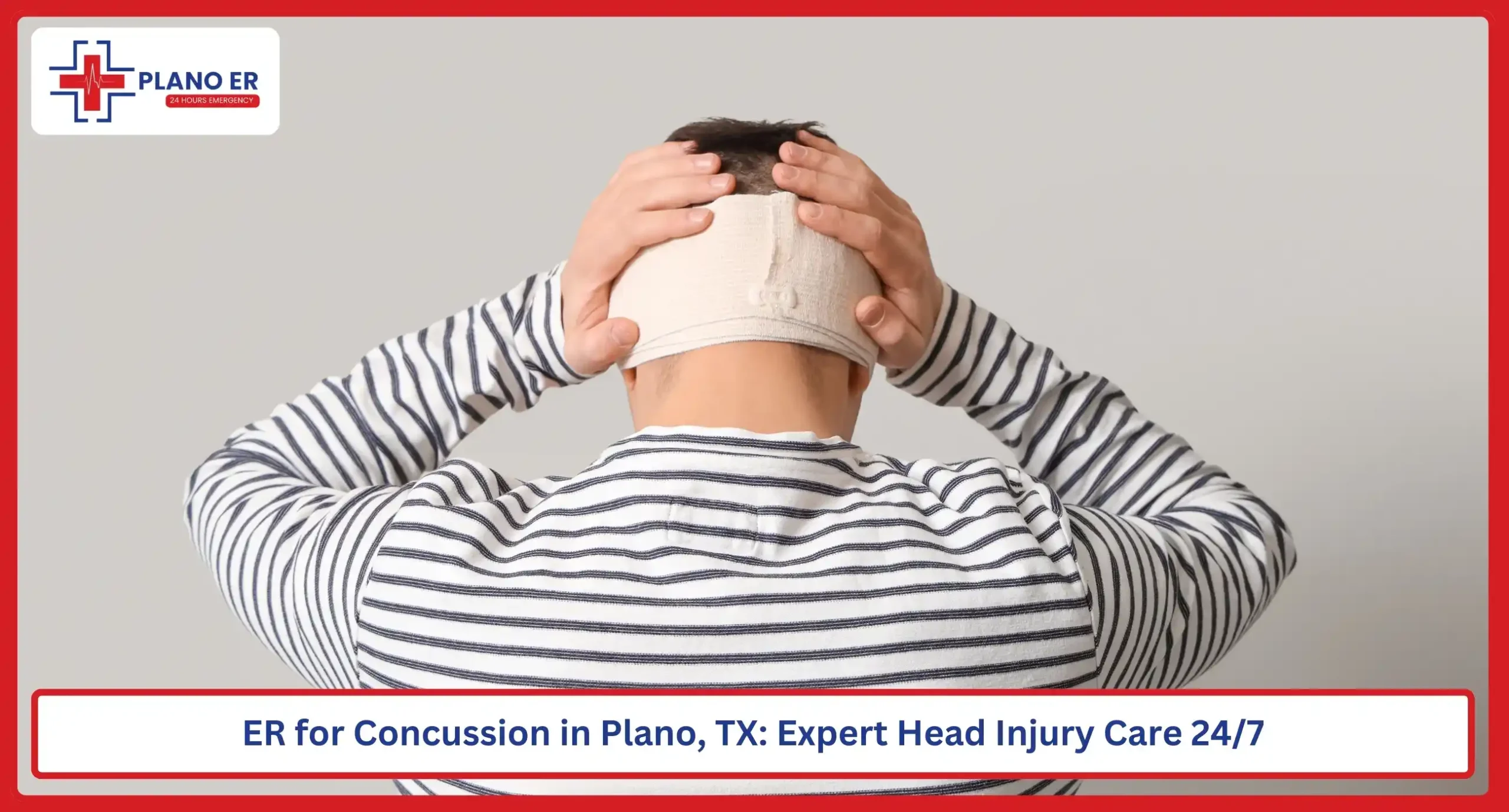
A head injury deserves proper evaluation, even when it seems minor at first. Concussions are a form of traumatic brain injury, and symptoms can be subtle, delayed, or mask something far more serious beneath the surface. Plano ER is open 24/7 with board-certified emergency physicians, on-site CT scanning, and no wait times for patients of all ages.
What Is a Concussion?
A concussion is a mild traumatic brain injury caused by a blow, bump, or jolt to the head, or sometimes a forceful hit to the body that causes the brain to move rapidly inside the skull. Despite being labeled “mild,” concussions affect brain function and require proper evaluation.
How Concussions Happen
- Sports include football, soccer, basketball, hockey, and cheerleading
- Falls, especially in young children and older adults
- Car accidents, including whiplash without direct head contact
- Bicycle, scooter, or skateboard accidents
- Workplace injuries
Why Every Concussion Deserves ER Evaluation
Some head injuries that appear to be concussions actually involve bleeding inside the skull or structural damage that can be life-threatening. Symptoms between a concussion and a more serious brain injury can overlap significantly. The only reliable way to distinguish between them is a physician examination and CT imaging when indicated. Learn more about our head injury and TBI treatment.
Concussion Symptoms to Watch For
Not all concussion symptoms appear immediately. Some develop hours or even days after the injury.
Immediate Symptoms
- Headache or pressure in the head
- Confusion or feeling foggy
- Dizziness or balance problems
- Nausea or vomiting
- Brief loss of consciousness or feeling stunned
- Memory problems around the time of the event
- Slurred speech or slow reactions
Delayed Symptoms (Hours to Days Later)
- Persistent or worsening headache
- Difficulty concentrating or remembering
- Sensitivity to light or noise
- Sleep disturbances
- Mood changes including irritability or anxiety
- Fatigue disproportionate to activity level
- Trouble with vision or hearing
Symptoms in Children
Young children may not be able to describe what they feel. Watch for increased crying, changes in eating or sleep patterns, loss of interest in activities, unsteady walking, vomiting, or appearing unusually tired or listless. Any suspected concussion in a young child warrants immediate evaluation.
When to Come to Plano ER for a Concussion
Walk In When Any of These Apply
- Any loss of consciousness, even briefly
- Headache that is worsening over time
- Repeated vomiting
- Difficulty waking or staying awake
- Confusion that does not clear within minutes
- Seizure following the injury
- Significant impact such as a car accident, fall from height, or sports collision
- Head injury in an infant, young child, or adult over 65
- Head injury in anyone currently taking blood thinners
How Plano ER Evaluates and Treats Concussions

Immediate Physician Assessment
You are seen by a board-certified emergency physician within minutes of arrival. No waiting room. The physician reviews how the injury happened, your current symptoms, medical history, and any history of prior concussions.
Neurological Examination
A detailed neurological exam is performed covering mental status, orientation and memory, cranial nerve function, motor strength, balance and coordination, reflexes, and pupil response. This exam guides every decision that follows.
On-Site CT Scanning
When imaging is indicated, our on-site CT scan produces results within minutes. CT imaging identifies brain bleeds, skull fractures, swelling, and other serious injuries that require immediate intervention. No transfer to another facility is needed.
Observation and Monitoring
For significant head injuries, our team monitors you for several hours to ensure symptoms are not progressing. This observation period is particularly important for patients over 65, young children, and anyone on blood thinners.
Discharge With a Detailed Care Plan
Before you leave, you receive comprehensive written discharge instructions covering symptoms to watch for during recovery, activity restrictions, when to return to the ER, and follow-up recommendations. Athletes receive specific return-to-play guidance.
Special Populations and Concussion Risk
Children and Teen Athletes
Sports concussions are common in young athletes across football, soccer, hockey, cheerleading, and basketball. Children’s brains are still developing, and recovery typically takes longer than in adults. Any suspected sports concussion in a child or teenager should be evaluated before returning to any activity. Our pediatric emergency care team evaluates children of all ages after head injuries.
Return-to-Play Protocol
Returning to sport too soon after a concussion risks second-impact syndrome, a rare but potentially catastrophic condition where a second concussion before full recovery causes rapid, dangerous brain swelling. Return to play follows a graduated, symptom-monitored process and requires full clinical clearance at each stage. Plano ER provides the initial evaluation and documentation needed to begin that process.
Older Adults
Adults over 65 face a higher risk of brain bleeding after head injuries, even from seemingly minor falls. Age-related changes in blood vessels and brain structure increase vulnerability, and many older adults take blood thinners that amplify that risk. Any head injury in this population should be evaluated at the ER with imaging.
Patients on Blood Thinners
If you take any anticoagulant therapy, any head injury increases your risk of intracranial bleeding, even when symptoms seem mild. These patients should always be evaluated at the ER with CT imaging following a head impact.
Concussion Recovery: What to Expect

Initial Rest Period
The first 24 to 48 hours call for relative rest, both physical and cognitive. This means limiting screen time, reducing intensive mental tasks, avoiding physical exertion, sleeping as needed, staying well hydrated, and avoiding alcohol.
Gradual Return to Activity
After the initial rest period, normal activities are reintroduced gradually. If symptoms return or worsen at any stage, step back and rest before progressing again. Pushing through symptoms delays recovery and increases risk.
Recovery Timeline
Most adults recover within 7 to 14 days. Children and teenagers often take longer. A portion of patients develop post-concussion syndrome with symptoms lasting weeks to months, particularly those with a history of multiple prior concussions.
Follow-Up Care
Schedule a follow-up with your primary care physician within 1 to 2 weeks of your ER visit. For prolonged symptoms, possible referral to a neurologist or sports medicine specialist may be recommended.
On-Site Diagnostics at Plano ER
Beyond CT imaging, Plano ER offers full on-site emergency lab testing to evaluate overall status, check for bleeding risk factors, and assess any injuries sustained alongside the head impact. For patients who also sustained injuries to the neck or spine, our team evaluates those concerns in the same visit without requiring a separate facility. Learn more about our emergency services in Plano.
Visit Plano ER
Address: 7940 Custer Rd, Plano, TX 75025
Phone: +1 972-527-3000
Email: info@planoertx.com
Hours: Open 24/7, every day of the year
We provide concussion and head injury evaluation for patients across Plano, Frisco, Allen, McKinney, Richardson, Carrollton, and surrounding North Texas communities.
If the injured person cannot safely ride in a car, call 911. Do not have a concussion patient drive themselves.
Frequently Asked Questions
When should I go to the ER for a concussion?
Go to the ER after any significant head impact, especially with loss of consciousness, worsening headache, repeated vomiting, confusion, or seizures. Children, older adults, and anyone on blood thinners should always be evaluated after a head injury.
Does Plano ER perform CT scans for head injuries?
Yes. CT scanning is on-site with results in minutes, allowing our physicians to quickly rule out brain bleeding, skull fracture, or other serious structural injuries.
How long do concussion symptoms last?
Most symptoms improve within 7 to 14 days. Some patients experience symptoms for weeks or longer, particularly with a history of multiple prior concussions or if rest guidelines are not followed.
Should my child be evaluated at the ER after a sports concussion?
Yes. Any suspected concussion in a child or teenager should be evaluated before returning to any activity. Plano ER provides pediatric concussion evaluation, CT imaging when indicated, and step-by-step return-to-play guidance.