Respiratory Syncytial Virus (RSV) is one of the most common respiratory infections affecting young children. It becomes most active during the fall and winter months.
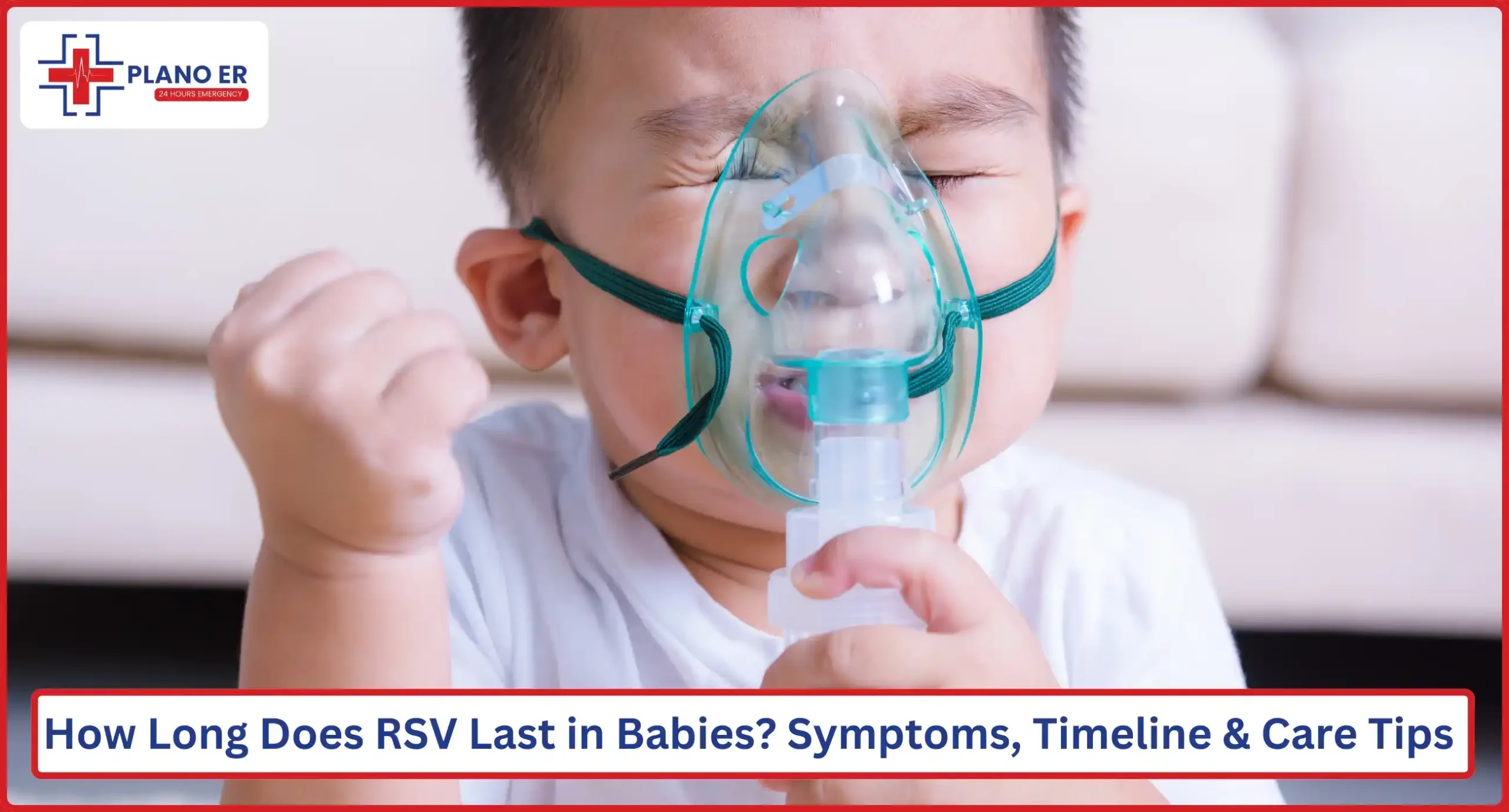
For many parents, one of the first and most urgent questions is how long does RSV last in babies and when symptoms become serious enough to require emergency care. While RSV often starts like a mild cold, it can quickly progress into breathing difficulties, dehydration, or feeding problems in infants.
This article explains how long RSV lasts in babies, what causes RSV in infants, and when parents should take a baby with RSV to the hospital. Understanding the illness timeline and warning signs can help families in Plano know when symptoms worsen, and immediate evaluation at the Plano ER becomes necessary.
What Is RSV and What Causes RSV in Babies?
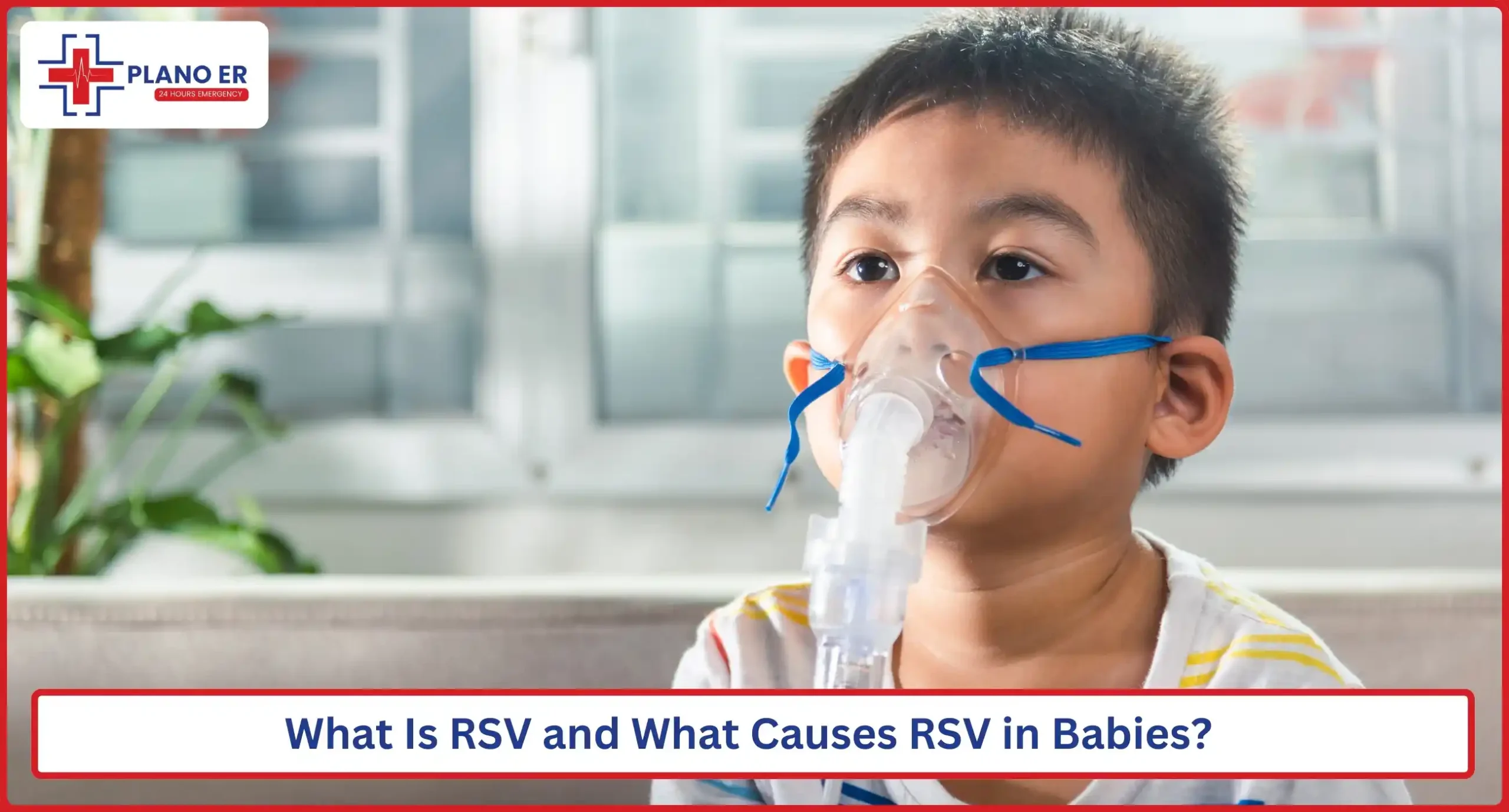
RSV is a highly contagious virus that infects the lungs and breathing passages. Babies are especially vulnerable because their airways are smaller and their immune systems are still developing.
RSV spreads through respiratory droplets, direct contact with infected surfaces, or close contact with someone who has the virus. Babies often catch RSV from siblings, caregivers, or daycare environments.
Common causes of RSV exposure include:
- Close contact with infected adults or children
- Touching contaminated surfaces and then the face
- Crowded indoor environments during RSV season
Symptoms of RSV in Babies
RSV symptoms often appear gradually and may worsen over several days. Early recognition is critical, especially in infants under 12 months.
Typical symptoms of RSV in babies include:
- Runny nose and nasal congestion
- Coughing or wheezing
- Rapid or labored breathing
- Poor feeding or reduced appetite
- Fever (not always present)
If breathing symptoms worsen, visit Plano ER for digital X-rays that help doctors evaluate lung involvement and rule out complications such as bronchiolitis or pneumonia.
How Long Does RSV Last in Babies?
In most cases, RSV illness usually lasts anywhere from 7 to 21 days, depending on the baby’s age, immune response, and severity of infection.
RSV Timeline in Babies
| Stage of Illness | Duration | What Parents May Notice |
| Early symptoms | Days 1–3 | Runny nose, mild cough |
| Peak severity | Days 4–7 | Wheezing, fast breathing |
| Gradual recovery | 1 to 2 weeks | Improving cough, better feeding |
| Lingering cough | Up to 3 weeks | Mild symptoms may persist |
Most babies begin to feel better about a week after symptoms peak, but cough and congestion can linger longer.
Infants and young children with RSV benefit from specialized pediatric care, where their breathing, hydration, and oxygen levels can be closely monitored.
How Long Does RSV Last in Adults vs. Babies?

While RSV affects all age groups, the duration and severity differ significantly. Understanding how long RSV lasts in adults helps families reduce exposure risks to infants at home.
| Group | Duration of RSV | Symptom Severity |
| Babies & infants | 7–21 days | Moderate to severe |
| Children | 1–2 weeks | Mild to moderate |
| Adults | About a week | Cold-like symptoms |
If you or your baby’s RSV symptoms worsen suddenly, our emergency services at Plano ER are available 24/7 to provide immediate evaluation and treatment.
How to Help Prevent RSV in Babies?
Parents can help lower the risk of RSV by practicing frequent handwashing before touching their baby, avoiding close contact with individuals who have cold-like symptoms, and regularly disinfecting commonly touched surfaces such as toys, doorknobs, and feeding items. Limiting a baby’s exposure to crowded indoor environments and ensuring visitors follow hygiene precautions can also make a meaningful difference.
For high-risk infants, early symptom monitoring is essential, as timely medical evaluation at Plano ER can help prevent mild RSV infections from progressing into serious respiratory complications.
When to Take a Baby With RSV to the Hospital?
Not all RSV cases require emergency care, but some symptoms should never be ignored. Parents should closely monitor breathing and hydration.
You should bring your baby to Plano ER immediately if you notice:
- Fast, shallow, or labored breathing
- Blue or gray color around lips or fingertips
- Refusal to eat or drink
- Signs of dehydration (fewer wet diapers)
- High fever or extreme lethargy
Emergency physicians may perform rapid lab tests to confirm RSV and assess oxygen levels, hydration status, and overall respiratory function.
How RSV Is Diagnosed and Treated at Plano ER?
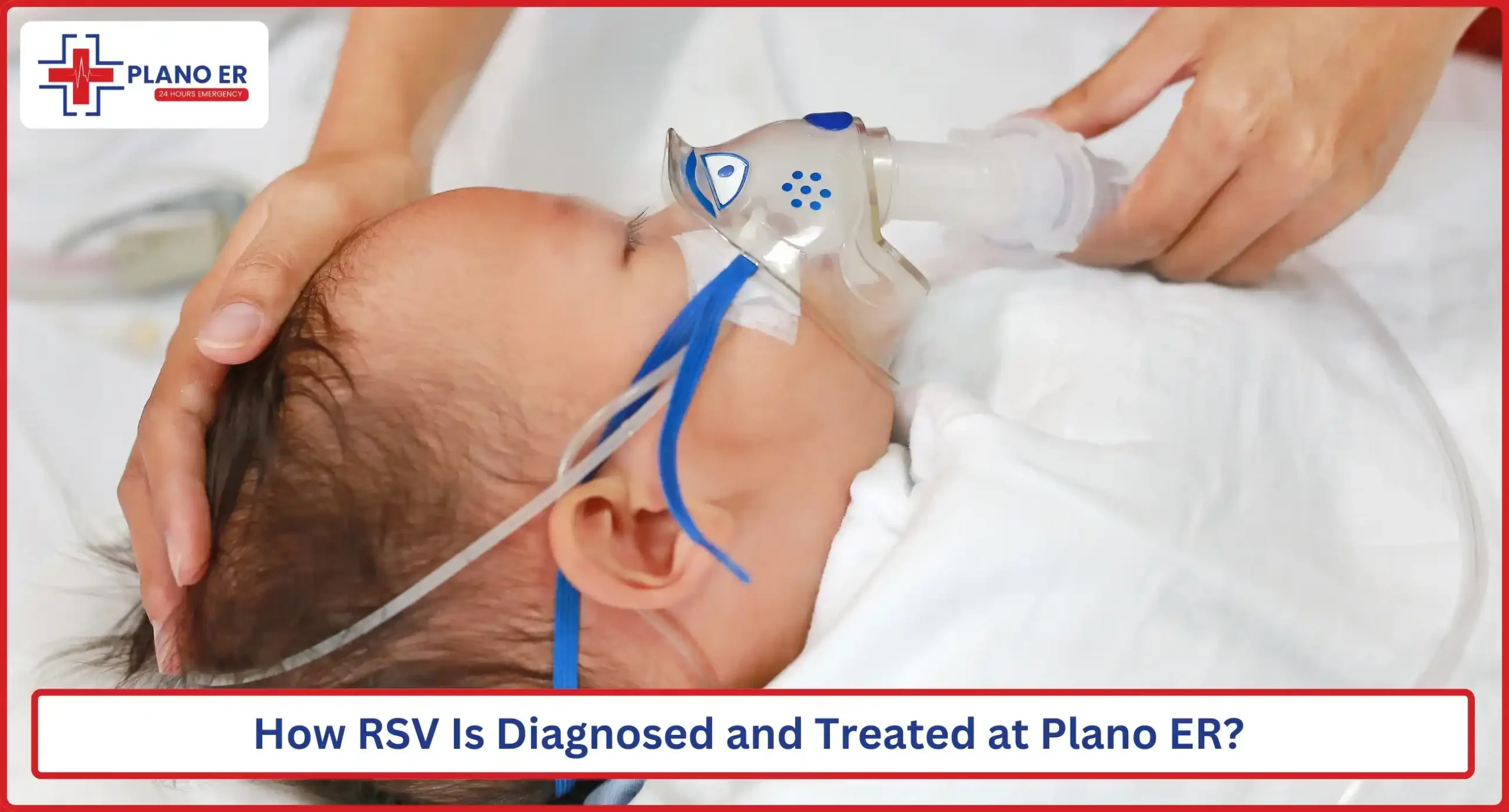
There is no specific cure for RSV, but early medical care focuses on symptom management and preventing complications.
If a baby with RSV shows signs of worsening illness, Plano ER may use diagnostic imaging such as CT scans to evaluate the lungs and guide immediate treatment.
At Plano ER, care may include:
- Oxygen support for breathing difficulty
- IV fluids to treat dehydration
- Monitoring oxygen saturation and heart rate
Prompt evaluation ensures infants receive supportive care before symptoms become life-threatening.
Final Thoughts on RSV in Babies
RSV is a common respiratory infection in babies that can last anywhere from 7 to 21 days, with symptoms ranging from mild cold-like signs to more severe breathing difficulties. Early recognition of symptoms such as coughing, wheezing, and poor feeding is crucial for timely care.
The virus is highly contagious, especially during the first few days of illness. Preventive measures at home, such as handwashing, disinfecting surfaces, and limiting exposure to sick individuals, can help reduce the risk of infection.
Understanding the typical illness timeline, knowing when to seek medical attention, and implementing prevention strategies are key steps for parents to manage RSV effectively and support their baby’s recovery.
Need Immediate Help for Your Baby?
Contact Us Now to schedule an immediate consultation or visit our 24/7 emergency department for urgent support.
Frequently Asked Questions (FAQs)
When should I take a baby with RSV to the hospital?
Seek help if your baby has breathing difficulty, bluish lips, dehydration, high fever, or extreme lethargy.
How long is RSV contagious?
Most contagious during the first 5–7 days, though infants can spread it for up to 2 weeks.
What causes RSV in babies?
RSV is a virus that spreads through droplets, contact with surfaces, or close contact with infected people.
How long does RSV last in adults?
In adults, RSV lasts about a week, usually with mild cold-like symptoms.
Can RSV cause serious complications in babies?
Yes, it can lead to bronchiolitis, pneumonia, or dehydration, especially in infants under 12 months.