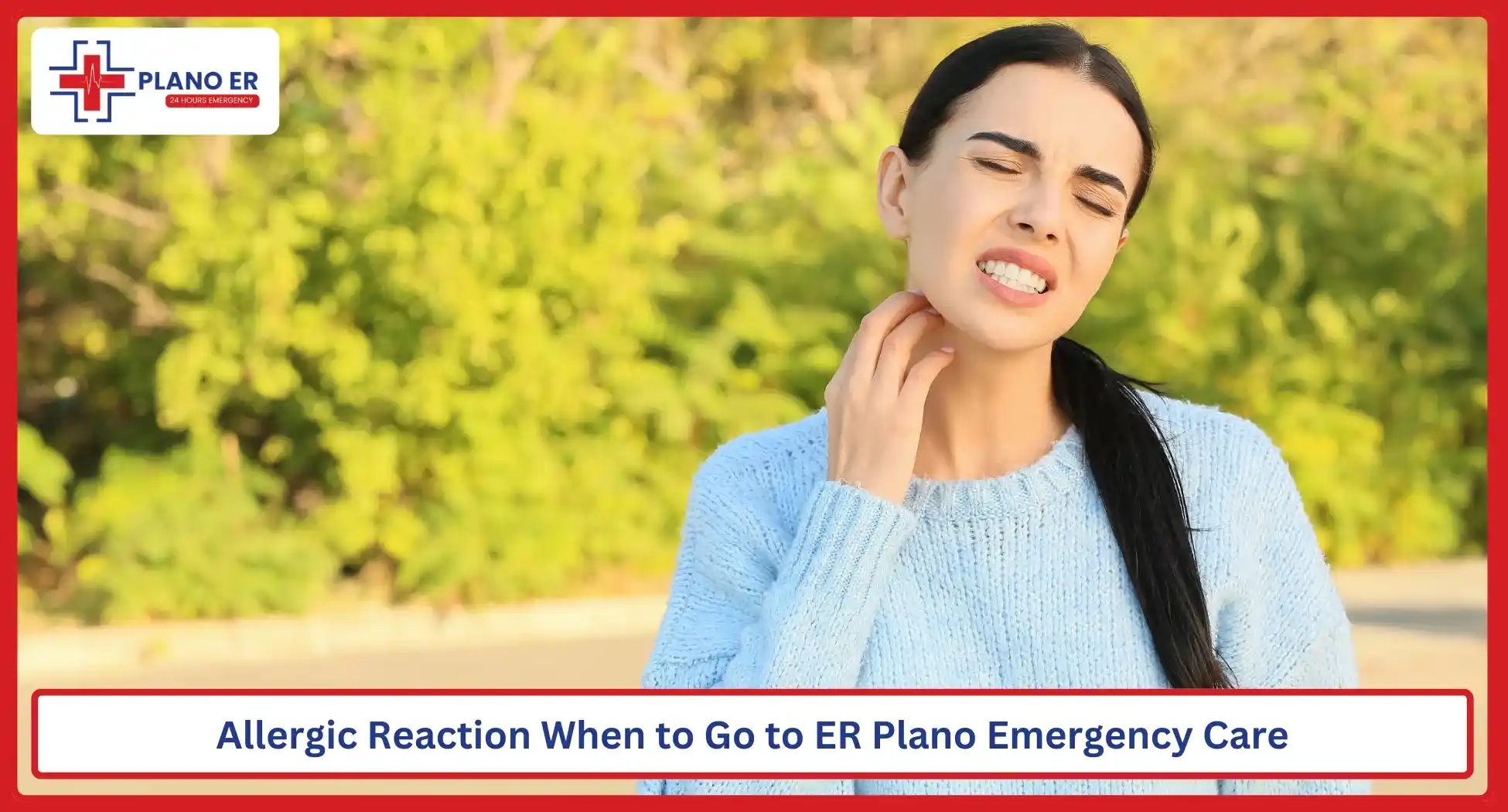
Allergic reactions exist on a spectrum, from mild localized itching to life-threatening anaphylaxis that can turn fatal within minutes. Knowing which tier you are dealing with can save a life. This guide walks you through the severity levels, the warning signs of anaphylaxis, and exactly when to walk into Plano ER, where severe allergic reactions are treated 24/7 with no wait times.
If someone has trouble breathing, throat or facial swelling, dizziness, confusion, or loss of consciousness right now, call 911 immediately. Do not drive.
Quick Triage: Go Now, Walk In, or Monitor at Home
Call 911 For:
- Trouble breathing or a feeling of the throat tightening
- Swelling of the face, lips, tongue, or throat
- Widespread hives combined with any other symptoms
- Dizziness, faintness, or confusion
- Loss of consciousness
Walk In to Plano ER For:
- Widespread hives without breathing issues
- Swelling that is spreading or worsening
- Persistent symptoms not improving with home care
- Any reaction in someone with a known severe allergy
- Reactions after a new food or unknown exposure
Monitor at Home For:
- Mild, localized itching or a small patch of hives
- Mild seasonal symptoms
- Localized swelling limited to an insect sting site
What Not to Do
Do not drive yourself if symptoms are severe. Do not lie down if breathing is difficult; sit upright. Do not wait to see if anaphylaxis signs improve on their own. They escalate faster than they resolve.
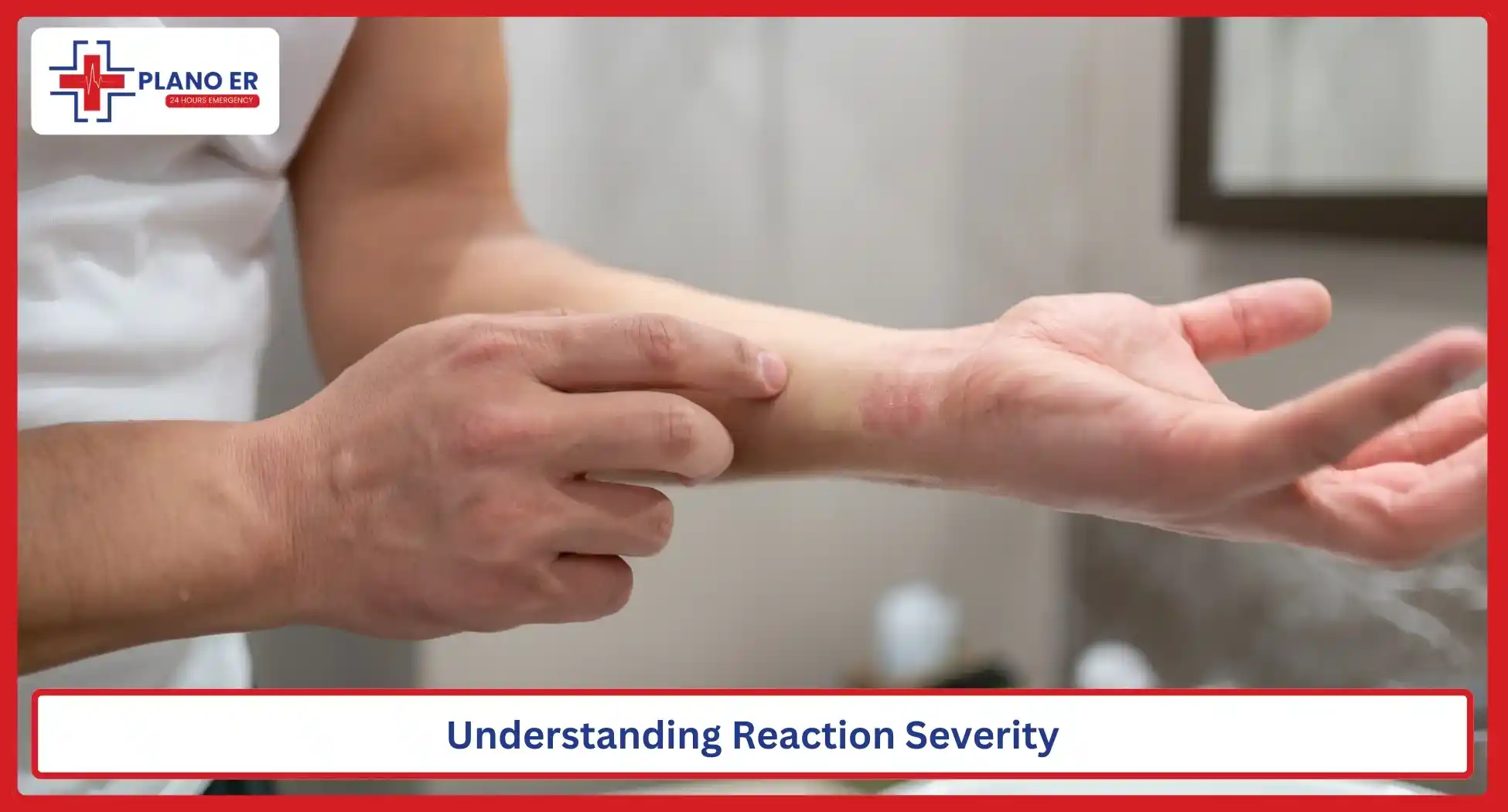
Understanding Reaction Severity
Mild Reactions
Localized symptoms affecting one area that are not progressing and do not involve breathing or circulation: a small area of itching or hives, mild congestion or sneezing, itchy eyes, mild stomach upset, or swelling limited to a sting site.
Moderate Reactions
More widespread but not yet life-threatening: hives spreading across the body, moderate swelling not affecting breathing, persistent stomach symptoms after exposure, symptoms not improving with home care, or any reaction in someone with a history of severe allergy. These warrant medical evaluation. Coming in early prevents escalation.
Severe Reactions (Anaphylaxis)
Life-threatening, multi-system reactions requiring immediate emergency care: difficulty breathing or swallowing, swelling of the face, lips, tongue, or throat, a drop in blood pressure causing dizziness or fainting, a rapid or weak pulse, severe digestive symptoms combined with other body systems, or confusion and loss of consciousness.
Biphasic Reactions
A biphasic reaction occurs when allergic symptoms return hours after the initial reaction seemed resolved, typically 4 to 12 hours later and without any new exposure. Roughly 1 in 5 anaphylactic reactions has a biphasic component. This is why ER monitoring after a severe reaction is critical and cannot be safely replicated at home.
Anaphylaxis Warning Signs
Anaphylaxis can develop within minutes, sometimes seconds, of exposure. Get emergency help immediately for any of the following:
Breathing Symptoms
Wheezing, shortness of breath, chest or throat tightness, a hoarse voice, trouble speaking, or persistent coughing.
Swelling
Swelling of the face, lips, tongue, or eyelids. Throat swelling is the most dangerous because it can block the airway entirely.
Skin and Circulation Symptoms
Widespread hives combined with other symptoms, flushed or pale skin, severe full-body itching, dizziness or lightheadedness from dropping blood pressure, a rapid or weak pulse, or fainting.
Other Critical Signs
Severe vomiting, cramps, or diarrhea combined with other body system involvement, confusion, pale, cool, clammy skin, or a sudden sense of impending doom, which is a recognized clinical symptom of anaphylaxis.
Mild Reactions You Can Manage at Home
Small localized reactions can typically be managed at home with careful observation. Apply cool compresses to itchy or swollen areas, avoid the trigger if you know what caused it, and do not stay alone during any allergic reaction. Symptoms can escalate over minutes to hours.
When to Escalate to the ER
- Symptoms worsen or spread to new areas
- Any breathing changes develop
- Swelling moves toward the face or throat
- Symptoms are not improving within 30 minutes
- You feel dizzy, faint, or unwell beyond the skin reaction
- Any anaphylaxis warning sign appears
Common Triggers of Severe Reactions
Foods
The most common food triggers are peanuts, tree nuts, shellfish, fish, milk, eggs, soy, wheat, and sesame.
Insect Stings
Bees, wasps, hornets, yellow jackets, and fire ants can all cause severe reactions. Texas has significant fire ant populations, making sting reactions a year-round regional concern.
Latex and Other Triggers
Latex reactions are more common in healthcare workers and people with multiple prior surgeries. In rare cases, exercise can trigger anaphylaxis, sometimes only in combination with certain foods eaten beforehand. Some people experience anaphylaxis with no identifiable trigger at all, which requires specialist follow-up.
How Plano ER Treats Allergic Reactions
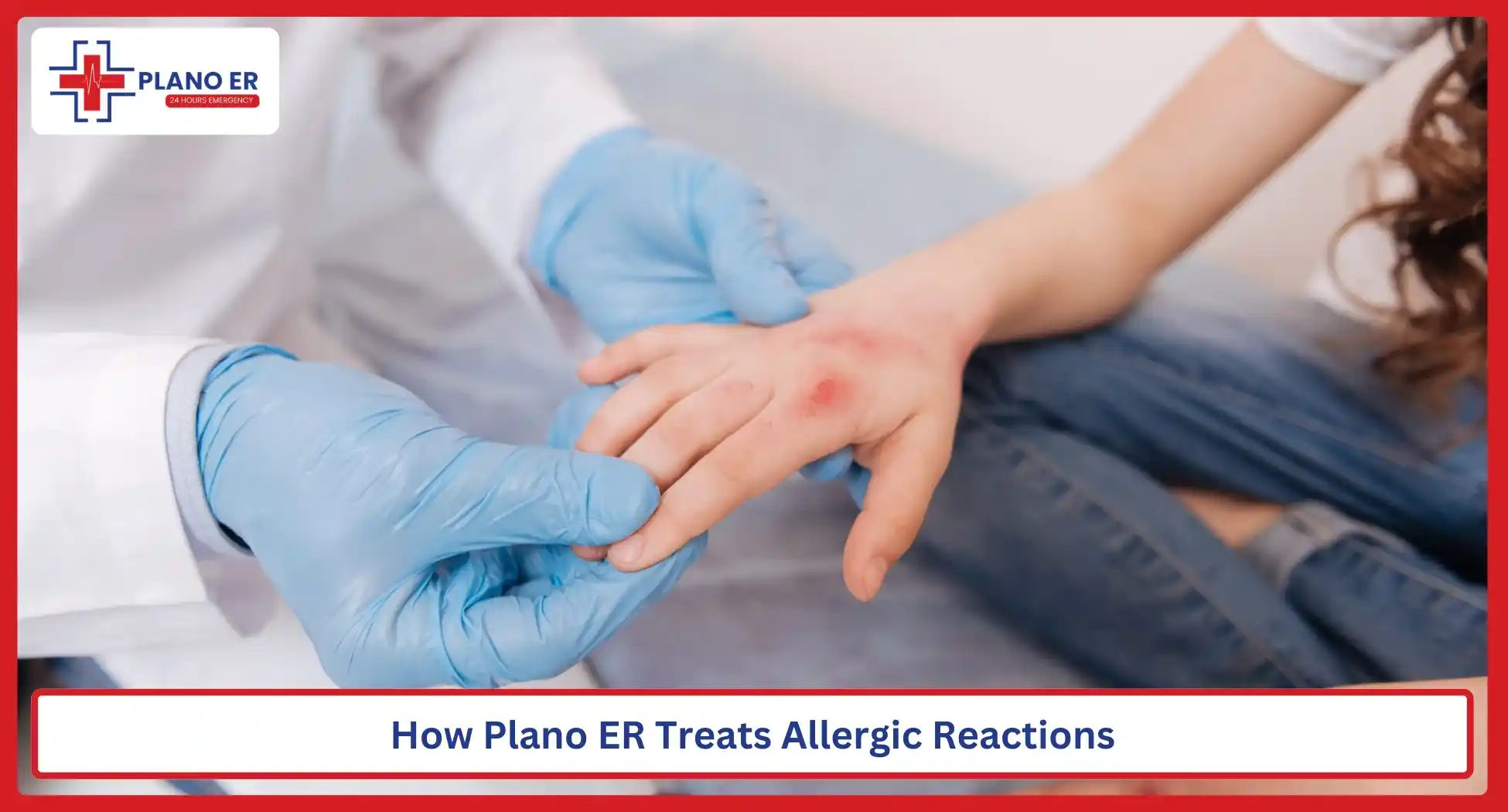
Immediate Triage
You are greeted at the door and seen by a board-certified emergency physician immediately, with airway, breathing, and circulation assessed first. There is no waiting room delay at our no-wait ER.
First-Line Emergency Treatment
When anaphylaxis is identified, first-line emergency treatment is administered immediately and repeated if needed. Time is the single most important factor in reversing a severe reaction, and our physicians act without delay.
IV Fluids and Supportive Care
IV fluids support blood pressure and circulation during a systemic reaction, alongside oxygen and other supportive care tailored to your presentation.
Monitoring for Biphasic Reactions
After the initial reaction is controlled, you are monitored closely for several hours with continuous vital sign tracking. This observation period confirms the reaction is fully resolved before you go home.
Discharge and Follow-Up
Once stable, you leave with a written action plan, guidance on warning signs for the next 24 to 48 hours, and a strong recommendation to follow up with a board-certified allergist for trigger testing and long-term prevention.
After the ER: Preventing the Next Reaction
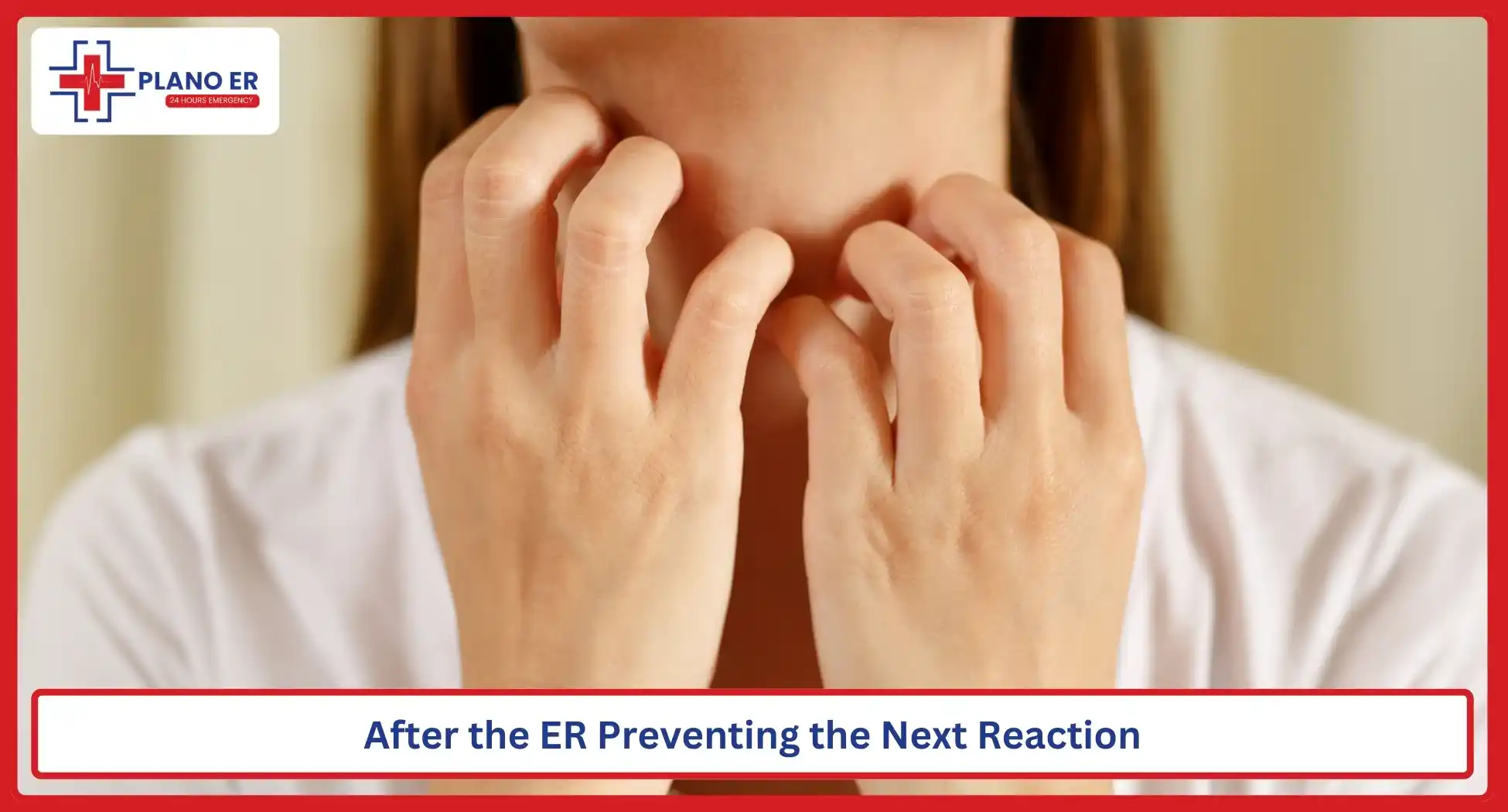
- Follow up with an allergist within 1 to 2 weeks. Testing identifies your specific triggers, and the allergist builds a personalized action plan for home, school, work, and travel.
- Identify and avoid your triggers. Knowing exactly what caused the reaction means reading labels carefully, asking questions in restaurants, and informing every healthcare provider you see.
- Wear medical alert identification. A bracelet or necklace speaks for you if you cannot communicate during a reaction. First responders check for these immediately.
- Share your discharge records. Your Plano ER documentation gives your allergist the full picture of what happened and how you responded to treatment.
Special Considerations
Children
Children can develop food allergies rapidly and severely. Our pediatric emergency care team treats children of all ages, from infants through teens, in private, child-friendly rooms.
People With Asthma
Asthma significantly raises the risk of severe allergic reactions. If you have asthma plus food or environmental allergies, any allergic symptoms deserve prompt evaluation.
People With Prior Anaphylaxis
A history of anaphylaxis means higher risk of another severe reaction. Act earlier, not later, on any allergic symptoms.
Pregnant Women and Older Adults
Severe reactions during pregnancy require immediate care to protect both mother and baby. Older adults may experience more severe or atypical reactions, and existing heart or lung conditions make reactions more dangerous. Our full emergency services support patients across every age group and risk profile.
Frequently Asked Questions
When should I go to the ER for an allergic reaction?
Immediately for any anaphylaxis signs: trouble breathing, facial or throat swelling, widespread hives with other symptoms, dizziness, rapid pulse, or confusion. Walk in for moderate reactions such as spreading hives without breathing issues or symptoms that are not improving.
What is anaphylaxis?
Anaphylaxis is a severe, life-threatening allergic reaction affecting multiple body systems within minutes of exposure. Without immediate emergency treatment, it can be fatal.
Can a mild allergic reaction become severe?
Yes. Reactions can escalate rapidly, progressing from mild symptoms to anaphylaxis within minutes. Monitor every allergic reaction closely and seek emergency care the moment warning signs develop.
What is a biphasic allergic reaction?
A biphasic reaction is when symptoms return hours after initial treatment, typically 4 to 12 hours later, without any new exposure. This is why ER observation after a severe reaction is essential even when you feel better.
Does Plano ER treat allergic reactions in children?
Yes. We treat patients of all ages, including infants and children, for allergic reactions of any severity, with pediatric-experienced physicians and immediate evaluation on arrival.