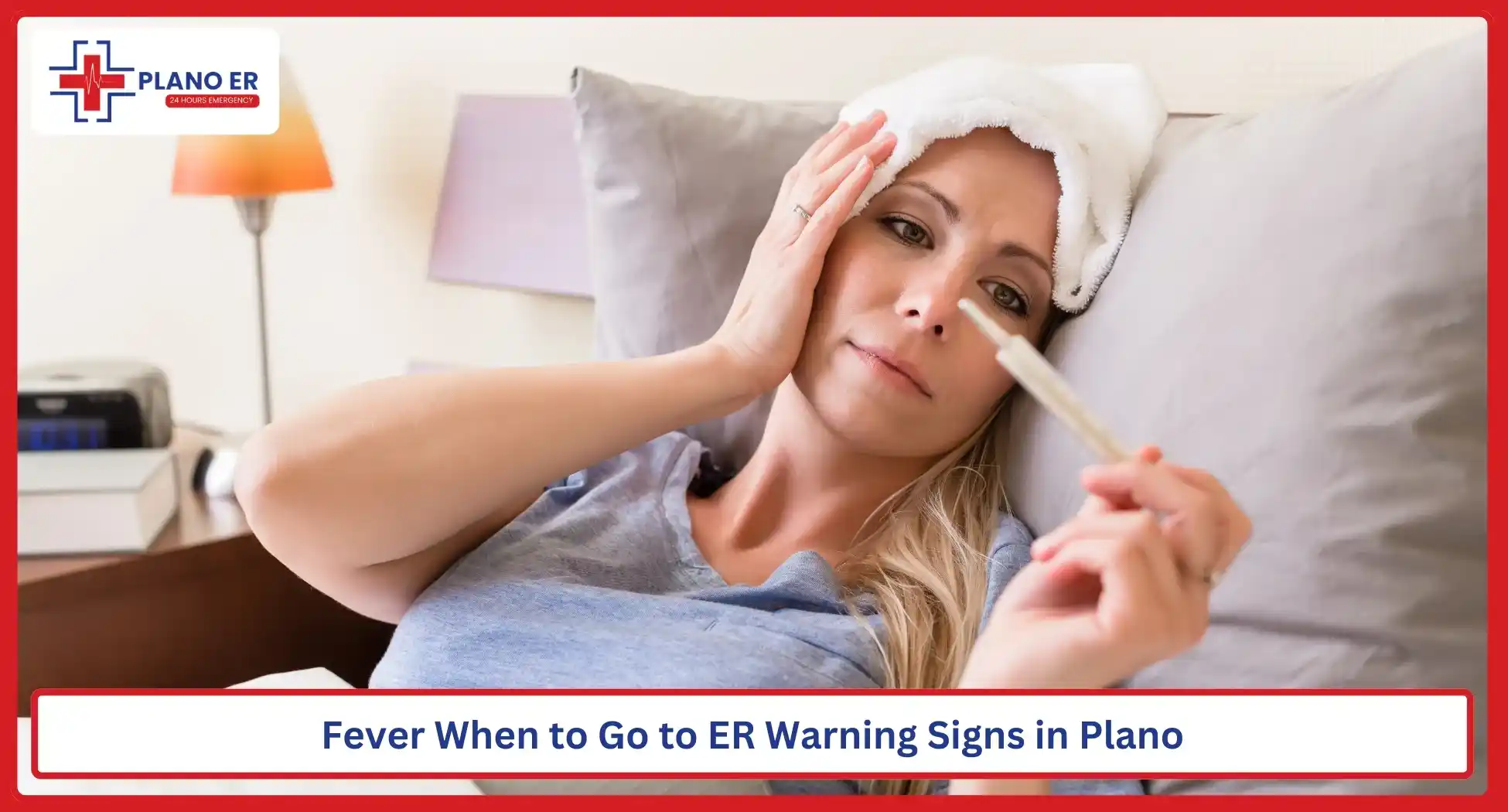
Fever is one of the most common reasons people seek emergency care, and the answer to “is this serious enough?” depends on age, accompanying symptoms, and how the fever is behaving over time. This guide gives you clear, age-based criteria so you can decide confidently. Plano ER provides 24/7 walk-in fever evaluation for all ages with no wait times.
Quick Answer: Always Go to the ER for Fever If
- An infant under 3 months has a fever of 100.4°F (38°C) or higher
- An adult or child has a fever above 104°F (40°C)
- Fever comes with a stiff neck or severe headache
- Fever comes with difficulty breathing or chest pain
- Fever comes with confusion, extreme drowsiness, or seizures
- Fever comes with a rash that does not fade when pressed
- Fever comes with severe abdominal pain or persistent vomiting
- The person has a compromised immune system
- Fever has lasted more than 3 days in a child or 5 days in an adult
What Counts as a Fever?
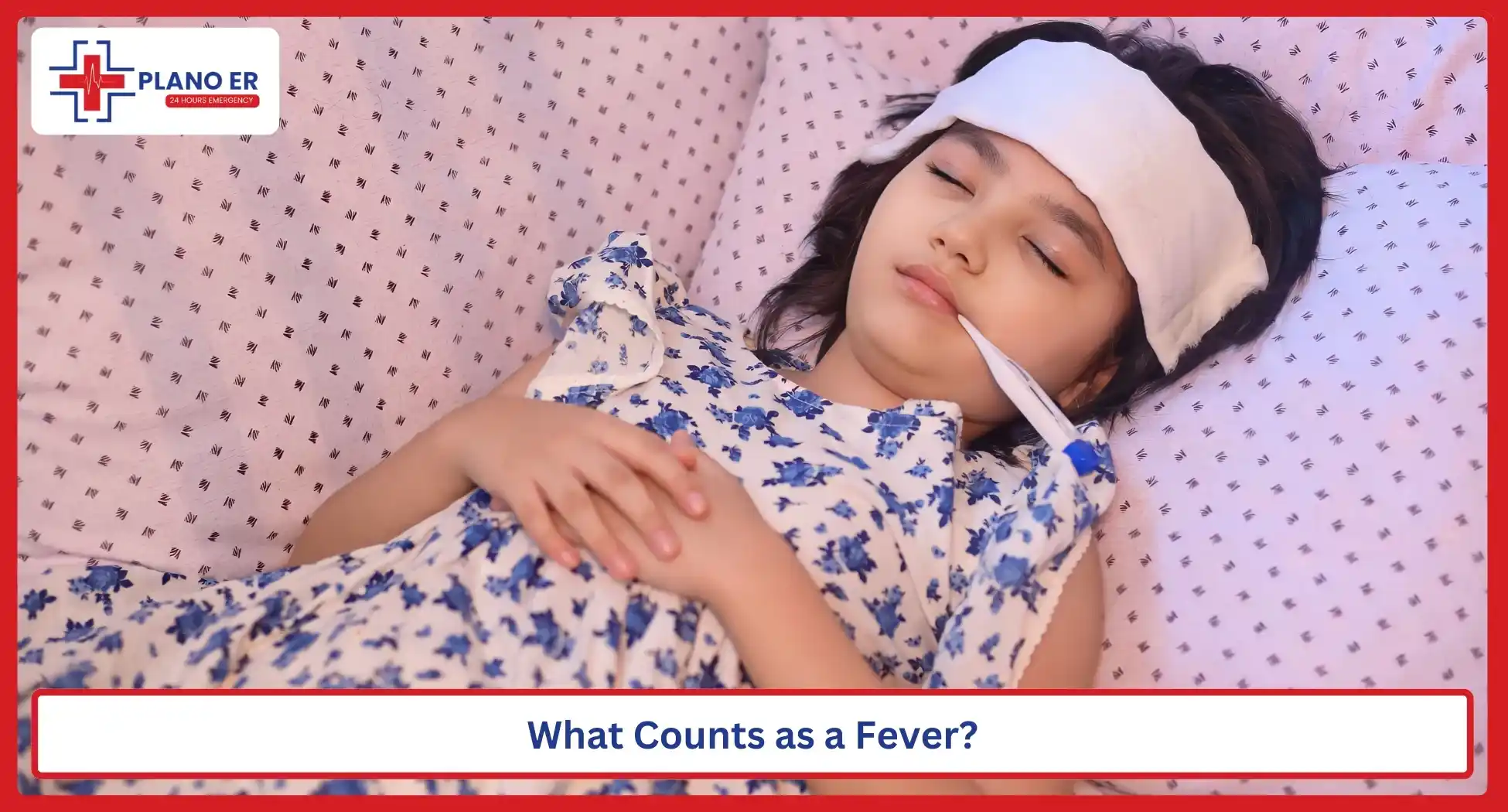
Normal body temperature ranges from about 97°F to 99°F. A fever is a temporary rise above normal, usually triggered by the immune system fighting infection.
Temperature Thresholds
- Low-grade fever: 99.1°F to 100.3°F
- Fever: 100.4°F (38°C) and above
- High fever: 103°F (39.4°C) and above
- Dangerous fever: 104°F (40°C) and above, requiring emergency care
Measurement Method Matters
Rectal readings are the most accurate, especially for infants. Oral readings are reliable for adults and older children. Ear and forehead readings are convenient but less precise, and underarm readings typically run about 1°F lower than oral.
Behavior Matters More Than the Number
A child with a 102°F fever who is playing and drinking is often less concerning than a child with a 100.5°F fever who is lethargic and refusing fluids. Always weigh symptoms and behavior alongside the reading.
Fever Warning Signs by Age Group
Infants Under 3 Months
Any rectal temperature of 100.4°F or higher in this age group is a medical emergency. Young infants have immature immune systems and can deteriorate quickly. Even if the baby looks fine, come in immediately. Do not attempt to bring the fever down at home first.
Babies 3 to 6 Months
Come to the ER for a fever above 102°F, any fever with lethargy, refusal of fluids, or breathing problems, fever lasting more than 24 hours, or fever that returns after appearing to resolve.
Children 6 Months to 2 Years
Come in for fever above 104°F, fever lasting more than 3 days, fever with persistent crying, lethargy, or refusal to drink, fever with a rash, stiff neck, or breathing difficulty, or any febrile seizure.
Older Children and Teens
Come in for fever above 104°F, fever lasting more than 3 days, fever with stiff neck, severe headache, or light sensitivity, fever with breathing difficulty or chest pain, severe abdominal pain, confusion, or a severe rash.
Adults
Come in for fever above 103°F that is not improving, any fever above 104°F, fever lasting more than 5 days, fever with severe headache, stiff neck, or confusion, fever with shortness of breath, chest pain, or severe abdominal pain, fever after foreign travel, or fever with a rapid heart rate or low blood pressure.
Adults Over 65
Older adults should seek care earlier. Come in for any fever above 100.4°F lasting more than 24 hours, fever with confusion or behavior changes, which are often the first sign of serious illness in seniors, fever with weakness or falls, or fever in anyone managing chronic medical conditions.
Red-Flag Symptoms That Make Any Fever an Emergency
Regardless of the number on the thermometer, come to the ER or call 911 if fever is accompanied by:
- Stiff neck or inability to bring the chin to the chest, a possible sign of meningitis
- Severe headache, especially with light sensitivity
- Difficulty breathing
- Severe abdominal pain
- Confusion or extreme drowsiness, possible signs of sepsis
- Seizures
- A rash that does not fade when a glass is pressed against it
- Severe dehydration: dry mouth, no urine for 8 or more hours, dizziness
- Persistent vomiting preventing fluids from staying down
- Chest pain
- Severe weakness or inability to stand
When Home Care Is Safe
Many fevers can be safely managed at home when the person is otherwise healthy. Home care is generally reasonable when:
- An adult or older child has a fever under 103°F
- The person is alert, drinking fluids, and acting reasonably normal
- No red-flag symptoms are present
- A known viral illness is following its typical course
- The fever has lasted less than 3 days in a child or 5 days in an adult
Home Care Basics
Rest, hydrate with water, clear broths, and electrolyte drinks, dress in light clothing rather than bundling up, keep the room at a comfortable temperature, and track the temperature along with any new symptoms.
When Home Care Becomes ER Care
Head to Plano ER if the fever keeps climbing despite home care, new warning signs appear, the person becomes lethargic or hard to wake, or the fever lasts beyond the expected duration for their age group.
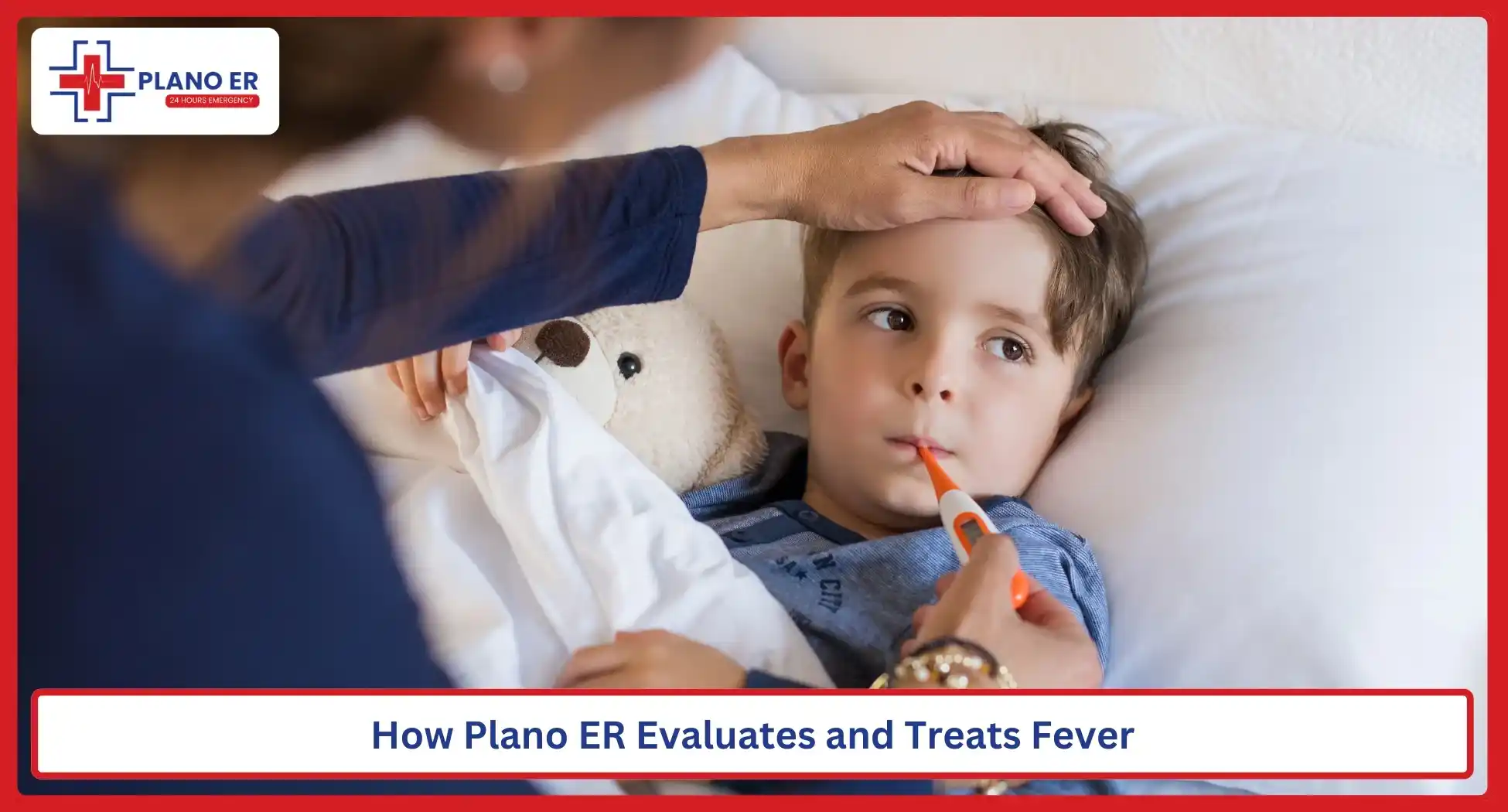
How Plano ER Evaluates and Treats Fever
Immediate Assessment
You are seen within minutes of arrival. Our board-certified emergency physician reviews the duration, height, and pattern of the fever, accompanying symptoms, and medical history, followed by a focused physical exam.
Identifying the Cause
Fever is a symptom, not a disease, and identifying the source determines the treatment. Our on-site emergency lab testing includes complete blood counts, urinalysis, blood cultures, and rapid strep, flu, and COVID testing, with results in minutes. Chest X-ray and other imaging are ordered when a respiratory or abdominal source is suspected, all available through our emergency services under one roof.
IV Fluids and Supportive Care
Fever accelerates fluid loss, and dehydration frequently accompanies it. Our IV fluid therapy provides rapid rehydration and supports the body while the underlying cause is treated.
Pediatric Fever Care
Our pediatric emergency care team is fully equipped to evaluate and treat children of all ages, including the youngest infants, with age-appropriate protocols and a calm, private environment.
Discharge or Transfer
Most fever patients are discharged within 1 to 3 hours with a clear care plan and follow-up instructions. If hospital admission is needed, we stabilize first and coordinate a seamless transfer.
Common Causes of Fever
- Viral infections are the most common cause, including flu, COVID-19, RSV, and mono. Most resolve with supportive care, though severe cases need intervention.
- Bacterial infections such as strep throat, urinary tract infections, pneumonia, and ear infections require targeted treatment to resolve.
- Heat-related illness during Texas summers can push body temperature to dangerous levels. Heat stroke is a medical emergency requiring immediate cooling and IV fluids.
- Serious but less common causes include sepsis, meningitis, appendicitis, and kidney infection, all of which are exactly why unexplained or persistent fever deserves professional evaluation.
Groups That Should Seek Care Earlier
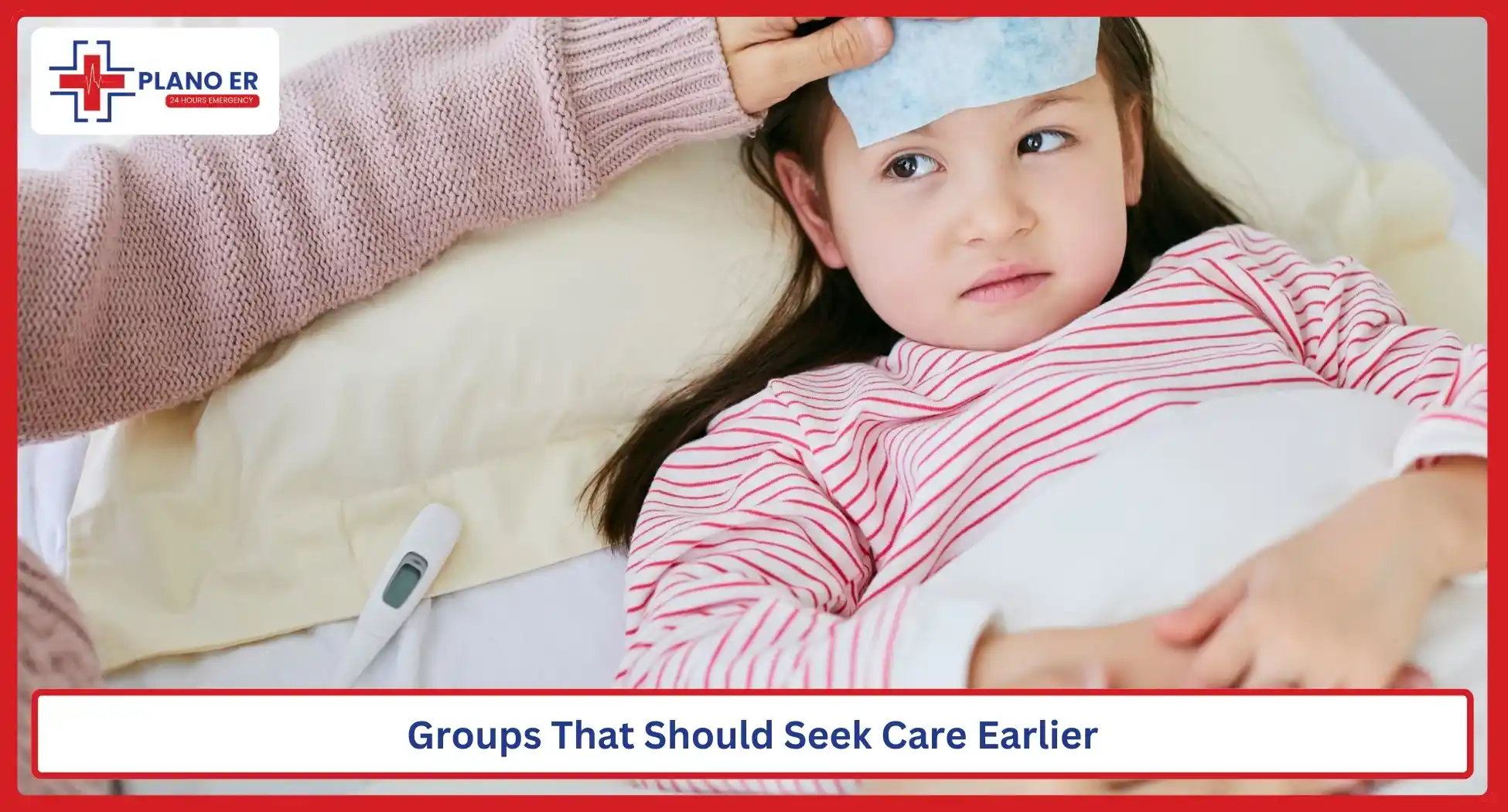
- Pregnant women: Fever can affect the developing baby. Seek care for any fever above 102°F or any fever lasting more than 24 hours.
- Immunocompromised patients: Fever during chemotherapy or immune-suppressing treatment is always an emergency, even at 100.4°F.
- People with chronic conditions: Diabetes, heart disease, kidney disease, and lung disease, raise the risk that fever signals a serious complication.
- Recent surgery: Fever after surgery can indicate infection or other complications and should be evaluated promptly.
Frequently Asked Questions
When should I go to the ER for a fever?
Immediately for any fever in an infant under 3 months, fever above 104°F at any age, fever with stiff neck, severe headache, breathing difficulty, persistent vomiting, confusion, or a non-fading rash, or fever lasting more than 3 days in a child or 5 days in an adult. High-risk patients should come in earlier.
What temperature is considered a high fever?
In adults and older children, 103°F or higher is a high fever, and anything above 104°F requires emergency evaluation. In infants under 3 months, any fever of 100.4°F or higher is a medical emergency.
Should I take my infant to the ER for a fever?
Yes. Any fever of 100.4°F or higher in a baby under 3 months requires immediate ER evaluation, even if the baby appears well. Young infants can deteriorate quickly.
How long is too long for a fever?
Fever lasting more than 3 days in children or 5 days in adults without a clear cause should be evaluated. A fever that returns after improvement may indicate a developing secondary infection and also warrants evaluation.
Does Plano ER treat fever in both adults and children?
Yes. We provide 24/7 walk-in fever evaluation and treatment for all ages, from infants to seniors, with rapid on-site diagnostics, IV fluids, and treatment targeted at the underlying cause, all with no wait times.