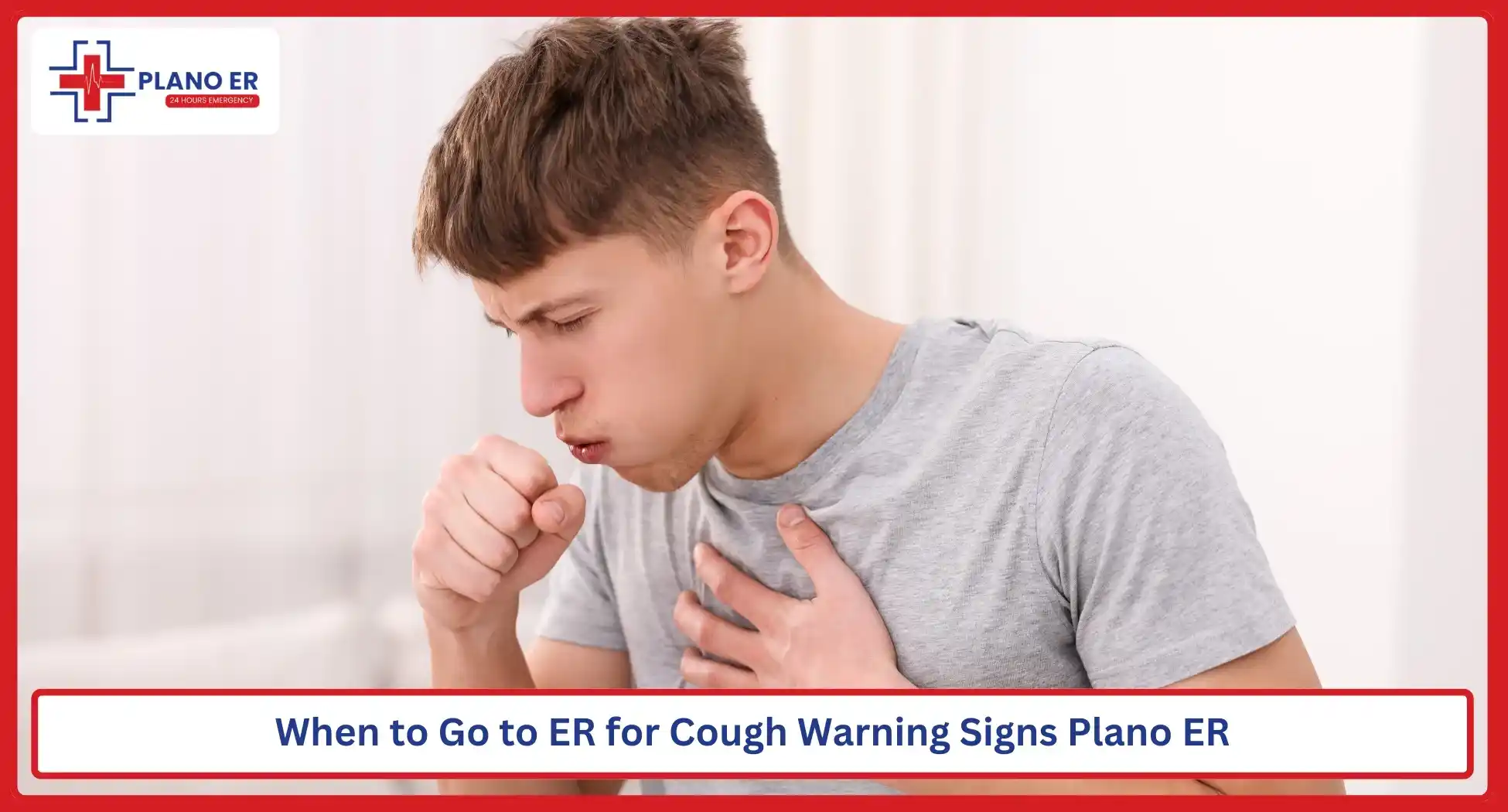
A cough that lasts weeks or brings up blood is not just an annoyance. It can point to pneumonia, a blood clot in the lung, or an asthma flare that needs urgent care. Knowing when to go to the ER for a cough is what separates a routine viral recovery from a hospital stay. The warning signs below reveal what a persistent cough can hide, and how Plano ER evaluates severe cough on-site 24/7.
When Should You Go to the ER for a Cough?
Go to the ER for a cough that brings up blood, causes severe shortness of breath, or comes with chest pain, blue lips, high fever, or confusion. Any cough in an infant under three months also needs immediate evaluation, no matter how mild it looks.
Most coughs from colds and viruses fade within one to two weeks. When a cough sticks around, escalates, or comes with any of the warning signs above, waiting can turn a treatable condition into a hospital admission. Plano ER stays open around the clock so you can walk in the moment something feels off.
Plano ER: 7940 Custer Rd, Plano, TX 75025 | +1 972-527-3000 | Open 24/7 | Rapid, No-Wait Emergency Care
What Are the Warning Signs of a Serious Cough?

Cough warning signs include coughing up blood, difficulty breathing, chest pain, wheezing that inhalers do not fix, blue lips or fingertips, high fever, and fainting. These symptoms can point to pneumonia, blood clots in the lung, severe asthma attacks, or heart failure, all of which need emergency care.
If you notice any of the following, do not wait for the cough to improve on its own:
- Coughing up blood, even a small streak of pink or rust color
- Severe shortness of breath, especially at rest or when talking
- Chest pain or pressure that worsens when you breathe or cough
- Blue tint on lips, face, or fingertips (a sign of low oxygen)
- Wheezing that does not respond to your rescue inhaler
- High fever above 102°F combined with cough
- Confusion or fainting during a coughing fit
- Thick yellow, green, or rust-colored mucus
What Causes a Cough to Turn Serious?
Most coughs come from viral infections and clear on their own. A cough turns serious when it lasts beyond three weeks, produces colored or bloody mucus, or comes with fever, shortness of breath, or chest pain. These signs point to deeper lung, heart, or vascular problems.
Lung infections
Pneumonia produces a wet cough with thick mucus, fever, chills, and shortness of breath. Bronchitis causes airway inflammation and a lingering cough. Both need medical treatment when symptoms escalate.
Airway and asthma problems
Severe asthma flares cause coughing fits, wheezing, and breathlessness. When inhalers stop working, this becomes an emergency. COPD flares can look similar in older adults with a smoking history.
Blood clots in the lung
A pulmonary embolism can cause sudden cough with chest pain and shortness of breath, sometimes with blood. Risk factors include recent surgery, long travel, pregnancy, and blood clotting disorders. This is a life-threatening emergency.
Heart-related cough
Heart failure causes fluid backup into the lungs, producing a cough that gets worse when lying down, often with pink frothy mucus. This warrants immediate ER evaluation.
How Does Plano ER Diagnose and Treat Severe Cough?
Plano ER evaluates severe cough with rapid physician assessment, on-site digital chest X-ray, rapid pathogen testing for flu, COVID, RSV, and strep, and full laboratory work. Treatment starts within minutes and can include IV fluids, breathing treatments, antibiotics, and oxygen, all delivered 24/7 without an appointment.
Immediate physician assessment. A board-certified emergency physician sees you within minutes. No waiting room delay.
On-site chest imaging. Our digital chest X-ray identifies pneumonia, fluid buildup, collapsed lung, or masses. Results in minutes.
Rapid pathogen testing. For flu, COVID-19, RSV, and strep, give results in 15 to 30 minutes so treatment starts fast.
Full lab work. Our emergency lab runs complete blood counts, D-dimer testing for clots, cardiac enzymes, and inflammatory markers with rapid turnaround.
CT scan when needed. If a pulmonary embolism or serious lung issue is suspected, our on-site CT scanner provides detailed imaging.
Targeted treatment. Depending on the diagnosis, we can start IV fluids, nebulizer breathing treatments, IV antibiotics, oxygen therapy, or blood thinners for clot-related conditions.
When Is a Child’s Cough an Emergency?
A child’s cough is an emergency when it comes with fast breathing, chest retractions (chest sucking in with each breath), stridor, blue lips, or feeding trouble. Any cough in an infant under three months also needs immediate ER evaluation, even if the child looks otherwise well.
Kids can decline faster than adults with respiratory illness. Watch for these age-specific warning signs:
| Age Group | Warning Signs to Act On |
| Under 3 months | Any cough, any fever, refusing to feed, unusually sleepy |
| 3 months to 2 years | Fast breathing, retractions, wheezing, high fever, dehydration |
| 2 to 5 years | Barking cough with stridor (croup), fever above 104°F, blue lips, whooping fits |
| School age and teens | Coughing up blood, severe chest pain, breathing trouble, cough plus fainting |
Our pediatric emergency room is equipped to treat children of all ages for severe cough, croup, RSV, and whooping cough.
What Should You Expect at Plano ER for a Severe Cough?

A visit to Plano ER for a severe cough follows a fast path from door to treatment. You are greeted on arrival, moved to a private exam room within minutes, evaluated by a board-certified emergency physician, and start on-site testing and treatment before the first hour ends.
- Arrival and triage. Walk in any time. No appointment, no waiting room delay.
- Physician assessment. A board-certified emergency physician reviews your symptoms, duration of cough, medical history, and performs a focused exam.
- Diagnostic testing. Chest X-ray, rapid pathogen tests, blood work, and pulse oximetry as needed. Most results within 30 minutes.
- Treatment starts. IV fluids, breathing treatments, antibiotics, or oxygen begin as soon as diagnosis is confirmed.
- Discharge or transfer. Most patients go home within 1 to 3 hours with a care plan. For conditions requiring admission, we coordinate direct transfer to a partner hospital.
Plano ER works with most major insurance plans. For self-pay options, our team can discuss payment plan financing. Learn more about freestanding ER benefits and how we compare to hospital emergency rooms.
Frequently Asked Questions
Q: What does coughing up blood mean?
Coughing up blood, even a small streak, is a medical emergency. It can point to pneumonia, a blood clot in the lung, severe bronchitis, or lung cancer. Go to Plano ER immediately or call 911.
Q: How long is too long for a cough?
A cough lasting more than three weeks warrants medical evaluation. Chronic cough beyond eight weeks can signal asthma, acid reflux, post-nasal drip, or more serious lung disease that needs testing.
Q: Can a cough be a symptom of a blood clot?
Yes. A pulmonary embolism, a blood clot in the lung, can cause sudden cough with chest pain, shortness of breath, and sometimes blood. It is a life-threatening emergency requiring immediate ER care.
Q: When should I take my child to the ER for a cough?
Take your child to Plano ER for cough with fast breathing, retractions, blue lips, stridor, high fever, or feeding trouble. Any cough in an infant under three months needs immediate evaluation.
Q: Does Plano ER treat a severe cough at night or on weekends?
Yes. Plano ER is open 24 hours a day, seven days a week, with no appointment needed. Walk in any time for severe cough evaluation with on-site chest X-ray and rapid testing.