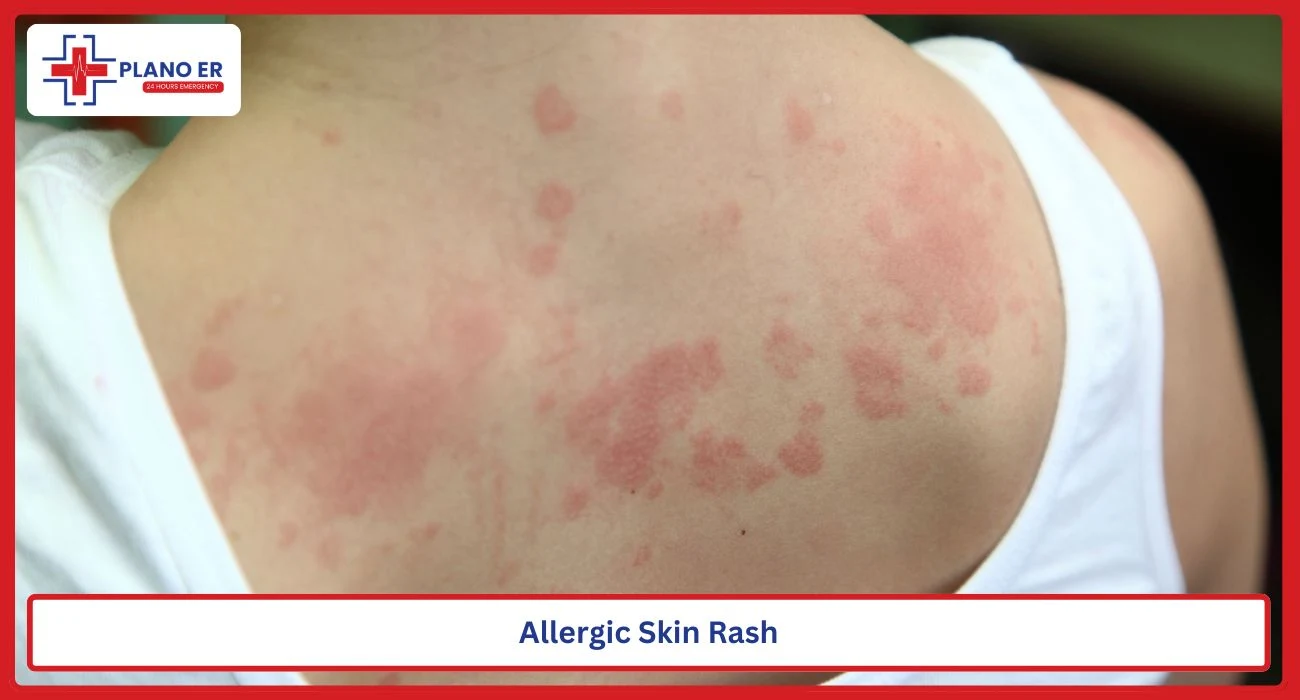
An allergic skin rash can go from mild itching to raised welts or blistering within hours. Most reactions come from something you touched, ate, or were exposed to. The right approach starts with removing the trigger and calming the skin. This guide covers what causes these rashes, what helps at home, the red flags that mean it is time to act, and how Plano ER can help.
What Causes an Allergic Skin Rash?
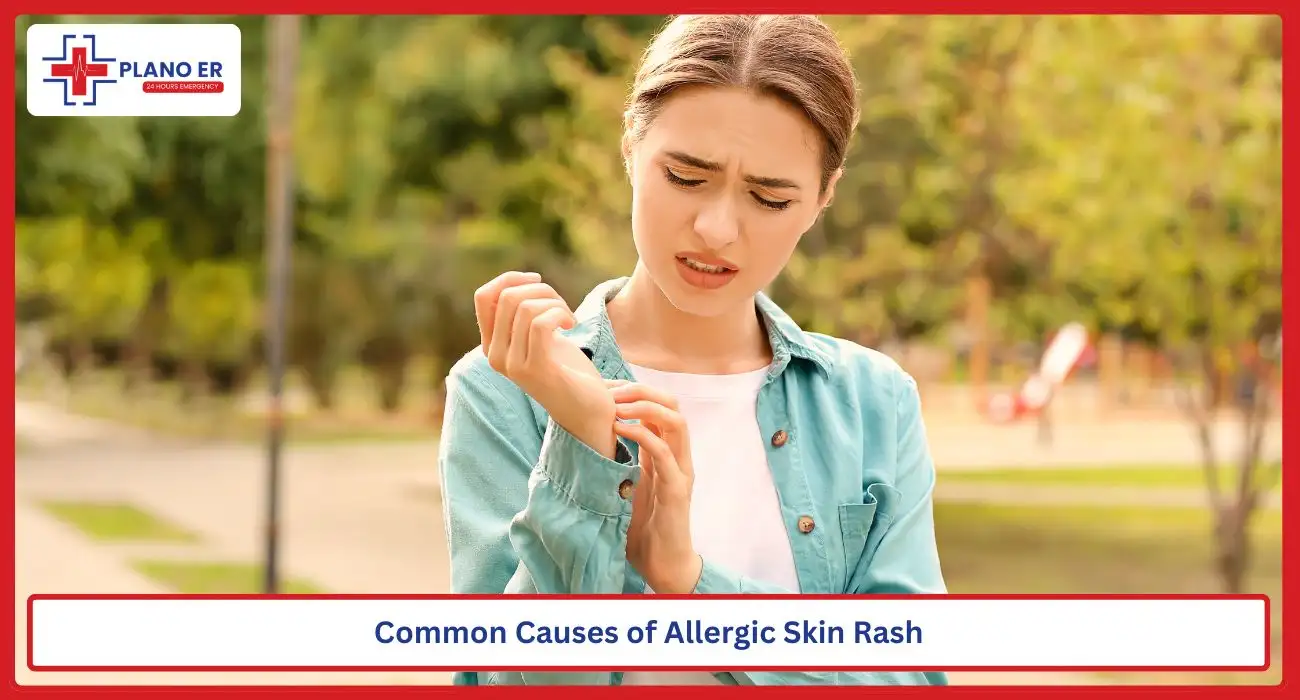
An allergic skin rash happens when the immune system reacts to a substance it treats as a threat. The reaction can appear within minutes or take up to 72 hours to develop.
Common Triggers
- Contact triggers: Poison ivy, poison oak, nickel jewelry, cosmetics, cleaning products, and fragrances
- Food allergies: Nuts, shellfish, dairy, eggs, wheat, and soy
- Plant and pollen exposure: Seasonal allergens landing directly on the skin
- Latex: Gloves, balloons, adhesives, and elastic bands
- Insect stings and bites: Bees, wasps, fire ants, and mosquitoes
- Fabric and detergent reactions: Wool, synthetic dyes, and harsh laundry products
- Sun exposure: Reactions triggered by sunlight combined with certain products on the skin
Identifying and removing the trigger is the first step in resolving any allergic rash. Rashes that come back repeatedly often point to an allergen still present in the person’s environment.
How Do You Care for a Skin Allergy Rash at Home?
Remove the Trigger
Change clothes, wash the area with mild soap and cool water, and get away from the suspected allergen as soon as possible.
Cool the Skin
Apply a cool, damp cloth to the affected area for 15 to 20 minutes at a time, repeating every few hours as needed.
Try a Colloidal Oatmeal Bath
For rashes covering larger areas, a 15-minute bath in lukewarm water with colloidal oatmeal can soothe widespread itching effectively.
Moisturize Gently
Once the initial inflammation eases, apply a fragrance-free moisturizer to support the skin barrier and speed healing.
Avoid Scratching
Broken skin increases the risk of bacterial infection. Trim nails, wear light gloves at night if needed, and resist the urge to scratch.
Most allergic rashes clear within 1 to 3 weeks with consistent home care. If the rash worsens or new symptoms appear, it is time to escalate.
When Does a Skin Allergy Rash Need Emergency Care?
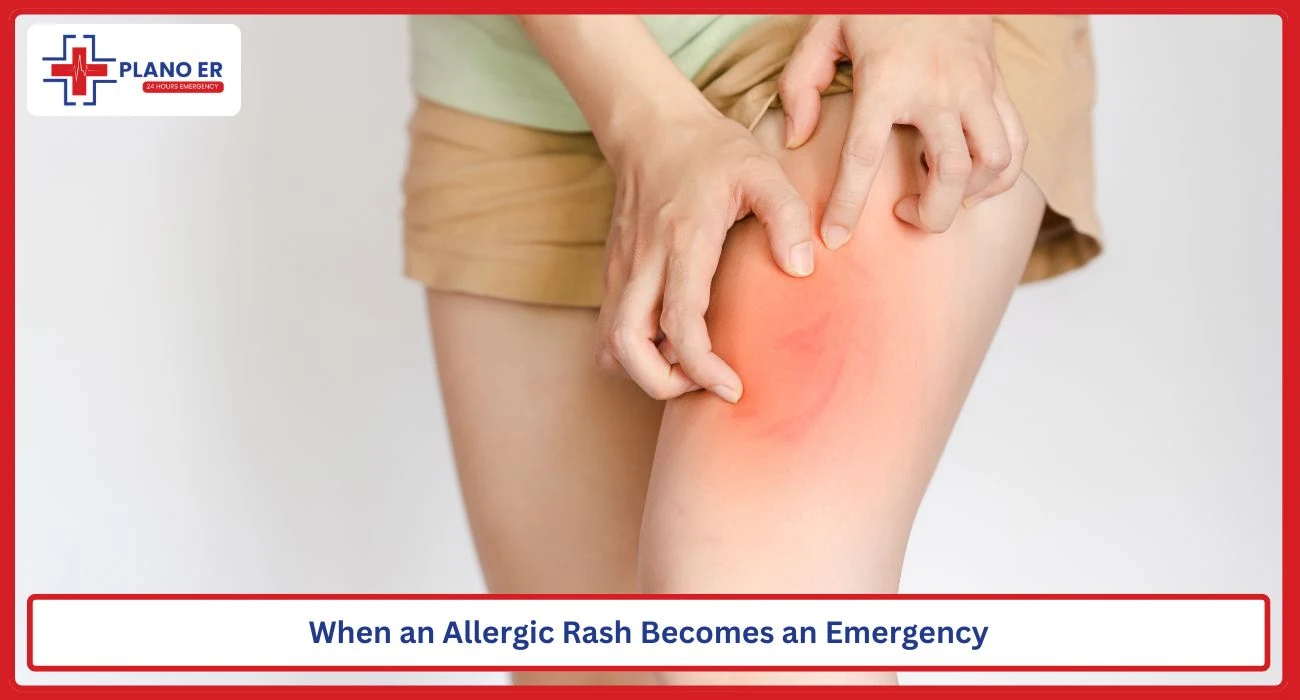
A skin allergy rash needs emergency care when it comes with trouble breathing, throat swelling, facial swelling, dizziness, fainting, widespread hives with fever, or blistering and peeling skin. These signs can point to anaphylaxis or a severe systemic reaction, both of which require immediate ER treatment.
Red Flags to Act On
- Trouble breathing or throat tightness during a rash outbreak
- Swelling of the face, lips, or tongue
- Widespread hives appearing rapidly across large body areas
- Dizziness, fainting, or a rapid heartbeat alongside the rash
- Fever above 101°F with a spreading rash
- Blistering, peeling, or sloughing skin
- Rash inside the mouth or on mucous membranes
- Signs of skin infection: expanding redness, warmth, pus, or red streaks
- A rash that develops shortly after starting something new, whether a product, food, or exposure
Call 911 immediately if you or a loved one has trouble breathing, throat swelling, or is losing consciousness. Do not wait to see if it improves.
How Plano ER Treats Severe Skin Allergy Rashes
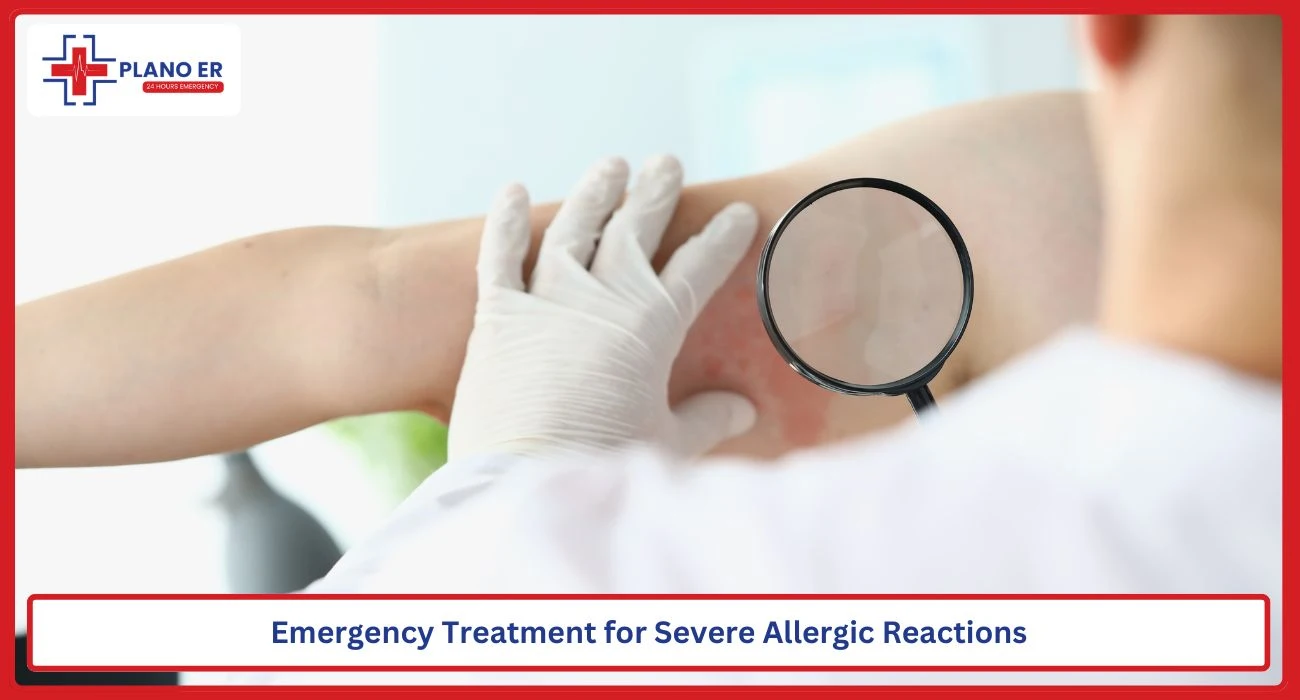
Immediate Physician Assessment
A board-certified emergency physician evaluates the rash, checks vital signs, and rules out anaphylaxis or a serious underlying cause. There is no waiting room delay at our no-wait ER.
First-Line Treatment for Anaphylaxis
If the rash comes with breathing trouble or throat swelling, emergency treatment for anaphylaxis begins immediately.
IV Supportive Therapy
IV treatment works faster than oral options to reduce widespread inflammation, itching, and swelling, addressing the reaction systemically rather than just on the surface.
IV Fluids for Supportive Care
Severe reactions can cause dehydration or low blood pressure. Our IV fluid therapy stabilizes the patient throughout treatment.
Wound Care for Blistering Rashes
Rashes with open blisters or peeling skin receive cleaning, dressing, and infection prevention care to support healing.
Observation for Delayed Reactions
Severe allergic reactions can return hours after initial treatment. Monitoring catches these before they escalate, giving you a safer path to discharge.
Rapid Diagnostic Support
For rashes that may be linked to an underlying systemic cause, our on-site emergency lab testing provides rapid results to guide the right treatment path.
Follow-Up and Referral
Discharge includes clear care instructions and referral to a dermatologist or allergist for long-term management and trigger identification.
How Do You Prevent a Skin Allergy Rash From Coming Back?
Identify the Trigger
Keep a diary of what you touched, ate, wore, or used before rashes appeared. Patterns often emerge within a few weeks.
Patch-Test New Products
Apply a small amount to your inner forearm and wait 48 hours before regular use, especially for new cosmetics or skincare products.
Wear Protective Clothing
Long sleeves, gloves, and closed shoes protect against known irritants when working outdoors or handling chemicals.
Choose Fragrance-Free Products
Fragrances are among the most common allergen categories in personal care and household products.
Get Allergy Testing
If triggers remain unclear, an allergist can perform skin or blood testing to pinpoint specific allergens and build a long-term management plan.
Our pediatric emergency care team also evaluates children experiencing skin allergy reactions, since kids can develop rashes rapidly and sometimes cannot describe what triggered them.
When a skin allergy reaction crosses the line from routine to concerning, our full emergency services are open 24/7 for adults and children, with no appointment required.
Visit Plano ER
Address: 7940 Custer Rd, Plano, TX 75025
Phone: +1 972-527-3000
Email: info@planoertx.com
Hours: Open 24/7, every day of the year
Serving Plano, Frisco, Allen, McKinney, Richardson, Carrollton, and surrounding North Texas communities. If breathing becomes difficult or the throat feels tight, call 911.
[CALL NOW: +1 972-527-3000] [WALK IN NOW] [GET DIRECTIONS]