
An asthma attack that is not improving is not something to wait out. Airway swelling can worsen fast, cutting off oxygen and pushing the body toward respiratory failure. Knowing when to go to the ER is the difference between a treated flare and a hospital stay. This guide covers the warning signs and how Plano ER treats severe asthma with breathing support, oxygen, and IV therapy, 24/7.
When Should You Go to the ER for an Asthma Attack?
Go to the ER when breathing is not improving as expected, or when breathing becomes so difficult you cannot speak in full sentences. Blue lips, extreme drowsiness, or a silent chest are all signs of respiratory failure requiring 911.
If your usual approach to managing a flare is not improving your breathing within a reasonable window, the attack has escalated beyond home management. Our emergency asthma treatment stays open 24 hours a day so you can walk in the moment your breathing does not improve. On-site breathing treatments, IV anti-inflammatory therapy, and oxygen support can reverse a flare that home management cannot.
Warning Signs of a Severe Asthma Attack
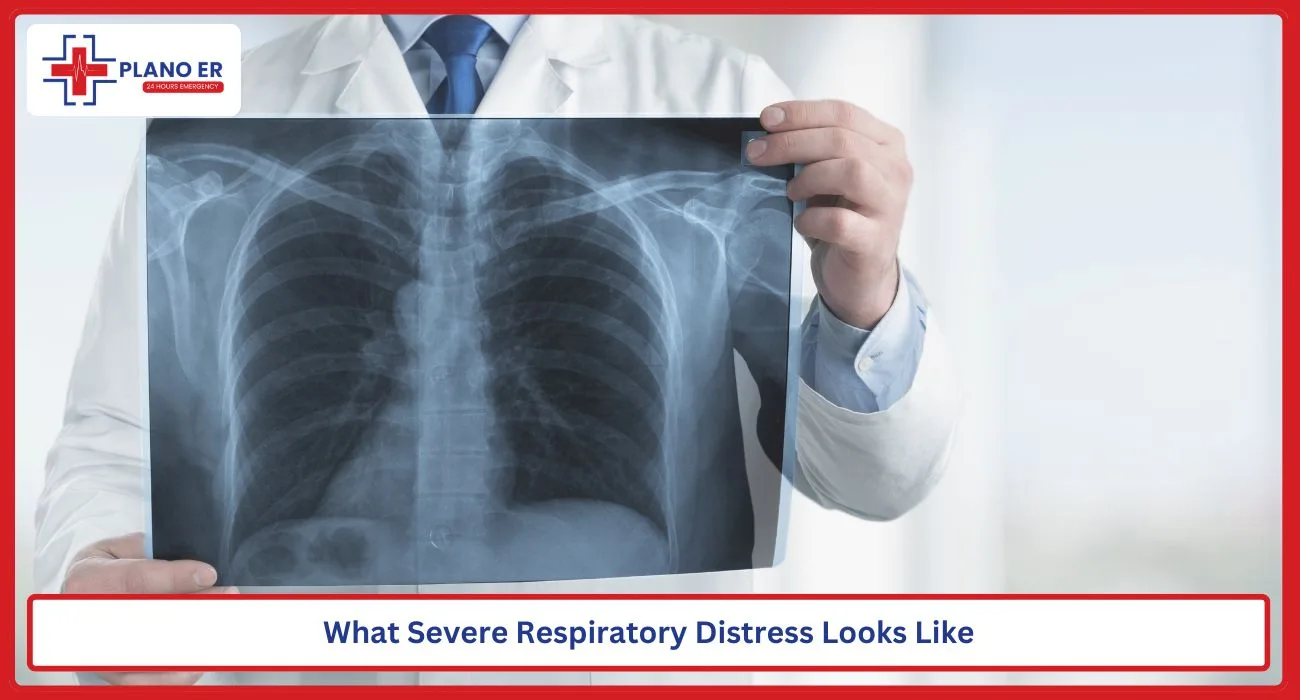
Treat any of the following as an emergency:
- Shortness of breath at rest, not just with activity
- Inability to speak more than a few words between breaths
- Blue lips, fingertips, or face
- Chest retractions, where the skin pulls in around the ribs or above the collarbone with each breath
- A peak flow reading below 50% of your personal best
- Extreme drowsiness or confusion
- Breathing is not improving despite your usual approach
- A silent chest, where no wheezing can be heard despite labored breathing, one of the most dangerous late-stage signs
Call 911 if breathing becomes severely labored, lips or face turn blue, or the person becomes unresponsive. Every minute matters during a severe asthma attack.
Why Does an Asthma Attack Become an Emergency?
An attack becomes an emergency when airway inflammation and mucus buildup narrow the bronchial tubes enough to severely restrict airflow. Without prompt treatment, oxygen levels drop and the airways can shut down entirely.
Common Triggers
- Respiratory infections: Viral illnesses like flu and colds are among the most common triggers, inflaming airways that are already reactive.
- Environmental exposures: Pollen, mold, pet dander, smoke, and cold air can all trigger airway inflammation and set off a flare.
- Disrupted daily management: Any gap in your usual maintenance routine leaves the airways more reactive, and a routine flare can escalate into a full emergency faster than expected.
- Stress: Emotional strain increases breathing rate and can worsen an ongoing flare, as the body’s stress response adds to airway tightening.
How Plano ER Treats Severe Asthma

Treatment includes rapid physician assessment, oxygen monitoring, breathing treatments, IV anti-inflammatory therapy, oxygen support, and continuous monitoring. Most patients begin to breathe easier within 30 to 60 minutes, and treatment continues until breathing is stable. Our no-wait ER model means this all begins the moment you arrive, not after sitting in a lobby while symptoms worsen.
Immediate Physician Assessment
A board-certified emergency physician sees you within minutes of walking in. There is no waiting room delay.
Oxygen Saturation Check
Pulse oximetry measures how much oxygen your blood carries. Low readings prompt immediate oxygen support.
Breathing Treatments
Aerosolized therapy opens the airways within minutes, and multiple treatments can be given back to back when needed.
IV Anti-Inflammatory Therapy
Delivered through IV, this works faster than oral options to reduce airway swelling and bring the attack under control.
Oxygen Therapy
Delivered via nasal cannula or mask when saturation levels drop below normal ranges.
Continuous Monitoring and Lab Support
Vital signs are tracked throughout treatment to catch any change quickly, and when needed, our on-site lab testing can rule out an underlying infection driving the flare, all without leaving the building.
Follow-Up Plan or Transfer
Most patients stabilize and go home with updated guidance. For severe cases needing hospital admission, we coordinate direct transfer.
When Is a Child’s Asthma an Emergency?
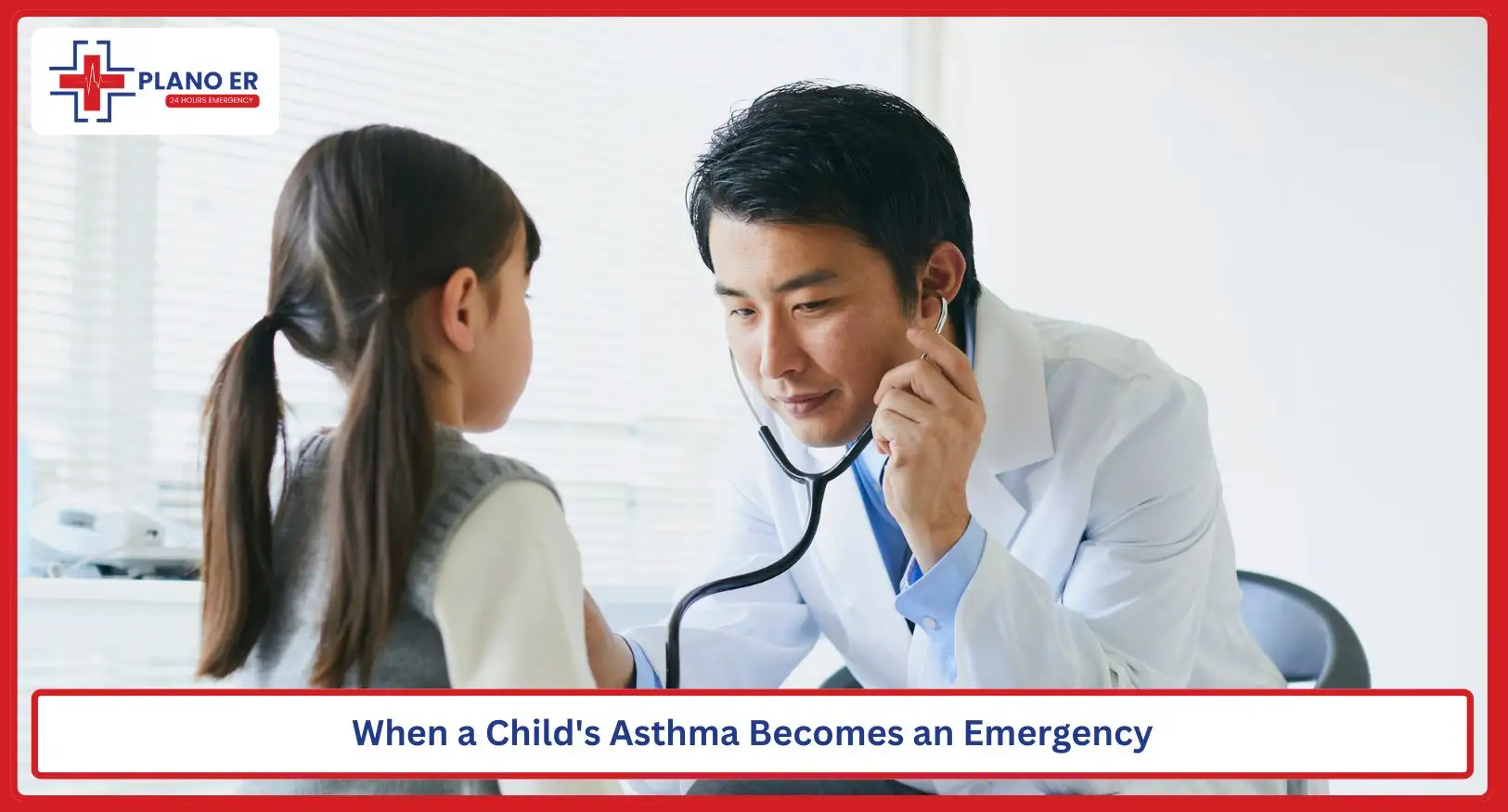
A child’s asthma is an emergency when they show fast breathing, chest retractions, blue lips, difficulty speaking or feeding, or extreme sleepiness. Wheezing that gets quieter without symptoms improving is another dangerous sign, since it can mean the airways are closing rather than opening. Any child whose breathing is not improving needs immediate ER evaluation.
Kids can decline faster than adults during an asthma attack because their smaller airways narrow more easily and oxygen levels drop quickly.
Warning Signs by Age
- Under 2 years: Fast breathing, retractions, blue lips, refusing to feed, unusually sleepy
- 2 to 5 years: Wheezing with chest retractions, difficulty speaking, no improvement with your usual approach
- 6 to 12 years: Cannot speak full sentences, blue tint on lips, breathing not improving
- Teens: Same signs as adults, plus refusing to sit up straight or extreme fatigue
Our pediatric emergency care team is equipped to treat asthma attacks in children of all ages, from infants to teens, in a calm, child-friendly environment.
What Should You Do After an Asthma ER Visit?
Schedule Follow-Up Within 1 to 2 Weeks
See your primary care doctor or a lung specialist to review the attack and next steps for ongoing management.
Review Your Management Plan
Work with your provider on a clear, symptom-based plan so you know exactly what escalation looks like before the next flare.
Identify Triggers
Review what preceded the attack. Was it an infection, an environmental exposure, exercise, or a disrupted routine? Understanding the trigger helps prevent the next emergency.
Follow Discharge Instructions
Continue any guidance provided at discharge for the full recommended period.
When another asthma emergency strikes, our full emergency services are available 24/7 with no appointment required.
Visit Plano ER
Address: 7940 Custer Rd, Plano, TX 75025
Phone: +1 972-527-3000
Email: info@planoertx.com
Hours: Open 24/7, every day of the year
Serving Plano, Frisco, Allen, McKinney, Richardson, Carrollton, and surrounding North Texas communities. No appointment needed. If breathing becomes severely labored or lips turn blue, call 911.
[CALL NOW: +1 972-527-3000] [WALK IN NOW] [GET DIRECTIONS]
Frequently Asked Questions
Can an asthma attack be life-threatening?
Yes. Severe asthma attacks that block the airways can cause respiratory failure if not treated. Any attack where breathing is not improving needs immediate ER care.
How long does an ER visit for asthma take?
Most asthma ER visits take one to three hours, including assessment, breathing treatments, and monitoring until breathing stabilizes and oxygen levels return to normal.
What is a silent chest in asthma?
A silent chest means no wheezing can be heard even though breathing is severely restricted. It is a late, dangerous sign that the airways are nearly closed and requires immediate 911 care.
Does Plano ER treat pediatric asthma emergencies?
Yes. Plano ER treats asthma attacks in patients of all ages 24/7, including infants and young children, with breathing support, oxygen therapy, and IV treatment, no appointment needed.