

Ear infections are among the most common reasons parents bring their child to a doctor, and adults can get them too. Most cases involve the middle ear and cause pain, pressure, and sometimes fever. Recognizing the signs early and knowing the right ear infection treatment can shorten the illness and prevent complications. Learn what causes ear infections, helpful home care, warning signs to watch for, and how Plano ER treats severe cases 24/7.
What Causes an Ear Infection?
Ear infections happen when bacteria or viruses infect the space behind the eardrum, usually after a cold or upper respiratory infection. Fluid builds up in the middle ear when the eustachian tube gets blocked, creating an environment where germs multiply.
The three most common types are:
- Middle ear infection (otitis media). The most common type. Bacterial or viral infection behind the eardrum.
- Outer ear infection (swimmer’s ear). Bacterial infection of the ear canal, often after water exposure.
- Chronic ear infection. Infection or fluid that keeps returning or does not fully clear.
Children get ear infections more often than adults because their eustachian tubes are shorter, narrower, and more horizontal, which makes drainage harder. According to MedlinePlus, three out of four children will have at least one ear infection by their third birthday.
Adults can also develop ear infections, especially after a cold, sinus infection, or allergen exposure. Adult cases often clear faster but can be more painful than childhood cases.
Common Ear Infection Symptoms in Adults and Children
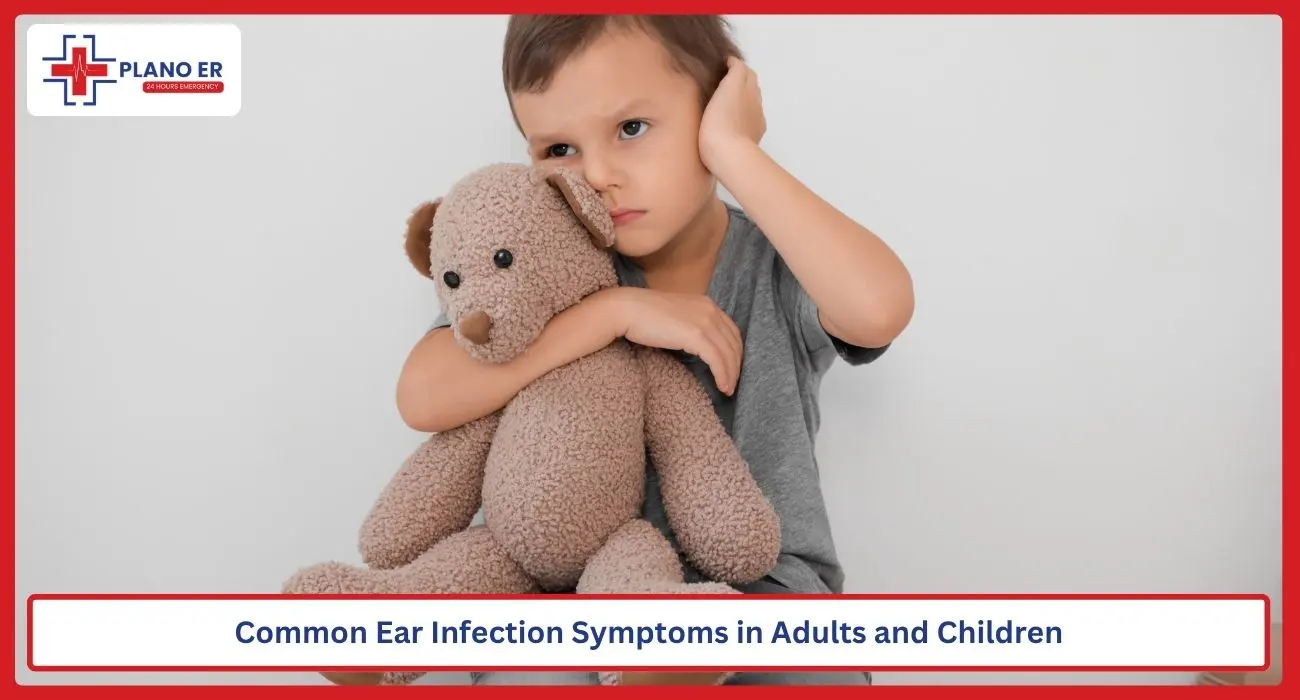
Ear infection symptoms vary by age and infection type. Children often cannot describe what they feel, so parents watch for behavioral signs. Adults typically know exactly where the pain is coming from.
In children, watch for:
- Tugging or pulling at the ear
- Increased fussiness, crying, or difficulty sleeping
- Trouble hearing or responding to quiet sounds
- Fever, often above 100.4°F
- Loss of appetite or trouble eating
- Fluid draining from the ear
In adults, ear infection symptoms usually include:
- Sharp, dull, or throbbing pain in the ear
- Feeling of pressure or fullness in the ear
- Reduced hearing on the affected side
- Fluid or pus drainage
- Sore throat or fever in some cases
- Dizziness or balance problems if the inner ear is involved
Ear pain in adults is less commonly from an actual ear infection. Pain may come from teeth, jaw joints, or the throat, known as referred pain. A physician exam can confirm whether the ear itself is infected.
How to Treat an Ear Infection at Home
For mild cases without warning signs, home ear infection treatment is often enough to manage symptoms while the body clears the infection.
- Manage pain and fever. Age-appropriate acetaminophen or ibuprofen helps with pain and reduces fever. Follow package dosing.
- Apply warm compresses. A warm washcloth held to the outer ear for 10 to 20 minutes can ease pain. Some people prefer cold compresses. Either works.
- Rest and hydrate. Fluids thin mucus and help the eustachian tube drain. Rest supports the immune response.
- Elevate the head during sleep. Extra pillows help drainage and reduce pressure. For infants, do not add pillows. Instead, tilt the mattress slightly.
- Avoid inserting objects. Cotton swabs, fingers, or ear candles can worsen the infection or damage the eardrum.
- Keep the ear dry. Especially for swimmer’s ear, avoid getting water in the affected ear until it heals.
- Watch for changes. Symptoms should improve within 48 to 72 hours. If they get worse or a fever spikes, medical care is needed.
When an Ear Infection Needs Emergency Care

Most ear infections resolve with routine care. Some symptoms mean it is time for emergency evaluation instead.
Go to Plano ER for any of these:
- Severe ear pain that does not respond to over-the-counter pain relievers
- High fever above 103°F, or any fever in an infant under 3 months
- Stiff neck, severe headache, or extreme drowsiness
- Swelling, redness, or tenderness behind the ear (mastoid area)
- Sudden hearing loss
- Facial weakness or drooping on the side of the infected ear
- Confusion or difficulty staying awake
- Bloody or thick pus drainage from the ear
- Ruptured eardrum with severe pain or vertigo
- Ear infection that keeps returning despite treatment
Signs of infection spreading to the mastoid bone behind the ear are a true emergency. Untreated mastoiditis can lead to hearing loss, meningitis, or facial nerve damage.
Fever with an ear infection needs its own evaluation, especially in young children. See our guide on when to go to ER for a fever for age-specific thresholds.
How Plano ER Diagnoses and Treats Ear Infections

Plano ER evaluates and treats ear infections around the clock with no appointment needed.
Immediate physician assessment. A board-certified emergency physician examines the ear with an otoscope, reviews symptoms, and checks for signs of complications.
Fever and pain control. Over-the-counter and prescription medications reduce fever, ease pain, and calm inflammation while other treatment takes effect.
Antibiotic treatment when needed. Bacterial ear infections often require antibiotic therapy. For severe cases with high fever, drainage, or mastoiditis concerns, our IV fluids and antibiotic treatment starts faster than oral medication can.
Ear drainage or minor procedures. If pus or fluid is trapped behind the eardrum, drainage may be needed. Foreign objects, water, or wax impactions can also be safely removed on-site.
Follow-up planning. Discharge includes clear care instructions, prescriptions when needed, and referral to a primary care doctor or ENT specialist for follow-up.
According to the American Academy of Pediatrics, not every ear infection needs antibiotics right away. Our physicians follow current guidelines to prescribe appropriately and prevent antibiotic resistance.
How Long Does an Ear Infection Last?
Most ear infections improve within 2 to 3 days and clear entirely in 1 to 2 weeks. Recovery time depends on the type of infection, whether treatment is needed, and how the body responds.
Typical recovery timelines:
| Type | Improvement | Full Recovery |
| Mild middle ear infection | 2 to 3 days | 5 to 7 days |
| Bacterial infection with antibiotics | 24 to 48 hours | 7 to 10 days |
| Swimmer’s ear | 3 to 5 days | 7 to 10 days |
| Chronic ear infection | Variable | Weeks to months |
Fluid can remain in the middle ear for several weeks after symptoms clear. This is normal and usually resolves on its own within 1 to 2 months. Any hearing loss during this time is typically temporary.
If symptoms return within a few weeks of clearing, or if a child gets four or more ear infections in six months, an ENT evaluation for ear tubes may be recommended.
When ear pain, fever, or drainage crosses the line from routine to concerning, Plano ER is open 24/7 with no appointment required.
Frequently Asked Questions
Q: Can I fly with an ear infection?
Flying with an ear infection can cause severe ear pain and, in rare cases, a ruptured eardrum. If you must fly, use nasal decongestants before takeoff and landing, chew gum, or swallow frequently to help equalize pressure.
Q: Does swimming cause ear infections?
Swimming does not cause middle ear infections, but water trapped in the ear canal can cause swimmer’s ear (outer ear infection). Dry ears thoroughly after swimming and avoid inserting cotton swabs into the canal.
Q: Are ear infections contagious?
Ear infections themselves are not contagious, but the cold or respiratory virus that led to them often is. Wash hands often and avoid close contact with sick people to reduce your risk.
Q: Can adults get ear tubes?
Yes. Adults who get frequent ear infections or have chronic fluid buildup can benefit from ear tubes, though the procedure is more common in children. An ENT specialist can evaluate whether this option fits your case.
Q: Does Plano ER treat ear infections in children?
Yes. Plano ER treats ear infections in patients of all ages 24/7. Our board-certified physicians examine the ear, prescribe antibiotics when needed, and manage severe pain or complications like mastoiditis.