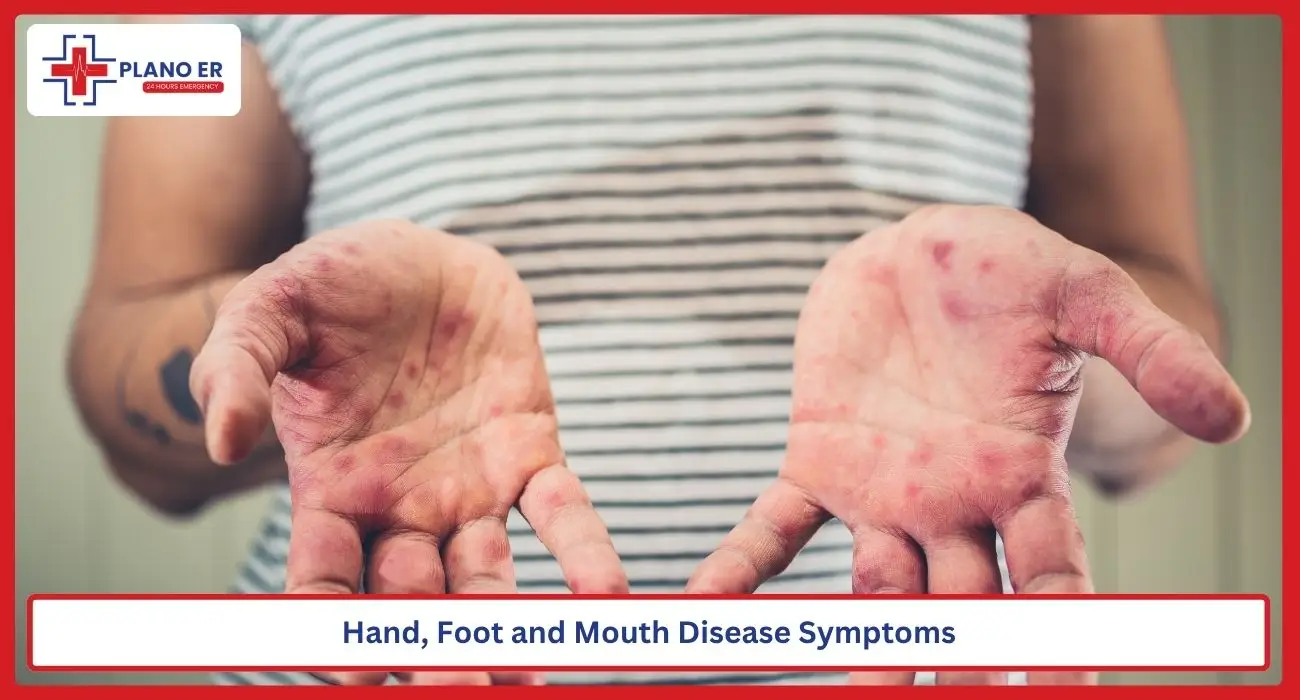
Hand, foot and mouth disease is a common viral infection that mainly affects young children, often worrying parents because of its visible symptoms. It usually starts with a low-grade fever, followed by red spots inside the mouth and small blisters on the hands and feet.
While it can look alarming, this condition typically clears on its own with proper care. Recognizing hand foot and mouth disease symptoms early helps you manage your child’s discomfort, contain the spread, and know when a visit to Plano ER is warranted.
What Is Hand, Foot and Mouth Disease?
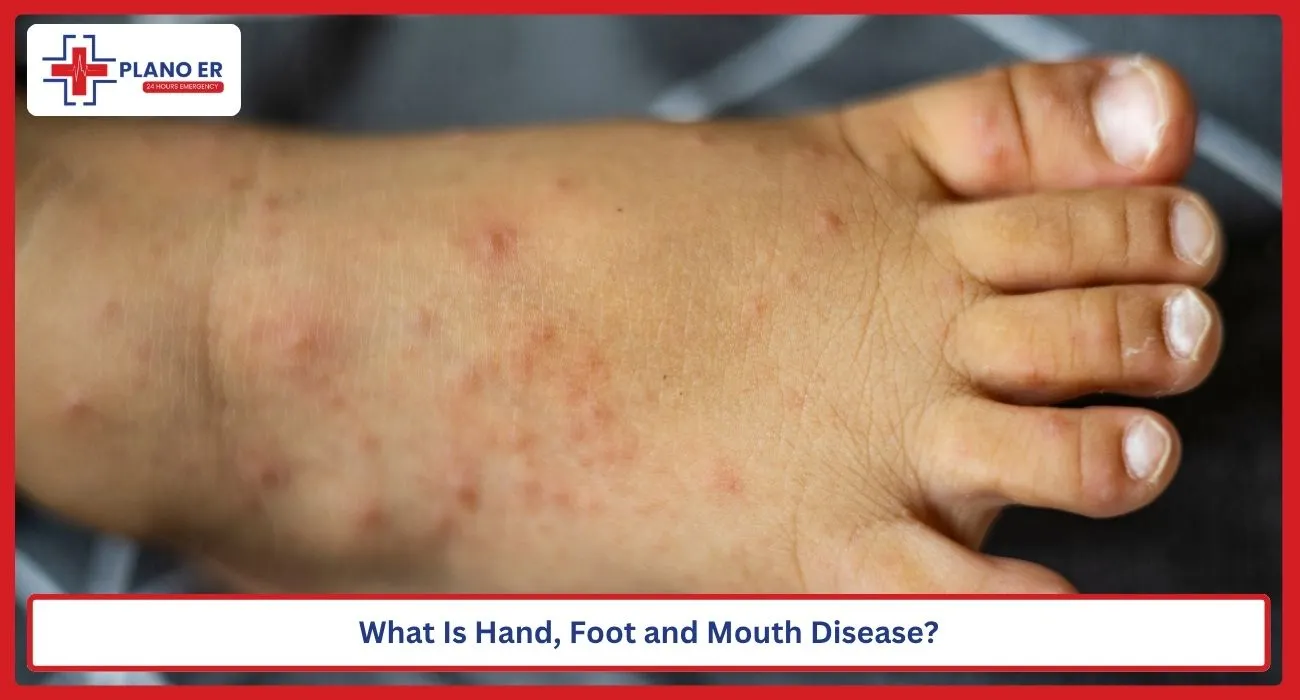
Hand, foot and mouth disease (HFMD) is a contagious viral illness that most often affects children under age five. It is caused by enteroviruses, usually coxsackievirus A16 in the United States. The name comes from where the telltale rash appears: on the hands, on the feet, and inside the mouth.
Most cases run their course in 7 to 10 days without any specific treatment. The virus spreads through saliva, blister fluid, respiratory droplets, and stool, which is why daycares and preschools see periodic outbreaks.
According to the American Academy of Pediatrics, most cases stay mild, though the symptoms can look worse than the illness actually is.¹
Adults can catch HFMD too, though they usually get milder symptoms and sometimes none at all. Despite the similar name, HFMD in humans is unrelated to foot-and-mouth disease in livestock.
The First Signs to Watch For
HFMD starts with symptoms that can look like any other minor illness. The first hand foot and mouth disease symptoms typically appear 3 to 6 days after exposure, and they show up in stages rather than all at once.
The earliest signs are usually:
- Low-grade fever between 100°F and 102°F
- Sore throat and reduced appetite
- Fussiness, tiredness, or clinginess in younger children
- Runny nose in some cases
One to two days after the fever starts, painful sores develop inside the mouth. These are small red spots that quickly turn into blisters or shallow ulcers, most often on the tongue, gums, and inner cheeks. Kids often stop eating or refuse to drink because the sores hurt.
Within another day or two, a skin rash appears. It shows up as flat red spots or small blisters on the palms, soles of the feet, and sometimes the buttocks, elbows, or knees. The rash usually does not itch, though it can feel tender.
How HFMD Progresses Over One Week
The illness follows a fairly predictable path in most children.
The National Library of Medicine’s MedlinePlus and other pediatric resources describe the standard progression this way :²
| Day | What to Expect |
| Days 1 to 2 | Fever, sore throat, loss of appetite, general fussiness |
| Days 3 to 4 | Mouth sores appear; rash begins on hands and feet |
| Days 5 to 6 | Rash may spread to other areas; fever usually breaks |
| Days 7 to 10 | Rash fades; blisters heal; energy returns |
| After Day 10 | Fingernails or toenails may peel weeks later (harmless) |
Not every child follows the same order or timeline. Some skip the mouth sores, some skip the rash on the palms and soles, and a few have such mild symptoms that parents miss them altogether. The nail peeling is unusual but not dangerous, and it can happen weeks after the illness clears.
When Your Child Can Return to Daycare or School
This is the question every parent asks first: when can my child go back? The answer is not as simple as waiting for the fever to break.
Your child is generally safe to return once:
- They have been fever-free for at least 24 hours without medication
- The blisters have dried and scabbed over
- They can eat, drink, and behave normally
- Any open mouth sores have closed
Most kids meet these markers around day 5 to 7 of the illness. Even after they look and feel better, the virus can shed in stool for weeks. That means good handwashing at home and at school stays important long after your child returns.
Daycare policies vary. Some require a doctor’s note before returning after HFMD, and others follow their own timeline. Check with your specific facility, especially if siblings attend the same location.
When HFMD Symptoms Become an Emergency
Most HFMD cases stay mild, but some do need medical attention. The biggest risk is dehydration, since mouth sores make swallowing so painful that kids refuse to drink.
Watch for these warning signs:
- No wet diaper for 8 hours or more (or no urination in older children)
- Dry mouth, sunken eyes, or no tears when crying
- Extreme sleepiness, difficulty waking, or unresponsiveness
- Fever above 103°F, or any fever in an infant under 3 months
- Stiff neck, severe headache, or persistent vomiting
- Trouble breathing or swallowing
- Blisters that look infected (spreading redness, pus, or streaks)
- Symptoms getting worse after day 5, or new symptoms after the fever breaks
Signs of dehydration deserve special attention, because young children can lose fluids fast. If your child cannot keep sips of water down or has stopped urinating, walk into Plano ER for emergency dehydration treatment. IV fluids can rehydrate a child in a way that oral drinking cannot when the mouth sores are severe.
HFMD in Toddlers vs Adults: What’s Different?
HFMD affects toddlers and adults quite differently, even though the same viruses cause it in both groups.
Toddlers usually show the classic picture: fever above 101°F, painful mouth sores that make eating and drinking difficult, and a distinctive rash on the palms, soles, and sometimes the buttocks. Dehydration is the top concern because young children stop drinking when their mouths hurt.
Adults often catch HFMD from an infected child at home. Symptoms tend to be milder or absent entirely, though the virus is still contagious to others. When adults do have symptoms, they may include a mild sore throat, low fever, and a limited rash on the hands or feet. Mouth sores are usually less severe than in children.
Immunocompromised adults, pregnant women, and older adults with chronic conditions face a higher risk of complications and should call their healthcare provider if HFMD symptoms appear. For most other adults, HFMD generally clears in about a week with rest and fluids.
Home Care and When to Walk In to Plano ER
For a routine HFMD case with no warning signs, home care is usually all your child needs. The goal is to manage the fever, keep them hydrated, and soothe the mouth pain enough that they can drink.
Offer cold, soft foods like yogurt, ice cream, and popsicles, which numb sore mouths and add fluid. Skip acidic or salty foods that can sting the sores. Age-appropriate acetaminophen or ibuprofen helps with fever and pain, though babies under 6 months should only receive medication under a doctor’s guidance. Wash hands often, disinfect shared surfaces, and keep toothbrushes separate from siblings.
When symptoms cross into the warning signs listed above, or if you are unsure whether your child is dehydrated, walk in to Plano ER. Our board-certified emergency team can assess symptoms, deliver IV fluids for dehydration, and rule out other causes when the rash or fever does not fit HFMD. If a persistent fever is your primary concern, see our guide on when to go to the ER for a fever for age-specific fever thresholds.
Plano ER is open 24/7 at 7940 Custer Rd, Plano, TX 75025. No appointment needed.
Frequently Asked Questions
Q: How is HFMD different from chickenpox?
HFMD blisters appear on the hands, feet, and inside the mouth in a distinctive pattern. Chickenpox spreads across the entire body and causes itchy blisters at different stages at once. HFMD rash is usually not itchy.
Q: Can adults get hand, foot and mouth disease?
Yes. Adults can catch HFMD from an infected child, though the symptoms are often milder. Some adults have no visible signs but can still spread the virus to others in the household.
Q: How long is HFMD contagious?
A child with HFMD is most contagious during the first week of illness. The virus can continue to shed in stool for several weeks after symptoms clear, which is why handwashing remains important.
Q: Is there a vaccine or specific medicine for HFMD?
No approved vaccine or antiviral treatment exists in the United States. Care focuses on managing symptoms with fluids, fever reducers, and pain relief until the virus runs its course.
Q: Can my child get HFMD more than once?
Yes. Different enterovirus strains cause HFMD, so a child can catch it again from a different strain even after recovering. Immunity is strain-specific, not lifelong.