
| STOMACH FLU AT A GLANCE | |
| Medical name | Viral gastroenteritis |
| Common causes | Norovirus (most common), rotavirus, adenovirus, and other viruses |
| Duration | Most cases resolve in 1 to 3 days. Full recovery takes up to a week. |
| Contagion window | Most contagious while symptoms are active and for 48 hours after they stop |
| Related to flu? | No. Stomach flu is not caused by the influenza virus, despite the name |
Stomach flu strikes fast and hits hard. Within hours of the first wave of nausea, most people are dealing with vomiting, diarrhea, cramping, and exhaustion. The good news is that most cases pass in one to three days without special treatment. The right stomach flu treatment focuses on staying hydrated, resting, and knowing when to escalate care. Below is a phase-by-phase walkthrough of the first 48 hours of a typical case, with the exact steps to take at each point.
Hours 0 to 6: When Symptoms First Hit
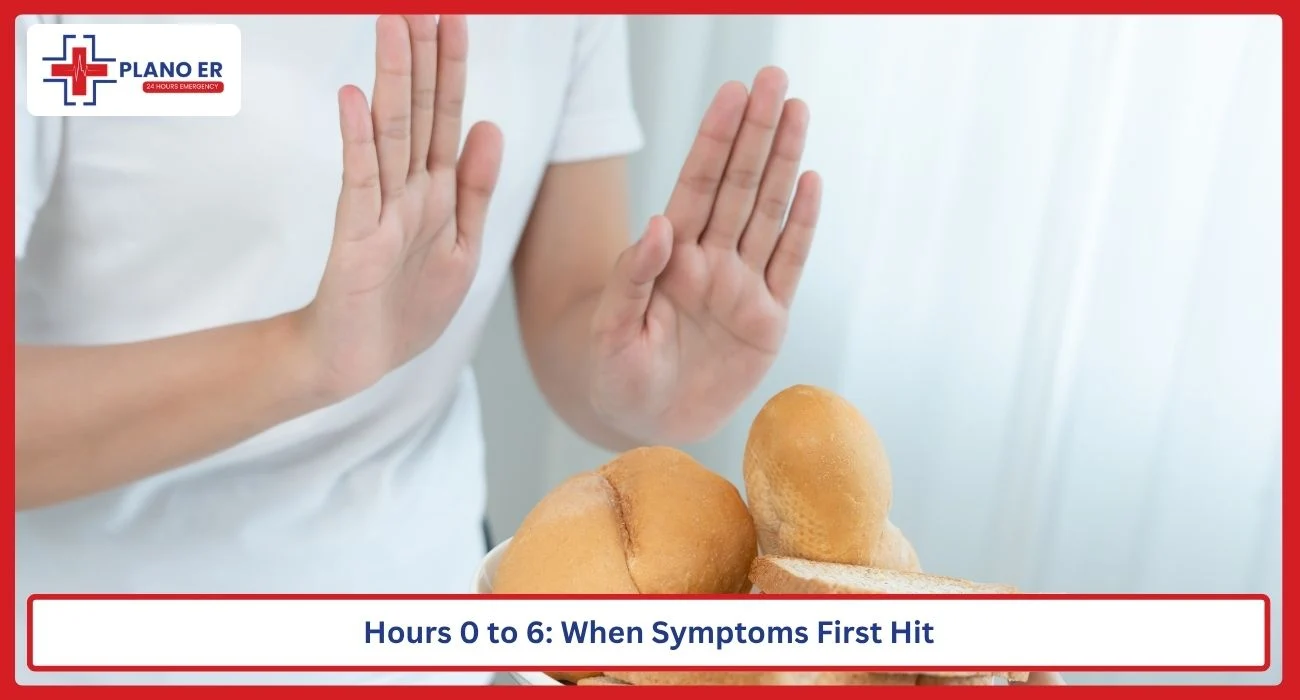
The first six hours are usually the worst. Vomiting comes in waves, and the body wants to reject anything you try to put in the stomach. This is the phase where most people ask whether this is really stomach flu or something more serious.
What is happening in your body. Your immune system has detected a virus in the digestive tract and is trying to flush it out. Vomiting and diarrhea are protective responses, uncomfortable as they are.
According to MedlinePlus, most viral gastroenteritis cases resolve within a few days without medical treatment.
What to do right now
- Stop eating. Even bland food will likely trigger more vomiting.
- Do not drink water in large gulps. This can restart the vomiting cycle.
- Rest lying on your side, especially if you feel drowsy after vomiting.
- Note the time of your first symptom. This helps you track the illness.
What not to do
- Do not take anti-diarrhea medication in the first hours. The body is trying to clear the virus.
- Avoid dairy, coffee, alcohol, and greasy foods for at least 24 hours.
- Do not share utensils, towels, or a bathroom if you can help it. Stomach flu spreads quickly.
Hours 6 to 24: Managing Fluids Without Making It Worse
Once vomiting slows to less than once an hour, it is time to start rehydrating carefully. This phase is where most stomach flu recoveries succeed or fail.
The small-and-slow rule. Sip 1 to 2 teaspoons of fluid every 5 to 10 minutes. If that stays down for 30 minutes, double the amount. Slow escalation is critical. Gulping a full glass of water almost always triggers more vomiting.
What to sip
- Oral rehydration solutions (best option, replaces lost electrolytes)
- Clear broth or bouillon
- Weak, unsweetened tea
- Ice chips or frozen electrolyte pops
- Water in tiny sips (after 12 hours, if tolerated)
What to skip
- Sports drinks (too much sugar can worsen diarrhea)
- Sodas, juices, and other sugary drinks
- Milk and dairy
- Alcohol and caffeine
Signs your approach is working
- Vomiting slows and stops
- You urinate at least once every 6 to 8 hours (light yellow color)
- Mouth feels less dry
- Energy starts to return slightly
If you cannot keep sips down after 12 hours, IV fluids may be needed. Plano ER provides emergency dehydration treatment on-site any hour of the day.
Is stomach flu contagious?
Yes. Stomach flu spreads easily through contact with infected people, contaminated surfaces, and shared food or utensils. Norovirus, the most common cause, can spread even after symptoms stop.
How is stomach flu different from the flu?
Different illnesses despite the shared name. Respiratory flu (influenza) causes fever, body aches, cough, and congestion. Stomach flu (viral gastroenteritis) causes vomiting and diarrhea. If you are unsure which one you have, our on-site strep, mono, and flu testing can identify influenza in about 15 minutes.
How do I know if I have stomach flu or food poisoning?
Food poisoning usually hits within a few hours of a specific meal and often affects everyone who ate the same food. Stomach flu builds more gradually, spreads person-to-person, and often runs through households or schools.
Day 2: Slowly Reintroducing Food
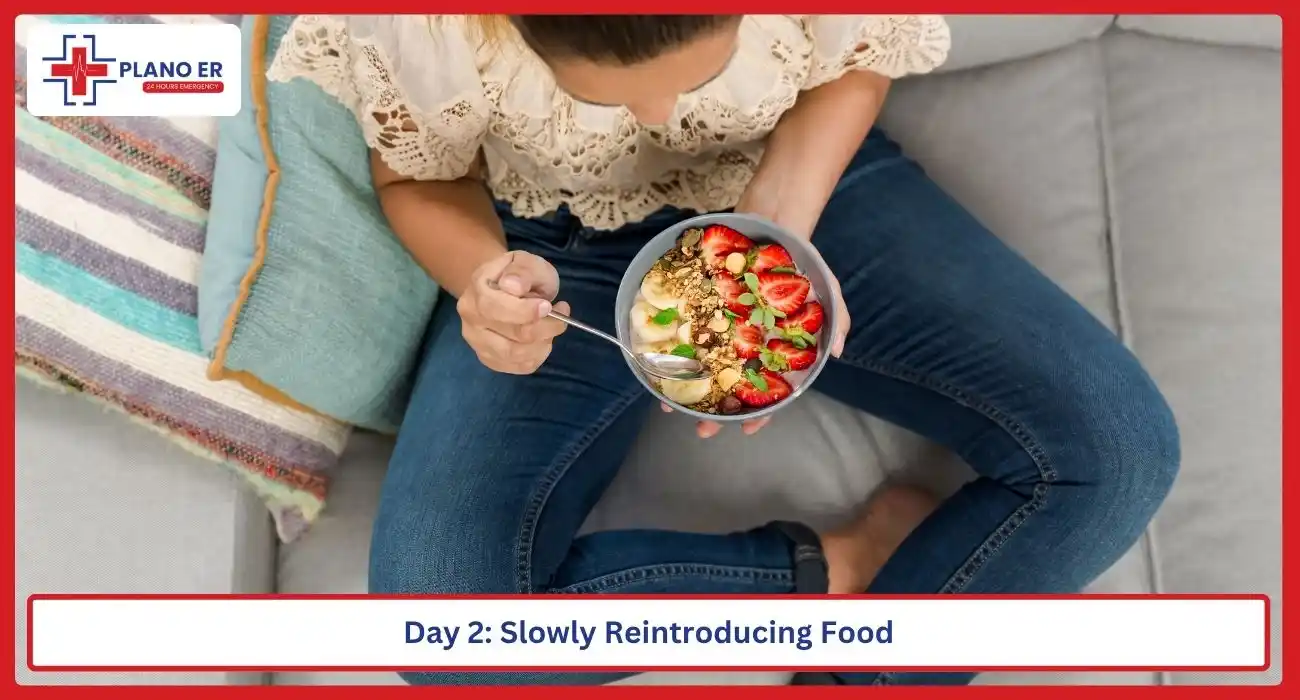
By hour 24 to 48, most people can start eating small amounts of bland food. The classic BRAT diet (bananas, rice, applesauce, toast) still works, but modern guidance is more flexible.
First foods to try
- Plain toast, crackers, or plain rice
- Bananas (potassium replaces what was lost)
- Applesauce
- Boiled or baked chicken in small portions
- Plain oatmeal
- Broth-based soups
The two-hour rule. Try one small serving. Wait two hours. If nothing comes back up, try a slightly larger portion of the same food. If your body tolerates that, expand your options gradually.
Foods to still avoid
- Dairy (temporarily hard to digest after stomach flu)
- Fried or greasy foods
- Spicy foods
- Raw vegetables and high-fiber foods
- Sugary desserts
Most adults can return to a normal diet within 48 to 72 hours. Children and older adults may take longer. If you feel worse after reintroducing food, go back to clear fluids for another 6 to 12 hours before trying again.
Red Flags: Signs This Is Not Just Stomach Flu
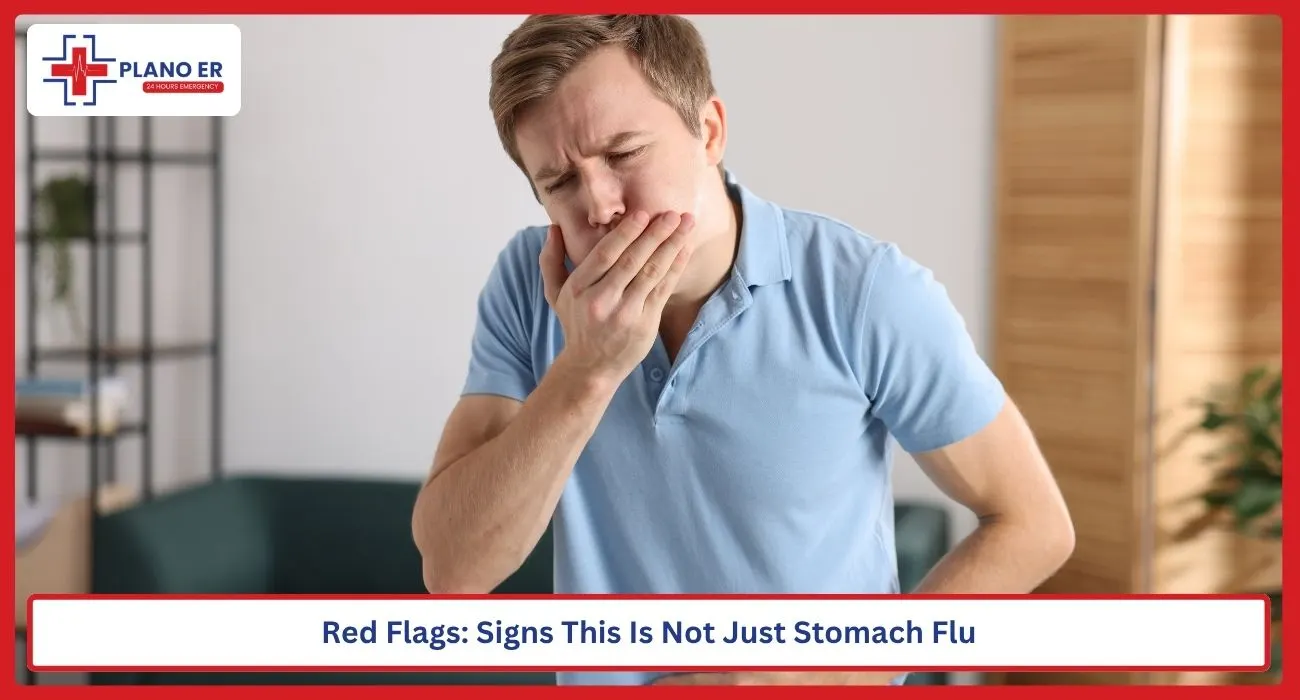
Most stomach flu cases stay routine, but some symptoms mean it is more than a viral infection or that dehydration has become dangerous. Head to Plano ER for any of these:
- Vomiting or diarrhea lasting more than 48 hours
- Blood in vomit or stool
- Fever above 103°F, or any fever in an infant under 3 months
- Severe abdominal pain, especially concentrated in one specific area
- Signs of severe dehydration: dizziness on standing, no urination for 8 or more hours, sunken eyes, extreme fatigue
- Confusion or difficulty staying awake
- Inability to keep any fluids down for more than 12 hours
- Symptoms in someone pregnant, elderly, or immunocompromised
- Recent travel to a country with known gastrointestinal outbreaks
Plano ER treats severe cases with IV fluids, anti-nausea medications, blood work to rule out other causes, and observation until symptoms stabilize. Most patients feel significantly better within 1 to 2 hours of IV rehydration.
Recovery, Return to Normal, and Preventing Spread
By day 3, most people feel noticeably better. Full recovery usually takes 3 to 7 days, though some fatigue can linger for a week.
When you can return to work or school
The CDC recommends staying home for at least 48 hours after vomiting and diarrhea stop. The virus can still shed in stool for up to two weeks, but you are most contagious during active symptoms and the two days after.
Protecting the household
- Wash hands with soap and water for at least 20 seconds. Hand sanitizer does not work well against norovirus.
- Disinfect surfaces with a bleach-based cleaner. Vinegar and standard household sprays are not enough.
- Wash bedding and clothing in hot water.
- Keep the sick person’s toothbrush, towels, and utensils separate.
- Avoid preparing food for others for at least 48 hours after symptoms stop.
What lingers. Fatigue, a smaller appetite, and mild bloating can continue for several days. Full digestive recovery may take up to a week. Continue drinking fluids and eating gently.
When to worry about recovery. If symptoms return, if diarrhea persists beyond 7 days, or if you develop new pain or fever after feeling better, get medical evaluation.
Can I take anti-diarrhea medications for stomach flu?
Generally not in the first 24 hours. The body is clearing the virus through diarrhea, and stopping it too early can prolong the illness. Adults with mild symptoms after day 2 may use them briefly, but check with a doctor first.
When are IV fluids needed for stomach flu?
IV fluids are needed when someone cannot keep sips down for 12 or more hours, shows signs of severe dehydration, or belongs to a high-risk group. Plano ER delivers IV rehydration within minutes of walk-in.
| Need care right now?
If you cannot keep fluids down, feel confused or extremely weak, or see blood in vomit or stool, walk in to Plano ER for 24/7 emergency stomach flu treatment. No appointment required. IV fluids and anti-nausea medications can turn severe cases around within an hour or two. 📍 7940 Custer Rd, Plano, TX 75025 📞 +1 972-527-3000 🕐 Open 24/7 |