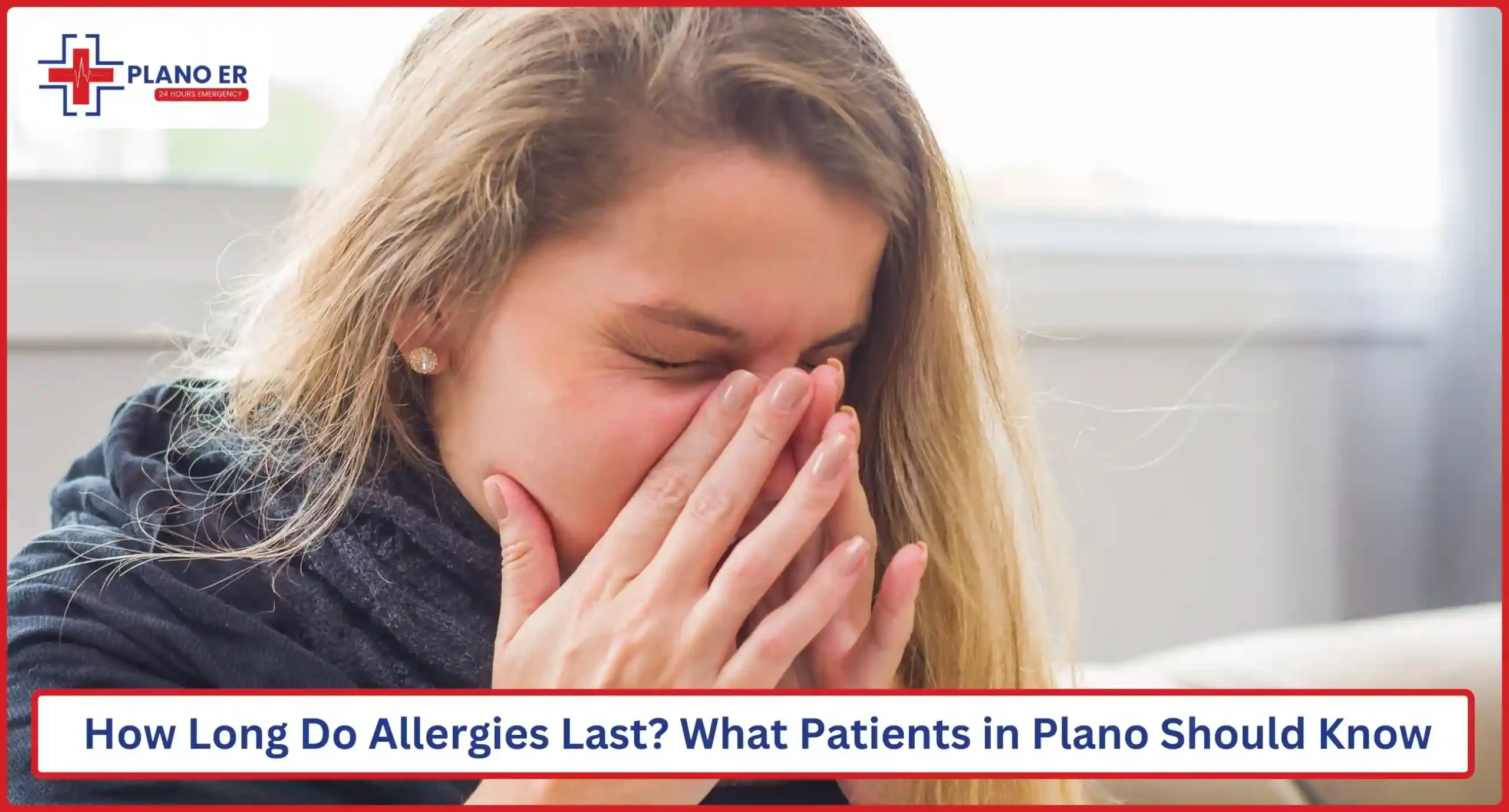
One of the most common medical advice patients seek during seasonal changes in North Texas is allergies. This is because every season has its own set of different allergies that may include rashes, watery eyes, or breathing discomfort.
Allergies could be genetic or sudden; however, their duration period differs. Some might last for a few days or get treated with medications, whereas some might last the entire season. At times, you might be allergic to certain environments or chemicals, which, when triggered, cause problems for you.
In this educational guide, we will explain how long do allergies last and when an emergency evaluation becomes essential at Plano ER.
Time duration of different allergies
| Symptom | Typical Duration |
| Sneezing and nasal congestion | 7–14 days |
| Itchy or watery eyes | 1–2 weeks |
| Skin rash or hives | 5–10 days |
| Sinus pressure or headache | Up to 2 weeks |
| Cough from postnasal drip | 1–3 weeks |
If the symptoms are over this period, then it is important to visit a reliable emergency room in Plano, Texas.
Can Allergies Be Mistaken for a Cold or Flu?

Yes, allergies are normally confused with viral winter infections because symptoms such as sneezing, congestion, and coughing are similar. If symptoms last longer than the expected time period or recur during the same season each year, then these allergies may be due to an underlying cause rather than an illness.
Environmental Allergens Common in North Texas
Understanding seasonal allergy patterns helps patients follow early preventive measures. Because these allergens are widespread, many residents experience continuously occurring or prolonged allergy symptoms.
- Airborne allergens are at a high level the entire year
- Tree pollen increases during the spring season
- Grass pollen is common during summers
- Weed pollen is more noticeable during the fall
- Mold spores increase after rainfall
Can Allergies Last Longer Than a Week?
Yes, when exposure to the allergen continues, the allergies can last more than a week. Seasonal allergies last for several weeks or sometimes months during peak periods.
Environmental allergens such as dust mites or pet dander can cause symptoms year-round if not controlled. In these cases, symptoms may improve only temporarily, making you feel normal for a short time, but without consistent treatment or allergen avoidance, they keep occurring again.
What are skin allergies and rashes?
Rashes caused by allergic reactions appear red, itchy, or swollen and may spread if triggered.
Most allergic rashes heal within five to 10 days, especially when the trigger is identified early and then controlled. However, severe itching, blistering, or signs of infection may require professional evaluation and urgent rash treatment to prevent complications.
Allergies in Children
The impact of allergies on children and adults is different, and symptoms may last longer if not recognized early. To identify how long do allergies last in children again depends upon their cause. Children might feel more discomfort in comparison to adults, but to minimize its recurrence in the future, it needs to be monitored and controlled.
Nasal congestion, skin irritation, and behavioural changes such as irritability or poor sleep may indicate an allergic reaction.
Because children may struggle to explain their pain or symptoms, persistent reactions should be evaluated promptly.
Visit us at Plano ER, where our cooperative staff and offers reliable and effective pediatric care in a friendly environment.
When Allergy Symptoms Require Emergency Care
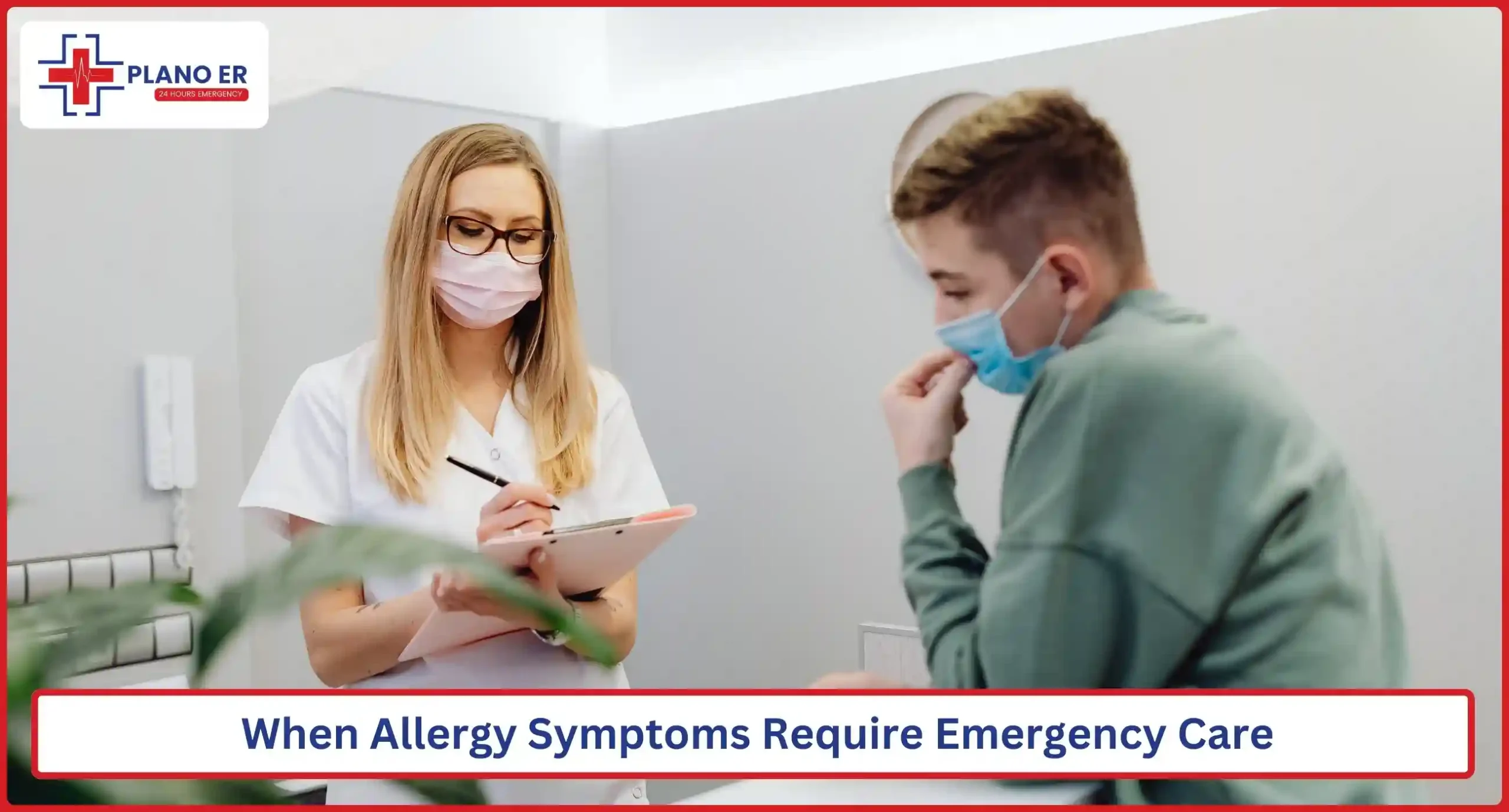
You may require emergency medical evaluation if you experience:
- Difficulty breathing or shortness of breath
- Wheezing
- tightness in the chest
- Swelling of the face, lips, tongue, or throat
- Dizziness, fainting, or confusion
- A rapidly spreading rash on the infected area
These symptoms may indicate a severe allergic reaction and should not be treated at home. Prompt lab testing and evaluation at an emergency room is important to prevent complications.
When Allergy Symptoms Affect Daily Function
Allergies not only cause discomfort, but they also interfere with work, school, and daily activities. Ongoing congestion, headaches, and fatigue may reduce concentration and productivity. In children, untreated allergies can impact sleep quality and academic performance.
When allergy symptoms consistently affect daily function, it is important to identify their cause so that you can start taking timely initiatives.
Final thoughts on how long do allergies last?
In contrast, the right answer to how long do allergies last differs depending on their cause and severity. Typically, if the allergy occurs again, then it is important to get it monitored and evaluated.
Early diagnosis does not only help in getting it controlled, but it might also ease your pain early. Environmental allergens cannot be ignored, but they can be avoided. In seasons that cause allergies, it is important to take proper precautions and staying close to allergens during the peak periods.
If you’re concerned about your rashes or allergies, then, for instant and reliable diagnosis, visit us at Plano ER by calling us or getting a walk-in evaluation.
Frequently Asked Questions (FAQs)
How long do allergies usually last?
Allergies may last from a few hours to several weeks, depending on the allergen and continued exposure.
Can allergies last five to 10 days?
Yes, mild allergic reactions, especially skin or contact allergies, often resolve within five to 10 days.
How long do allergies last with medication?
With medication, symptoms often improve within 1–3 days, though full relief may take longer.
Do seasonal allergies last all year?
No, seasonal allergies usually improve once pollen levels drop, often by late autumn.
When should I seek emergency care for allergies?
Emergency care is needed if symptoms include breathing difficulty, facial swelling, dizziness, or a rapidly spreading rash.