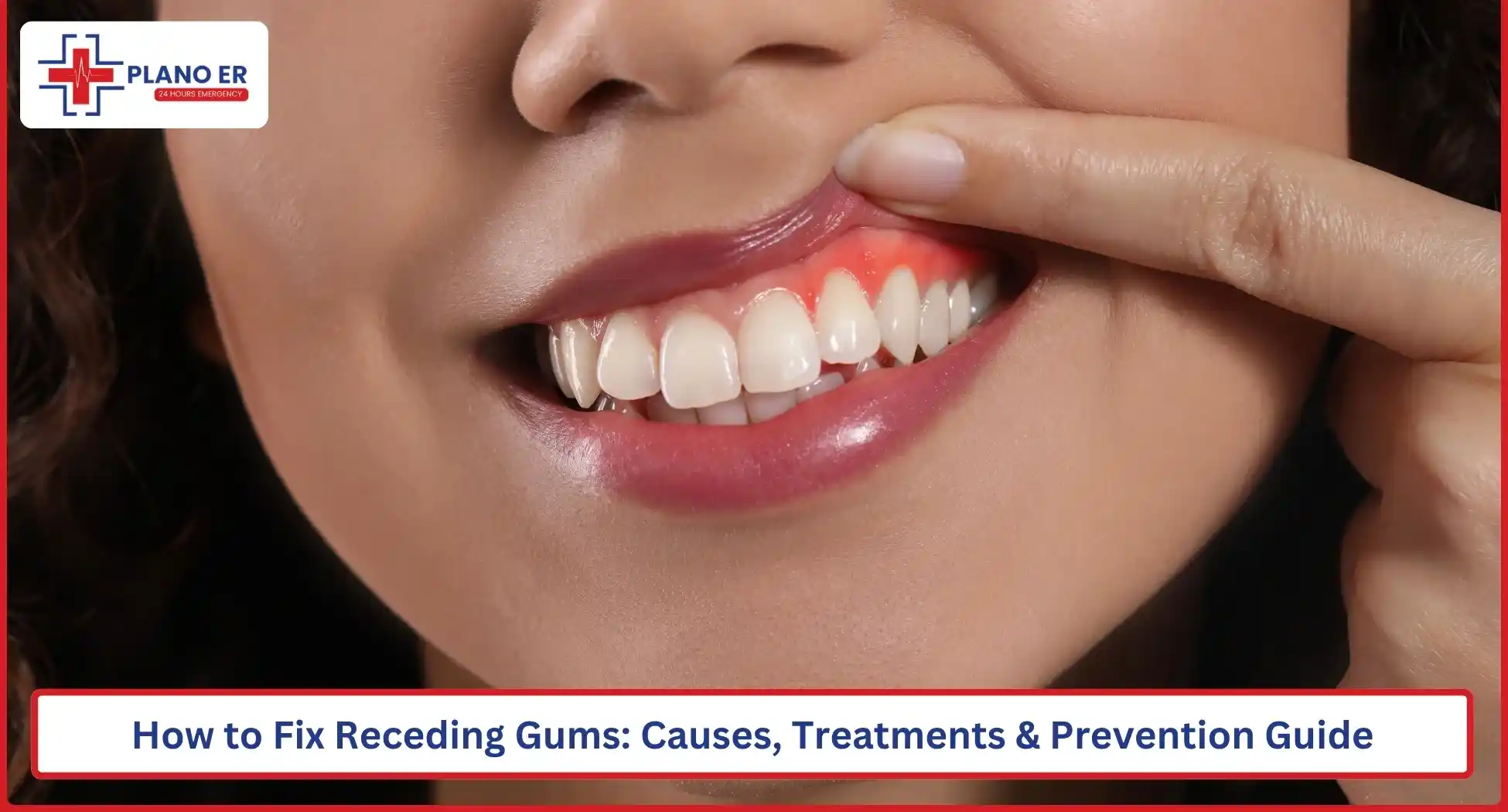
When the roots of the teeth become more visible, making the teeth appear longer, this should not be ignored, as it might indicate a long-term oral health problem. If you notice the gum tissue pulling away from your teeth, making the roots more visible, then it might be due to receding gums, which get worse over time.
Many people often search for how to fix receding gums, and this condition might get worse over time. It is important to know that receding gums do not grow back naturally. Moreover, it might also make the teeth sensitive, decay, or cause tooth loss.
By making use of the right professional care and best at-home practices, the process of receding gums slows down, and the appearance of the gums improves over time. In this guide, we will illustrate how to fix receding gums, including their causes and treatments, so that you know when to visit your dentist.
What Are Receding Gums?
Receding gums appear when the soft tissues around the teeth start to pull back, making the tooth roots more prominent. Such a condition is called gum recession, which affects the supporting structures of teeth.
Gum recession does not grow overnight, but it gradually grows, making early detection difficult. The initial problem you face is tooth sensitivity, and over time, you notice gaps between teeth and gums.
Below are a few common signs of receding gums:
- Sensitive to hot or cold
- Visible tooth roots
- Teeth appearing longer than usual
- Swollen or red gums
- Bleeding when you brush or use floss
It is better not to ignore these signs, as they might gradually lead to severe complications. If you experience tooth sensitivity or a change in the shape of a tooth, then it’s better to visit a healthcare provider.
Common Causes of Gum Recession
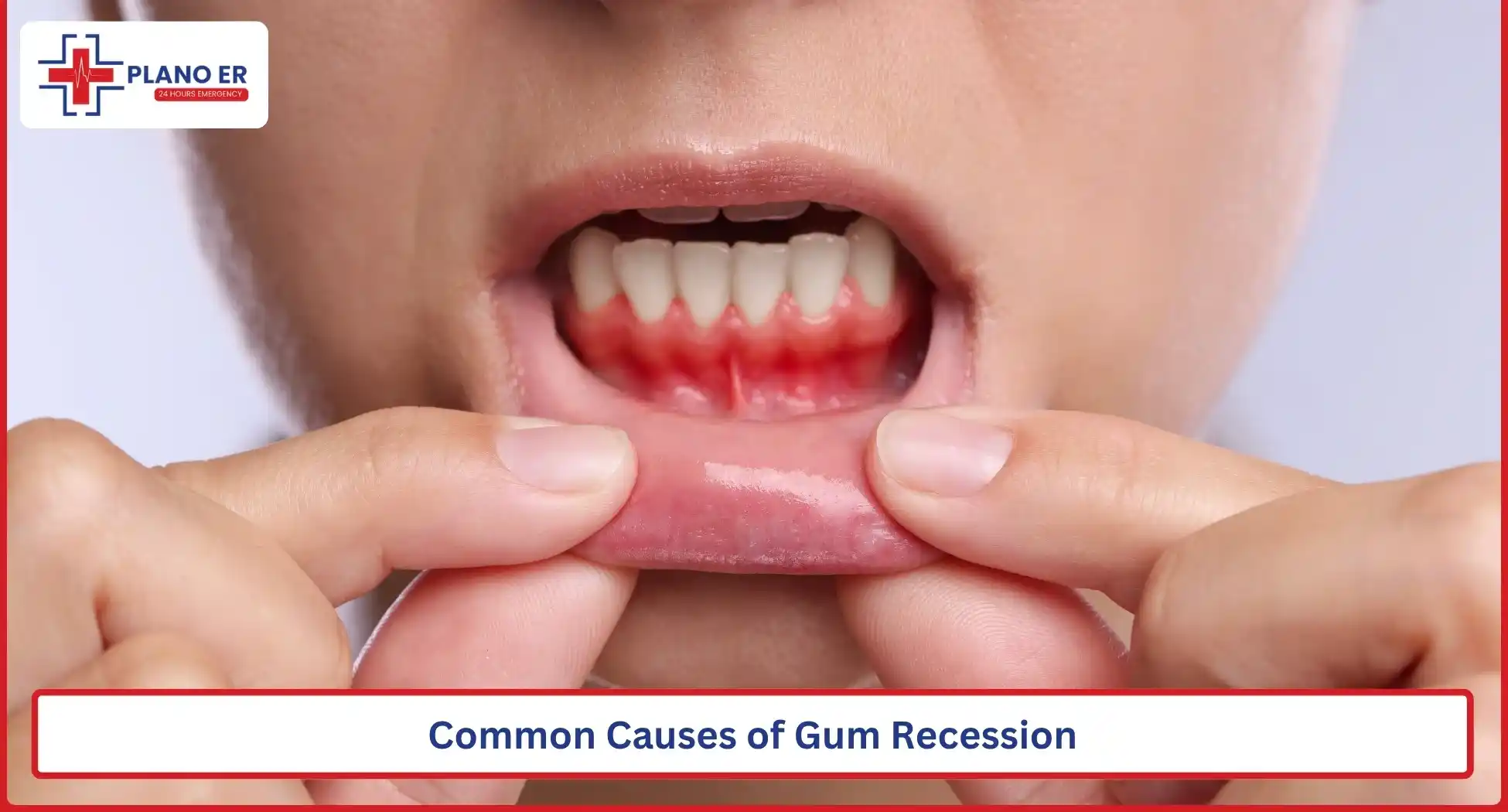
If you want to learn about how to treat receding gums, then it is important to know about their causes. Gum recession appears due to different factors, and accurate treatment is provided based on its cause:
Below are a few major causes of gum recession:
- Gum Disease (Periodontitis)
- Aggressive Brushing or Flossing
- Poor Oral Hygiene
- Hormonal Changes
- Use of Tobacco or smoking
- Teeth Grinding (Bruxism)
- Misaligned teeth (less common)
- Genetics
- Lip or tongue piercings
All these factors contribute to gum disease receding, but the conditions differ. If you’re experiencing severe gum pain, swelling, or signs of infection, visit Plano ER, where we can provide immediate evaluation and refer you to the right dental specialist.
How to Fix Receding Gums
If you want to know how to help receding gums, then the best solution is based on how severe the condition is. During the early stages, it can be managed with non-invasive treatments, whereas in an advanced condition, it might require surgery.
Improve Oral Hygiene
Taking good care of oral health is the first step towards well-maintained dental health. Gently brush teeth twice daily and use a soft-bristled toothbrush; also, use an antibacterial mouthwash and floss to remove plaque and
Resolve the underlying cause
At times, gum recession is caused by different underlying issues, such as smoking and teeth grinding. It is important to stop using products that harm oral health.
With routine check-ups, receding gums can be detected at an early stage.
For sudden gum issues, an ER near me search can connect you to immediate medical support and proper referrals.
Can You Reverse Gum Recession?
No, generally, it is not possible to naturally regrow the gum tissue that has been lost. However, this condition can be managed or improved with proper care. To stop further gum tissue loss, it is important to strengthen existing gum tissue and practise proper dental care. If required, it is also better to use professional treatments to restore the lost appearance.
The key to preventing further damage is through early intervention. To effectively fix receding gums without invasive procedures, it is better to diagnose the signs early and seek medical assistance.
Quick overview of what protects or worsens your gums
The table below provides a quick overview of what affects your gums and what can protect your gums:
| What Habit Are You Following? | Impact on Gums | What to do instead? |
| Brushing teeth hard | It slowly wears the gum tissue down | Instead, use a soft-bristled brush |
| Skipping the use of floss | Build-up of plaque | Floss daily |
| Smoking or tobacco use | Weakens gums and slows healing | Quit or reduce usage |
| Grinding teeth (bruxism) | Puts pressure on gums | Use a nightguard. |
| Poor diet (low vitamins) | Weakens gum and teeth health | Eat foods rich in Vitamin C & D |
| Ignoring dental checkups | Delays early detection | Visit the dentist every 6 months |
| Using hard-bristled brushes | Causes gum irritation | Switch to soft or ultra-soft brushes |
| Frequent sugary foods | Increases plaque formation | Limit sugar and rinse after meals |
If you’re dealing with gum discomfort along with throat pain, it’s important to understand infections. Explore our blog on “How Long Does Strep Last?” Symptoms, Contagious Period, and When to Seek Care” to understand how infections affect your body and when to seek care.
Conclusion: Controlling Receding Gums
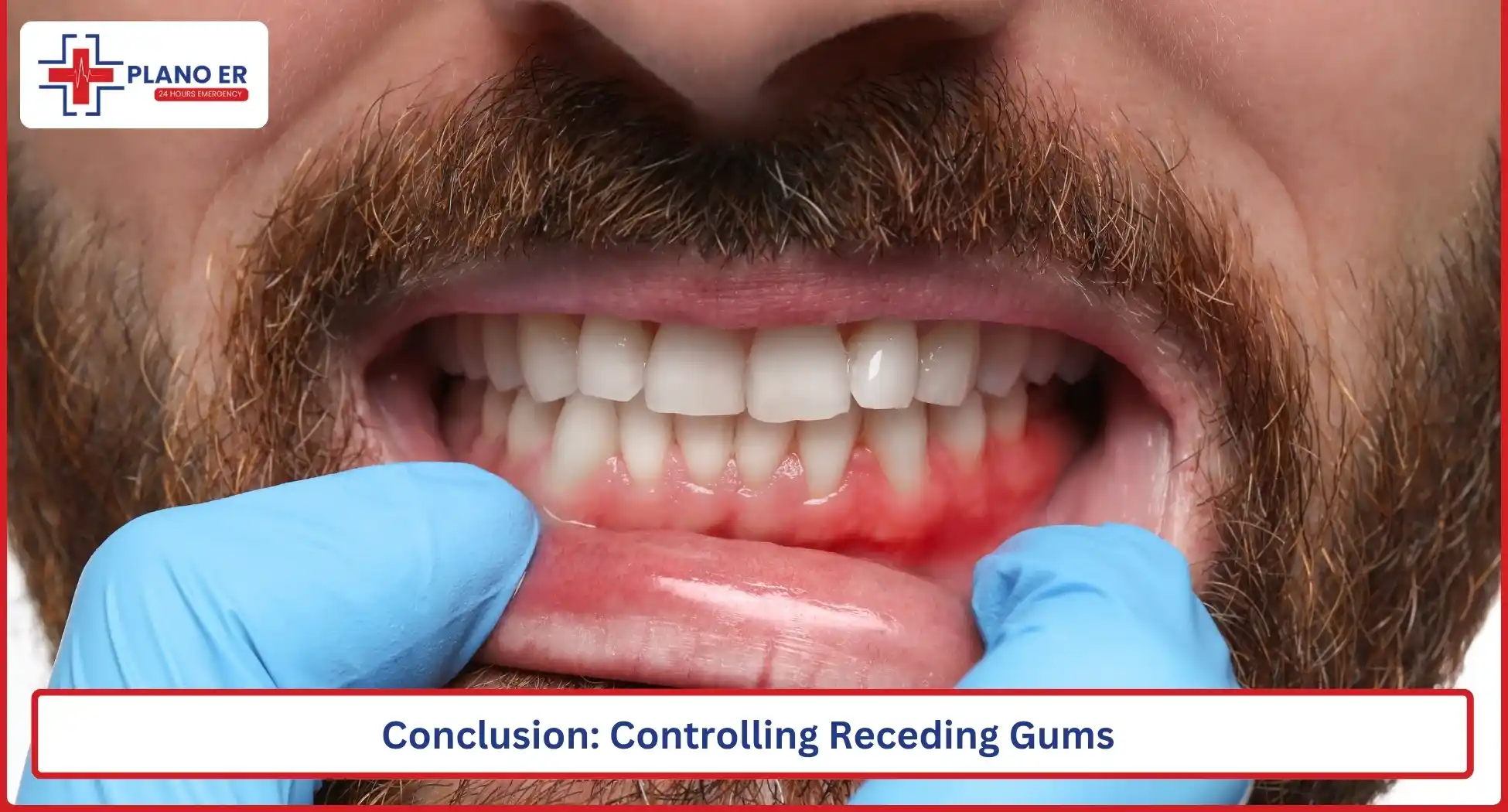
Gum recession can be concerning, but there are different effective and easy ways to manage it. If you’re looking for how to fix receding gums, then a simple solution is following an effective and healthy dental health approach.
Oral health can be improved with regular dental checkups, using suitable floss and a brush, and following a healthy diet. Moreover, when the signs of receding gums are detected at an early stage, then serious complications, such as tooth loss and advanced gum disease, can be avoided.
Taking early action is the most appropriate way to ensure gums are strong. Combine consistent care with healthy habits to ensure your gums are protected.
Frequently Asked Questions (FAQs)
1. Can receding gums grow back naturally?
No, once lost, receding gums cannot grow back naturally, but future damage can be avoided with proper care.
2. What is the best treatment for receding gums?
The best treatment is based upon how severe the issue is; mild cases can be resolved with proper oral hygiene, and advanced cases require surgery.
3. How can I fix receding gums at home?
Receding gums can be improved by brushing gently, using a floss daily, making use of an antibacterial mouthwash, and, if necessary, taking professional treatment.
4. Is gum recession caused by gum disease?
Yes, gum disease (periodontitis) is one of the most common causes of receding gums.
5. Does scaling and root planing fix receding gums?
No, scaling and root planing does not regrow gums but helps stop the progression of gum disease.