
Swelling in the knee is a common issue, and people in old age or sports are mostly affected by it. Regaining comfort and mobility after a swollen knee is what patients actually look for. It is important to know when to take rest and try home remedies, or when seeking medical assistance becomes essential.
In some cases, this issue can be treated on its own, whereas others require a serious medical evaluation. If the pain is persistent and is not healing, then it is important to get it properly monitored.
In this guide, we will explain how to reduce swelling in the knee quickly; moreover, we will illustrate when to go to the ER for diagnosis or further medical evaluation.
What Causes Knee Swelling?

People experience knee swelling when excessive fluid gathers around the knee joint. This condition is also known as “water on the knee” and can cause both severe or mild pain depending upon the cause.
Knee swelling might occur due to a minor strain or a serious injury. Sometimes it also appears due to a serious medical condition.
Other common triggers include:
- Repetitive strain from physical activities
- Sudden twisting or impact injuries
- Arthritis or chronic joint inflammation
- Infection or internal bleeding
For patients living in Plano, if the pain is persistent and keeps increasing, then it is best advised to visit a reliable state-of-the-art emergency facility in Plano, TX.
Recovery Timeline: What to Expect
The table below describes the recovery time of a swollen knee depending on its severity.
| Severity of Swelling | Expected Recovery Time |
| Mild swelling | 2-5 days |
| Moderate swelling | 1–2 weeks |
| Severe swelling and pain | Requires medical evaluation |
At times, you might experience severe knee pain, gradually causing swelling in the knee after complete recovery. This happens due to untreated underlying medical issues that trigger again. In such repetitive pain episodes, it is best recommended to visit ER near you for effective medical assistance.
Tips to Reduce Swelling in Knee Quickly at Home
Mild swelling or moderate swelling can heal naturally, and by using a few home remedies, you can speed up the recovery process.
Below are a few tips to heal fast:
- Rest: Avoid movements that stress the knee. Resting helps in reducing knee swelling within a few days.
- Ice therapy: Apply ice for 15–20 minutes several times per day. This helps relax blood vessels and limits fluid accumulation.
- Compression and elevation: Using a compression wrap while elevating the knee above heart level encourages fluid drainage and reduces swelling.
These tips help in healing mild cases; however, if the pain is severe and is getting worse, then it is advised to get emergency digital x-ray imaging, as it quickly diagnosis the underlying issue before it gets serious.
Understanding Knee Swelling After Injuries
A swollen knee can occur after a minor strain or a more serious incident. By knowing why it was caused, you can understand whether you require instant treatment or effective home remedies.
Symptoms that may indicate a severe injury include:
- Inability to bend or straighten the knee fully
- Sharp or worsening pain
- Significant bruising or deformity
- Instability while walking
In such cases, a comprehensive medical evaluation, such asa CT scan, is often used to identify bone or ligament injuries and determine the correct course of treatment.
Can a Swollen Knee Be Dangerous?
Yes, a swollen knee is harmless but it can be dangerous if you experience severe pain, sudden swelling, redness or warmth. These signs may indicate a severe underlying issue requiring instant sprains and fractures treatment.
Such complications require instant medical attention, as delaying only gives rise to more serious problems. Experiencing swollen knee can be a sign of septic arthritis, ligament tear, fracture, blood clots such as popliteal vein thrombosis, or chronic conditions like gout or arthritis.
Lifestyle Tips to Prevent Knee Swelling
Knee swelling can be prevented by strengthening the muscles around the joint and avoiding unnecessary stress.
Below are a few helpful tips to minimize the chances of a swollen knee:
Strength Training
Exercises that target quadriceps, hamstrings, and calves support knee stability.
Daily Activity changes
Swimming, cycling, or walking can maintain joint health without putting excessive pressure on the knee.
Right Footwear
Wear supportive shoes during exercise can prevent unnecessary strain.
Weight Management
Maintaining a healthy weight reduces stress on the knee joint, minimizing fluid buildup.
Conclusion: How to Reduce Swelling in Knee Quickly
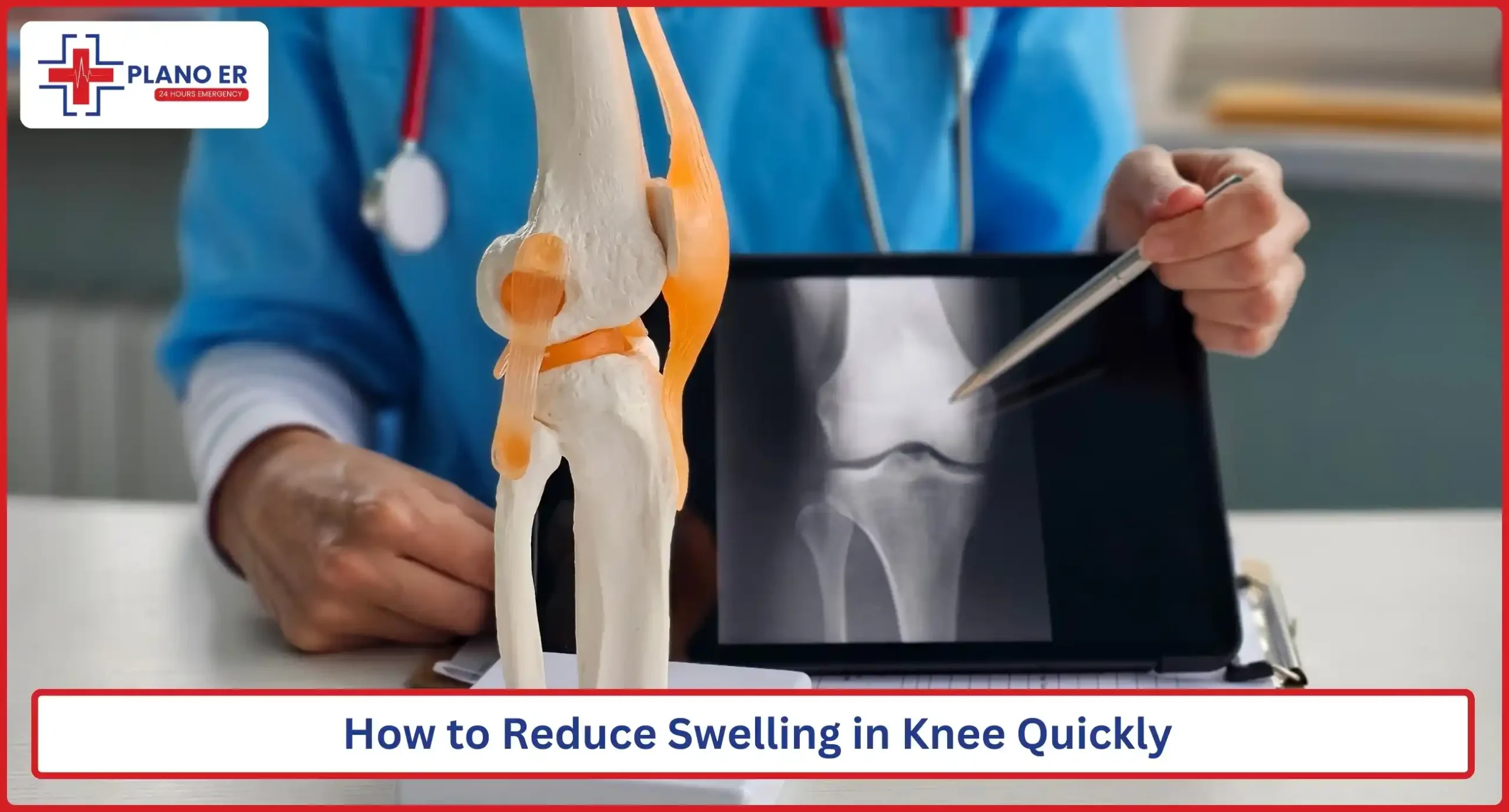
Managing knee swelling effectively starts with knowing its cause. Most mild swelling can be reduced in a few days through rest, ice therapy, compression, elevation, and gentle exercises to reduce fluid in the knee. Using supportive measures, avoiding strain, and following recommended recovery guidelines can help the knee heal faster and prevent stiffness or further injury.
If your knee has been swollen for 3 weeks, or if swelling is accompanied by severe pain, redness, warmth, or difficulty bearing weight, then it time to get it medically evaluated.
Visit Plano ER for 24/7 evaluation and advanced care, including Digital X-ray and CT scans to diagnose and treat injuries promptly.
Frequently Asked Questions (FAQs)
How can I reduce knee swelling fast?
Rest, ice, compression, elevation, and gentle exercises help most cases heal in a few days.
Can a swollen knee be dangerous?
Yes, if it is accompanied by severe pain, redness, warmth, or difficulty bearing weight.
How long does swelling last?
Mild swelling usually resolves in a few days; persistent swelling may need medical evaluation.
Are exercises helpful for knee fluid?
Yes, gentle leg and knee exercises can reduce fluid and improve mobility.
When should I see a doctor?
If swelling persists, worsens, or follows trauma, consult a medical professional for imaging like Digital X-ray or CT scans.