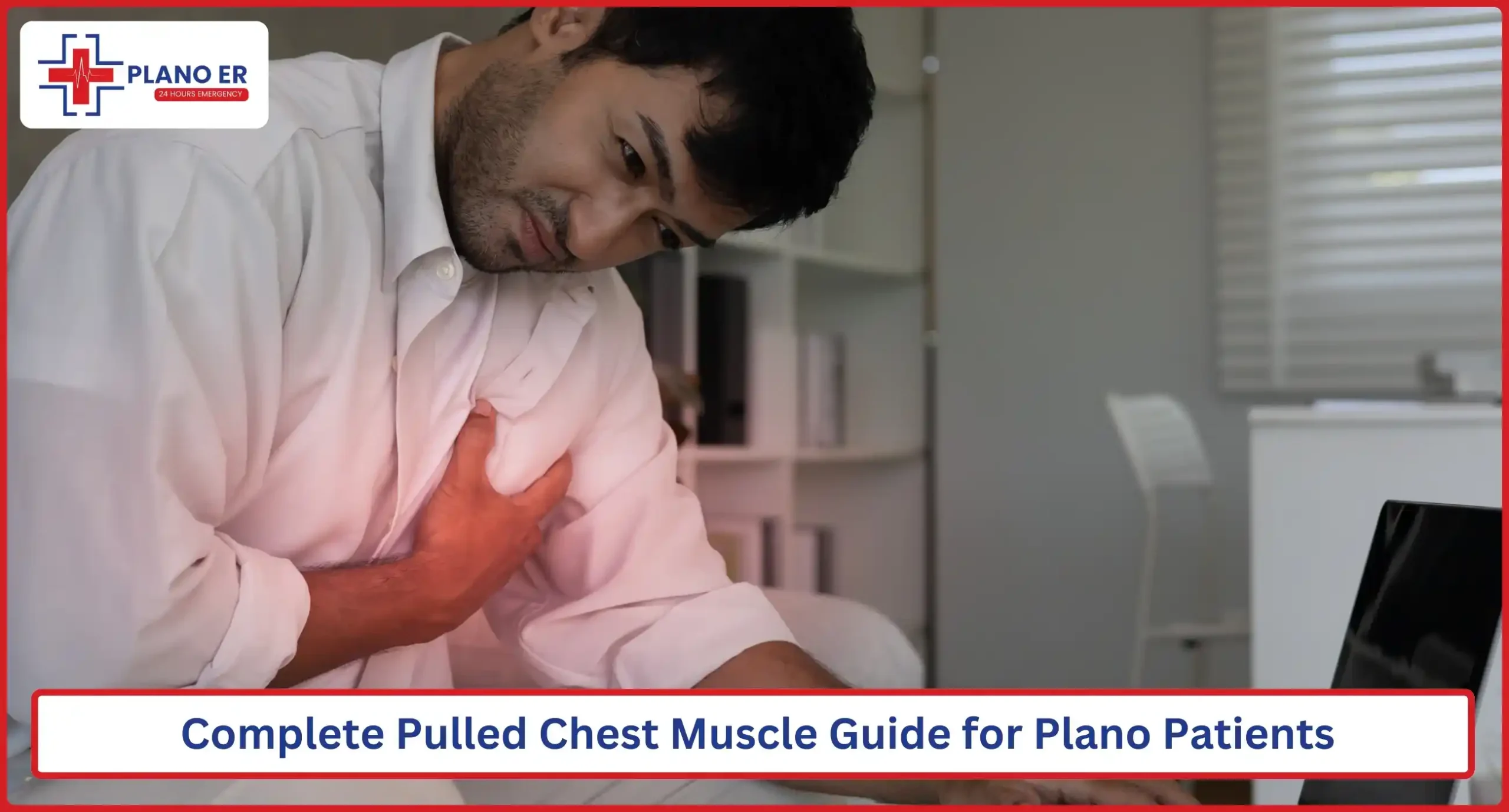
Many people feel sudden discomfort in the chest and immediately fear the worst. The worry grows when pain makes breathing hard or when it spreads across the upper body. A pulled chest muscle can mimic dangerous symptoms, which is why knowing the difference matters.
Chest muscle injuries often appear during lifting, workouts, or even coughing fits. The problem becomes confusing because chest pain also connects to heart or lung issues.
Plano ER, your 24/7 emergency care in Plano, provides round-the-clock evaluation for chest pain, including rapid tests that rule out serious emergencies. Chest muscle injuries often appear during lifting, workouts, or even coughing fits.
This pulled chest muscle guide explains the causes, symptoms, treatment steps, and when to visit Plano ER for fast medical care.
What does a pulled chest muscle really mean?

A pulled chest muscle happens when the muscle fibres along the chest wall stretch or tear. These muscles help you lift, breathe, and support upper-body movement. When they are overloaded, the result can feel sharp, tight, or heavy.
Many people confuse muscle strain with cardiac symptoms because both create discomfort in the same region. Plano ER evaluates chest pain within minutes, so you know whether you are dealing with a simple strain or a condition that requires urgent care.
Is a pulled chest muscle dangerous to your health?
Yes, a pulled chest muscle is usually not life-threatening, but it can still feel frightening and painful. This is because these symptoms resemble heart attack warning signs. Any chest pain with dizziness, nausea, shortness of breath, or spreading discomfort should be checked immediately.
Plano ER offers a quick evaluation to make sure your symptoms are muscular and not cardiac or respiratory. Our goal is to prevent delay when serious conditions need immediate treatment.
Learn more about our expert emergency care team at Plano ER, Your Trusted 24/7 Emergency Care Center.
Why do chest muscles get strained?
Chest muscles work through daily movements and athletic activities, which makes them sensitive to strain. When the muscle is pushed beyond its limit, the fibers stretch and create inflammation. Understanding the cause helps guide recovery and prevention.
Common triggers include:
- Heavy lifting
- Quick twisting movements
- Intense gym workouts
- Repetitive upper body tasks
- Hard coughing episodes
When medical testing becomes necessary?
Some chest strains look simple at first, but may hide deeper issues such as rib injuries or cartilage inflammation. Testing becomes important when symptoms persist or when the pain pattern seems unusual. Plano ER identifies complications early, so recovery does not get delayed.
Visit us for testing if you experience:
- A popping sensation at the time of injury
- Trouble taking a full breath
- Swelling that spreads
- Pain that continues for several days
Plano ER supports this evaluation with fast digital X ray and imaging, which helps detect rib problems or deeper chest wall inflammation.
Symptoms that help you recognize the problem
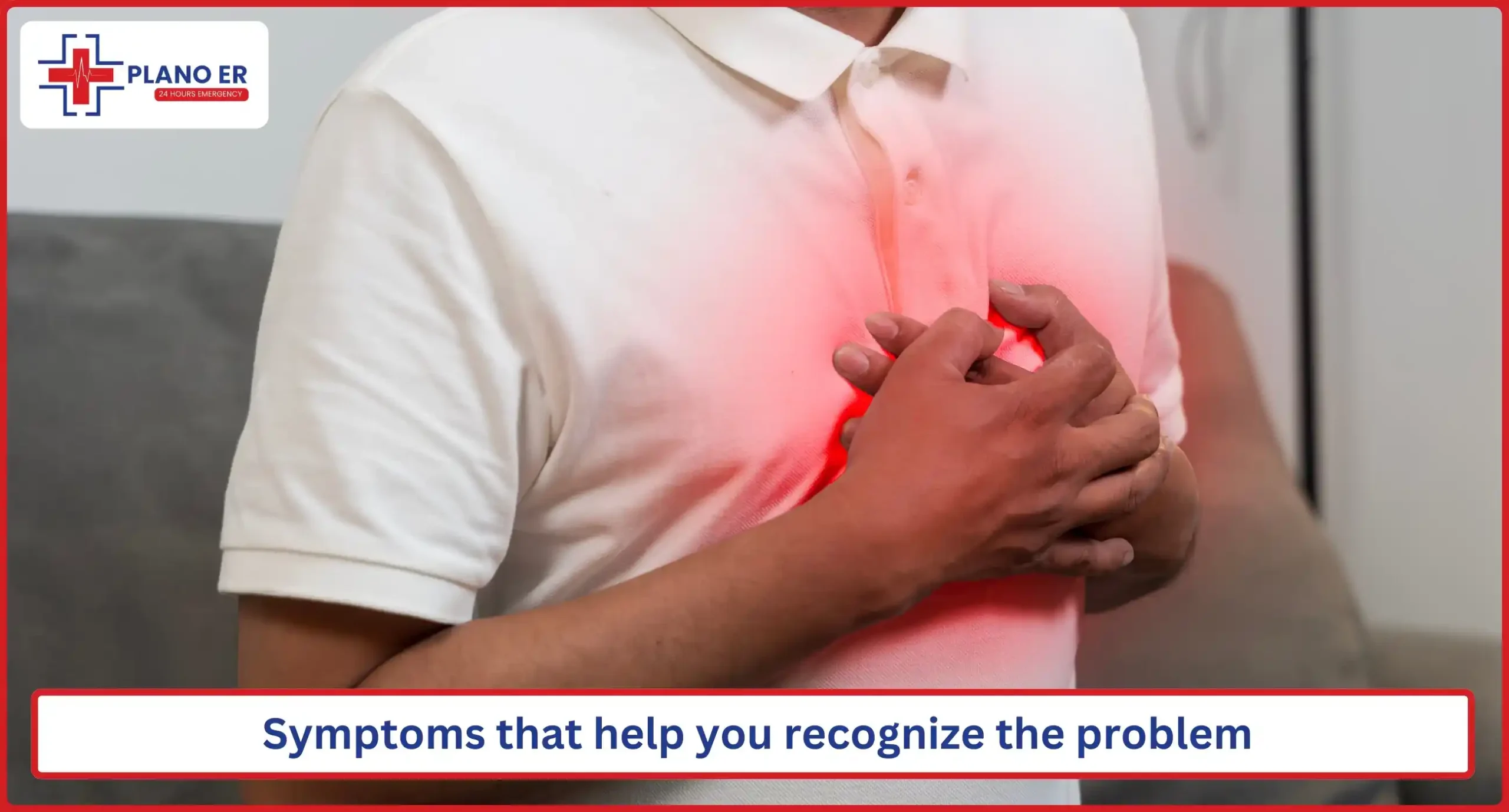
Chest muscle strain can appear mild or severe depending on how the fibres are stretched. Mild tightness often improves with rest, while more serious tears create sharp pain during simple activities. Recognizing your symptoms early helps you avoid further damage.
Here is a helpful comparison table:
| Symptom | Possible meaning | What to do |
| Pain during movement | Mild muscle strain | Rest and monitor |
| Pain with deep breathing | Chest wall involvement | Evaluate if breathing worsens |
| Swelling or bruising | Moderate strain or tear | Get checked if swelling increases |
| Pain without activity | Possible serious issue | Visit ER immediately |
First steps you should take at home
Early care supports faster healing and lowers the chance of worsening the injury. These steps work for most mild to moderate cases and help control swelling and discomfort.
Here are the most helpful initial steps you can take at home:
- Rest from strenuous activity
- Ice for short intervals
- Light heat after swelling settles
- Gentle movement once pain improves
If pain stays the same or becomes stronger after two to three days, a medical check is the safer choice. Plano ER offers urgent 24/7 laboratory testing that helps rule out cardiac causes when symptoms are unclear.
Imaging and services that guide diagnosis
A short evaluation sometimes provides enough information, but imaging offers a clearer view when symptoms are complex. Plano ER has immediate diagnostic tools that help identify fractures, tears, or deeper chest conditions without long waits.
Our onsite services include:
- Digital X-rays for rib and chest evaluation
- CT scans for deeper injuries
- Immediate lab work for chest pain assessment
When symptoms remain confusing, our team performs rapid CT scan evaluation to identify lung or vascular emergencies quickly.
Recovery timeline and what to expect
Healing depends on injury severity and how early treatment begins. Most mild strains recover well with rest and a slow return to movement. Larger tears require more time and structured care.
Typical healing expectations include:
- Mild strain: one to two weeks
- Moderate strain: two to six weeks
- Severe strain: several months
If your symptoms improve slowly, Plano ER can reassess your condition to ensure no hidden injury is delaying recovery.
Preventing a chest muscle strain in the future
Prevention starts with awareness. Chest muscles respond well to strength, flexibility, and proper technique during physical activity. Small adjustments can significantly lower your risk of another strain.
Helpful prevention steps include:
- Warming up before exercise
- Strengthening chest and shoulder muscles
- Stretching regularly
- Using proper lifting form
For unexpected injuries or sudden pain, Plano ER provides same day minor injury care for sprains and fractures so early intervention protects long-term recovery.
When to seek emergency care without delay
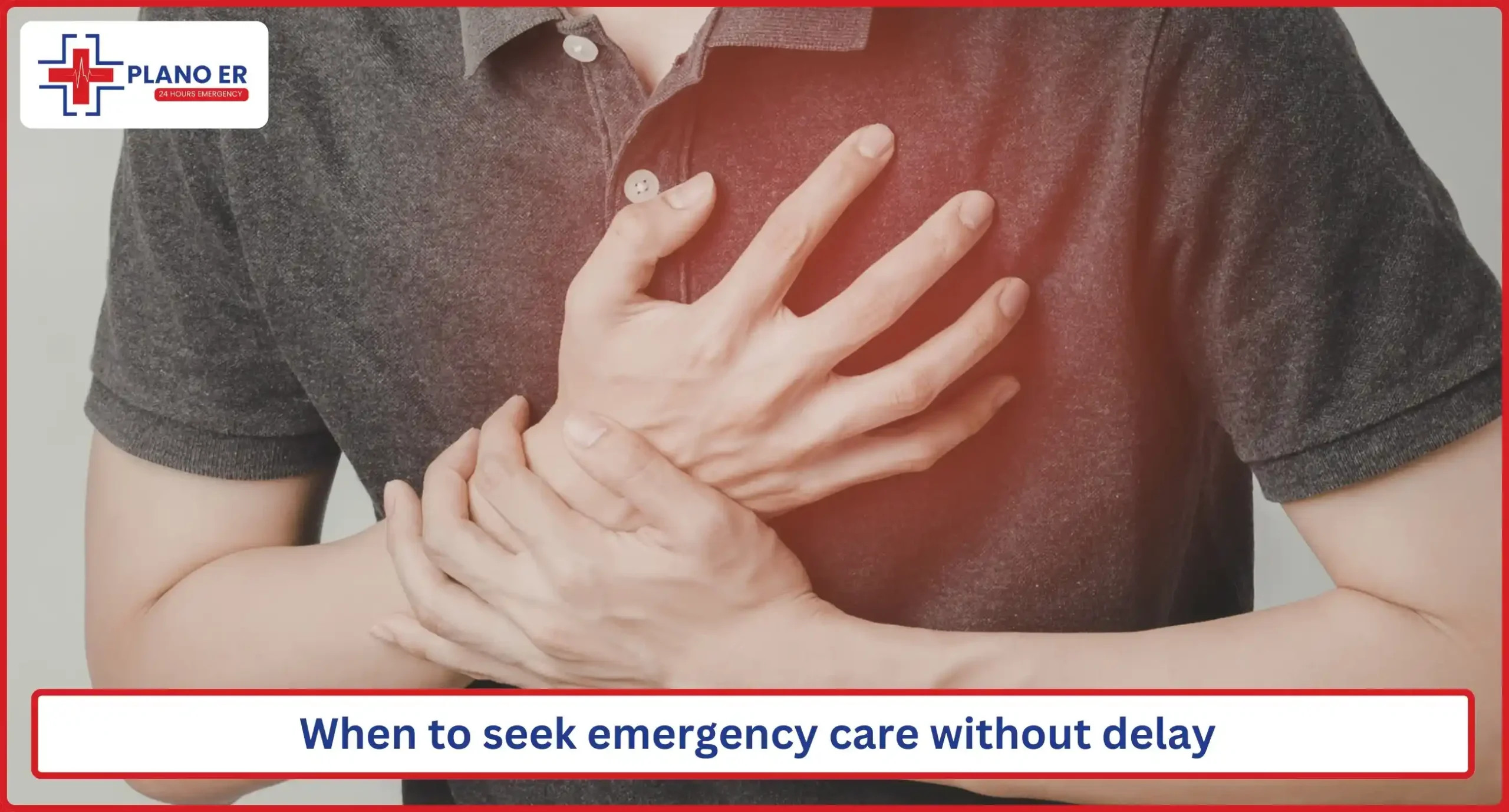
Although muscle strain is common, some symptoms require immediate evaluation. Waiting at home could increase the risk when chest pain is not muscular. Emergency evaluation is the safest choice when symptoms feel unusual or intense.
Seek help immediately if you notice:
- Severe shortness of breath
- Pain moving to the arm or jaw
- Dizziness or fainting
- Sudden chest tightness without movement
Plano ER is fully equipped to assess these symptoms quickly and guide you through the safest treatment pathway.
Final thoughts
This pulled chest muscle guide explained the common causes of chest muscle strain, the symptoms that help you recognize the problem, and the treatment steps that support recovery. It also highlighted when a medical evaluation becomes important, so you never ignore dangerous signs.
Plano ER provides immediate testing and imaging to confirm whether your chest pain is muscular or something more serious. If your symptoms feel unusual or if breathing becomes difficult, visit Plano ER for safe and accurate care. Early evaluation brings peace of mind and keeps your recovery on the right track.
Have questions or need urgent evaluation? Click the Contact Us button to reach Plano ER immediately.
Frequently Asked Questions (FAQs)
How do I know if my chest pain is from a pulled muscle?
Pain worsens with movement or deep breathing and often appears after activity or coughing.
Can a pulled chest muscle affect breathing?
Yes, it can make breathing uncomfortable, but severe difficulty needs ER care.
How long does it take to heal?
Mild strains heal in 1–2 weeks. Moderate strains take longer.
Can coughing cause a pulled chest muscle?
Yes, repeated or forceful coughing can strain chest muscles.
When should I visit Plano ER?
Go to the ER if pain spreads, causes dizziness, or affects breathing.