
When a severe fracture occurs, fast and precise treatment can determine how well the bone heals. In high-impact injuries where bones are severely displaced, swollen, or too unstable for immediate surgery, one of the most effective stabilization methods is skeletal traction.
At 24/7 open Plano ER, we provide rapid evaluation, digital X-ray imaging, pain management, and temporary stabilization, ensuring patients are safe and ready for specialist care. Early assessment can often prevent complications, reduce recovery time, and sometimes minimize the need for invasive procedures.
This guide explains what skeletal traction is, why it’s used, and what to expect during the recovery process.
What Is Skeletal Traction?
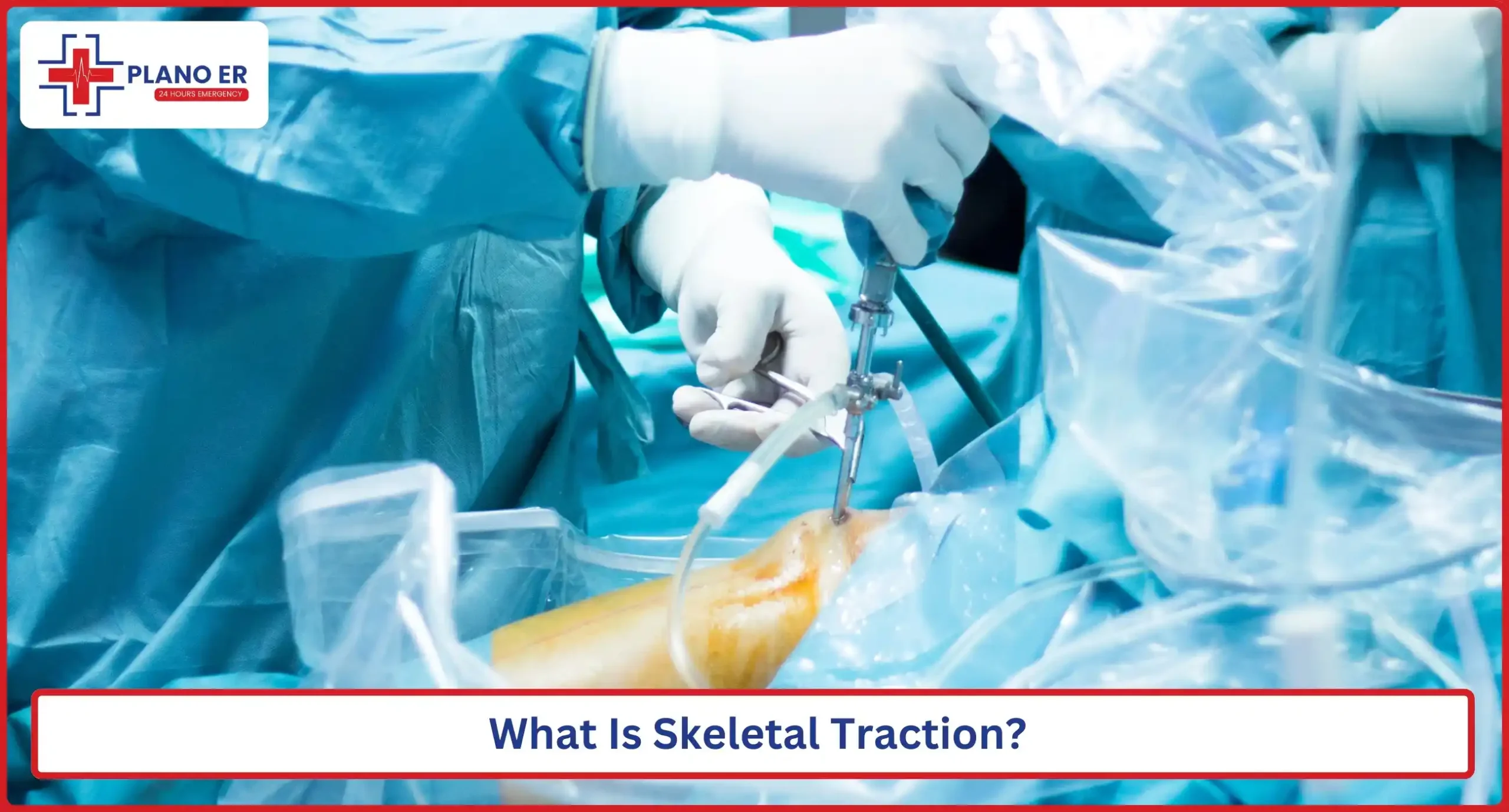
Skeletal traction is an orthopedic method where pins or wires are surgically placed into a bone, and weights are attached through a pulley system to realign the fracture.
It is typically used for:
- Severe femur fractures
- Tibial fractures
- Complex pelvic injuries
- Cervical spine injuries
This technique requires orthopedic surgery, which is why Plano ER offers urgent and effective emergency service and specialist referral.
How Plano ER Helps: Fast Diagnosis & Safe Referral?
When a patient arrives with a possible severe fracture, our emergency team acts quickly to determine whether skeletal traction or surgical stabilization may be needed.
At Plano ER, we provide:
Immediate digital X-ray imaging
Our advanced digital X-ray systems allow fast, accurate visualization of fractures, helping us determine:
- The severity of the break
- Whether bone alignment is compromised
- If traction or surgery is likely required
Emergency stabilization
We control swelling, manage pain, and immobilize the limb to prevent further damage.
24/7 emergency service
Our emergency physicians are always available to evaluate traumatic injuries, including complex fractures.
Rapid orthopedic referral
Once skeletal traction is deemed necessary, we coordinate prompt transfer to orthopedic specialists or trauma centers.
Support for children
If your child experiences a traumatic fracture, our pediatric care team provides gentle, age-appropriate evaluation and stabilization.
Can Skeletal Traction Be Avoided with Early Emergency Evaluation?
Yes, in many cases, early emergency evaluation can help prevent the need for skeletal traction, especially when fractures are identified and stabilized quickly. Skeletal traction is typically reserved for severe, unstable, or displaced fractures where bone alignment has already worsened.
By seeking care at the Plano ER emergency service right after an injury, patients can avoid these complications. Our team uses advanced digital X-ray imaging to assess the severity of the fracture within minutes.
When detected early, many fractures can be managed with splinting, immobilization, pain control, and rapid referral to an orthopedic specialist before traction becomes necessary.
If you experience sudden pain, swelling, deformity, or difficulty moving the limb, visiting Plano ER promptly can significantly reduce the chances of needing skeletal traction. Our 24/7 team is ready to diagnose, stabilize, and guide you toward the safest treatment plan.
How Can Early ER Evaluation Change Your Treatment Path?

Early assessment at Plano ER can significantly reduce the risk of complications and prevent unnecessary treatments. A fast diagnosis using tools like digital X-rays helps determine whether your chest pain is muscular or something more serious, ensuring you get the right care right away.
Quick Comparison: With Early ER Visit vs. Delayed Care
| Factor | Early ER Evaluation | Delayed Care |
| Diagnosis Speed | Fast & accurate | Slower, often uncertain |
| Risk of Complications | Much lower | Higher chance of worsening |
| Need for Specialist Referral | Only when necessary | More likely due to progression |
| Pain Recovery Time | Shorter | Can extend significantly |
Check our About Us to understand why families choose Plano ER for urgent care needs.
Can Children Safely Be Evaluated for Severe Fractures at Plano ER?
Yes, Plano ER provides specialized pediatric care, ensuring children receive gentle, age-appropriate evaluation for fractures and injuries. Our emergency physicians are trained to stabilize injuries safely and minimize discomfort during assessment.
With 24/7 emergency service, Plano ER ensures children get rapid digital X-ray imaging, pain management, and immediate coordination with orthopedic specialists if necessary. Early intervention keeps young patients safe and improves recovery outcomes.
Conclusion: Safe Fracture Care Starts at Plano ER
Severe fractures require prompt and precise evaluation to prevent complications and ensure the best recovery. At Plano ER, our team plays a critical role in identifying fractures that may require advanced orthopedic care, stabilizing the injury, controlling pain, and providing rapid digital X-ray imaging for accurate diagnosis.
Early emergency evaluation can often reduce the risk of worsening fractures, minimize the need for invasive procedures, and allow for safe, timely referral to orthopedic specialists. With our 24/7 emergency service and specialized pediatric care, Plano ER ensures that both adults and children receive the fastest, safest care possible.
Frequently Asked Questions (FAQs)
Can Plano ER perform skeletal traction?
No, Plano ER does not perform skeletal traction. We provide evaluation, stabilization, digital X-ray imaging, and referral to orthopedic specialists.
How does Plano ER diagnose severe fractures?
Our emergency physicians use physical assessment and digital X-ray to identify fracture type, severity, and the need for specialist care.
Can children be safely evaluated at Plano ER?
Yes, our pediatric care team provides gentle, age-appropriate fracture assessment and stabilization.
When should I visit Plano ER for a suspected fracture?
Seek immediate care for visible deformities, severe pain, swelling, inability to move the limb, or after trauma.
Does early ER evaluation prevent complications?
Yes, prompt emergency care reduces the risk of worsening fractures and can minimize the need for invasive procedures like skeletal traction.