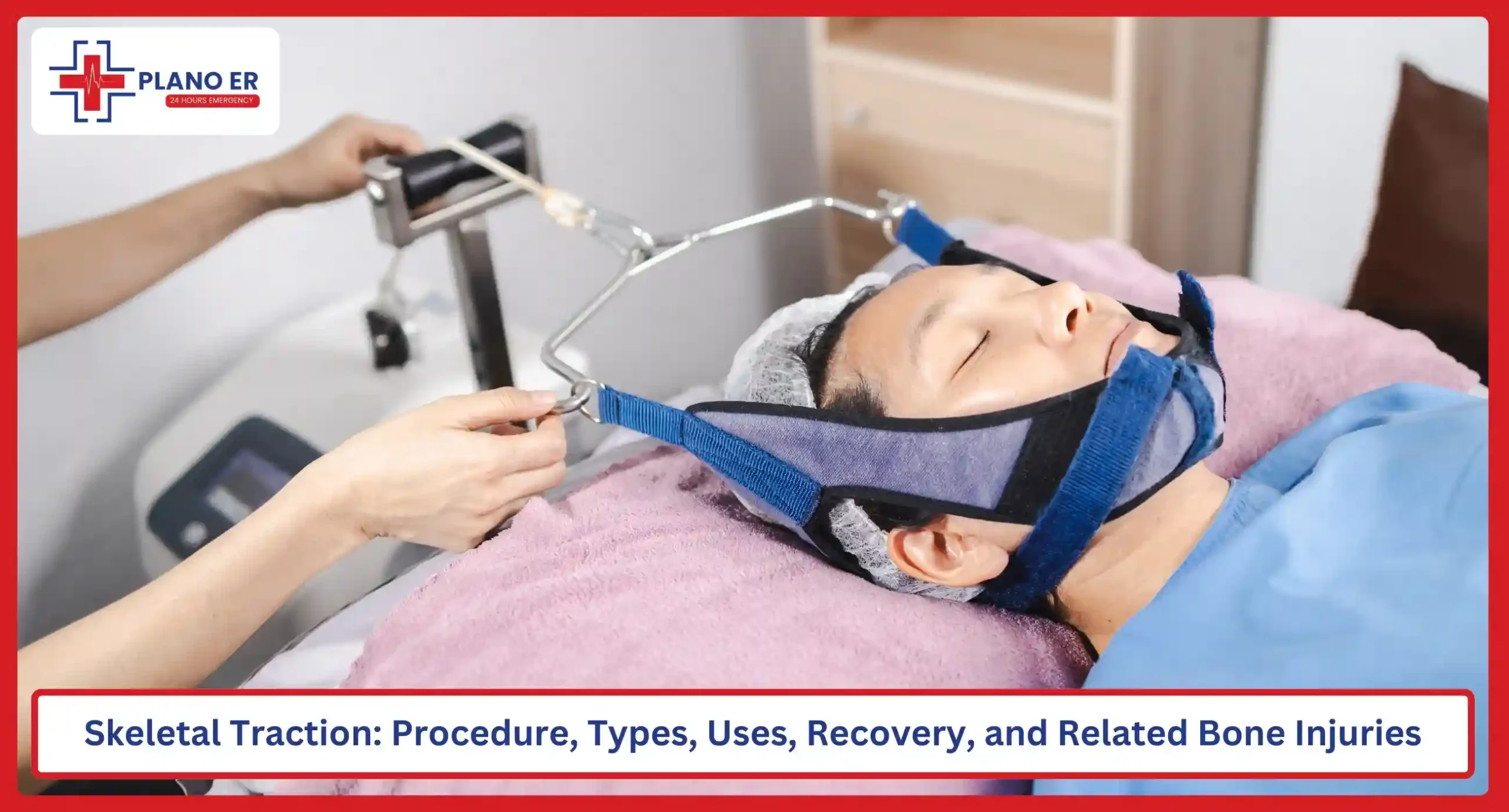
When a person suffers from a serious bone injury, it requires comprehensive medical treatment. One such serious orthopedic injury that doctors recommend for severe conditions is skeletal traction. This treatment is normally undertaken in hospitals to treat fractures that occur in the pelvis, hip, spine, or femur.
Skeletal traction is used to treat broken bones, as it helps maintain proper bone positioning while reducing the pain. During this treatment, a pulling force is directly applied to the skeletal system using pins, wires, and screws. Skeletal traction is only undertaken with careful monitoring by orthopedic specialists.
Understanding the process of skeletal traction, its types, recovery timeline, and when it is recommended is important, as it helps patients clearly understand their position and surgery. In this blog, we will provide comprehensive details on skeletal traction, along with its procedure, types, uses, and recovery period.
What Is Skeletal Traction?
It is a specialized orthopedic procedure that is recommended when the bone injuries are severe. This procedure is conducted by applying a steady pulling force around the muscles or the injured bone; as a result, it maintains alignment while healing.
It differs from skin traction, where the force is applied through the skin, whereas in skeletal traction, the force is directly applied using surgical pins.
Skeletal traction helps in:
- Stabilizing fractures
- Avoids muscle spasms
- Preventing bone shortening
- Improving the alignment of bones
It is normally preferred when the fracture is severe and occurs in the femur, pelvis, or causes spinal structures. In a few cases, traction helps in reducing pressure on injured joints or surrounding tissues.
Patients experiencing severe bone pain, possible fractures, chest wall injuries, or sudden mobility issues can receive prompt evaluation and advanced diagnostic support at Plano ER.
Skeletal Traction Types
There are different types of skeletal tractions, and the correct one is adopted based on their location and the severity of the fracture. Orthopedic specialists prefer the right type of skeletal traction based on the patient’s condition.
Below are a few common skeletal traction types:
| Type of Traction | Common Use |
| Femoral Traction | Fractures that happens on femur or hip |
| Tibial Traction | Fractures in the lower leg |
| Cervical Traction | Injuries in the neck or spine |
| Pelvic Traction | Pelvic fractures or spinal conditions |
| Balanced Suspension Traction | Complex leg fractures |
When the right force is applied directly, it helps stabilize bones and reduce pain during recovery.
Conditions That May Require Skeletal Traction
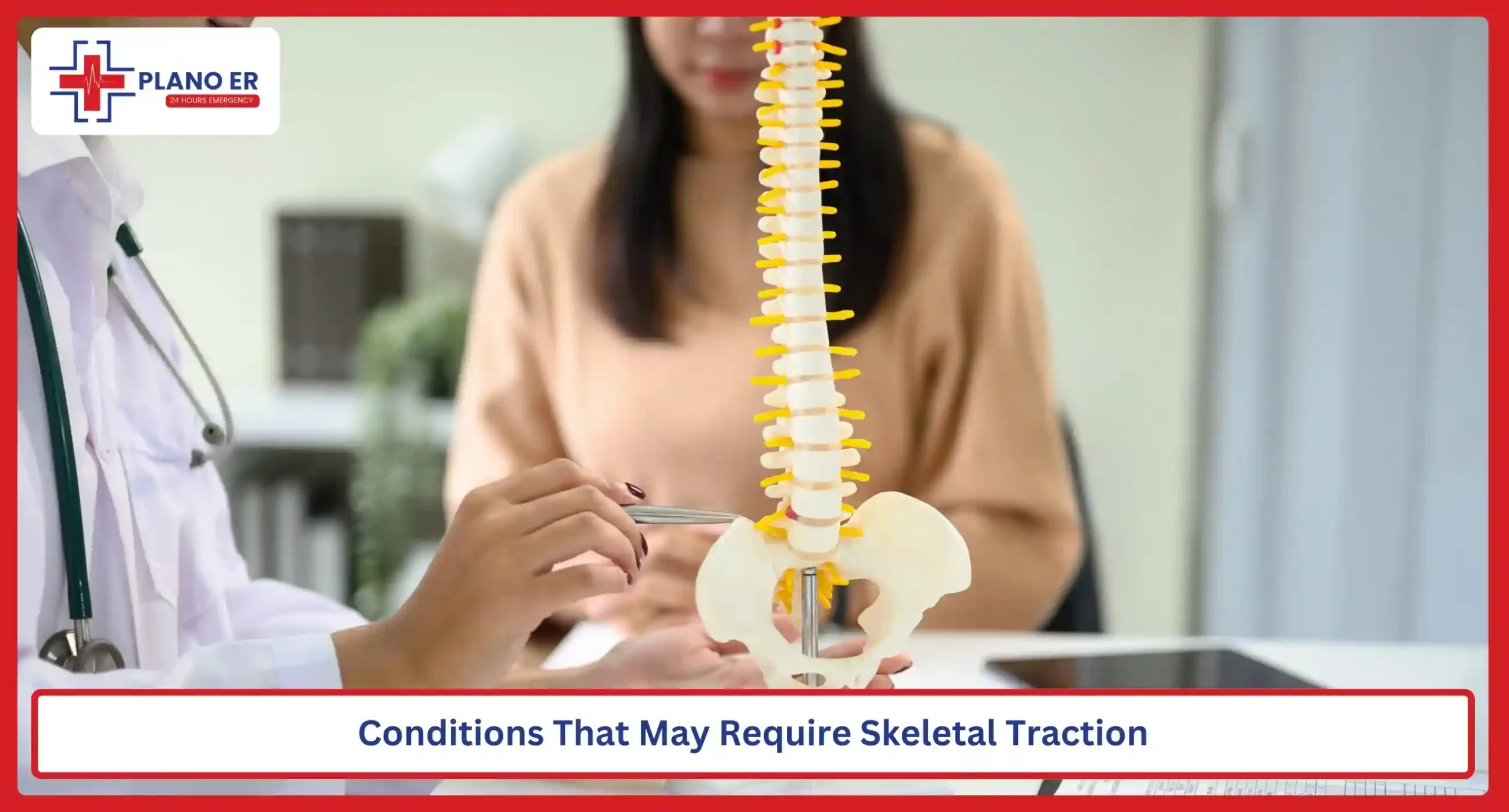
Skeletal traction is usually preferred for severe fractures and traumatic orthopedic injuries. This procedure helps reduce pressure and maintain alignment in complex bone or joint issues.
Below are a few conditions that may require traction:
- Femur fractures
- Pelvic or hip fractures
- Spinal injuries
- Severe dislocations
- Multiple traumatic injuries
At times, skeletal traction can be adopted with surgery, a bone stimulator, or rehabilitation therapy.
Recovery After Skeletal Traction
The exact recovery time period is based on the type of fracture, health condition, and whether further surgery is required. At times, patients might need rehabilitation to return to their normal condition and regain their strength. Although the recovery time is not the same, it takes around a few weeks or months, based on the severity of the injury.
| Recovery Stage | What Happens During Recovery |
| Initial stage Recovery | Pain and swelling are monitored. |
| Rehabilitation Phase | Physical therapy to improve movement. |
| Mobility Improvement | Patients gradually start walking. |
| Follow-Up Care | X-rays or imaging to check bone alignment. |
| Long-Term Healing | Strength, flexibility, and returning to normal activity. |
The right medical treatment helps in improving healing and reducing recovery complications. Sprains and fractures require prompt medical evaluation to determine the severity of the injury and ensure proper treatment for safe and effective healing.
Bone Injuries and Chest Conditions Related to Orthopedic Trauma
Musculoskeletal injuries are not only related to arm and leg issues. Injuries in the chest wall, such as ribs, sternum, or costal cartilage, cause pain and movement issues.
Below are a few common chest-related injuries:
- Slipping rib syndrome: Happens when, due to weak or damaged costal cartilage, the lower ribs move abnormally.
- Rib subluxation: Causes a sharp pain, a clicking sensation, and a feeling that the rib is out of place.
- Rib out of place: Happens when, due to a serious abnormal force, the rib gets out of its place.
- Bruised sternum: Occurs after a trauma, serious sport injury, or heavy lifting.
- Pulled chest muscle: Similar to a bruised sternum, similar to trauma, or a serious sports injury.
Not all of these conditions require skeletal traction, but severe chest trauma sometimes occurs alongside fractures requiring orthopedic stabilization.
If you are experiencing knee swelling, pain, or joint injury symptoms, refer to our related blog How to Reduce Knee Swelling Fast and Know When It’s Serious to learn when swelling may indicate a more serious condition requiring medical evaluation.
Risks and Complications of Skeletal Traction
If the condition is not clearly monitored, then skeletal traction can cause complications. It is important to closely observe the patients who receive traction.
Below are a few complications of skeletal traction:
- Infection at the pin site
- Nerve injury
- Blood clots
- Skin breakdown
- Muscle weakness
- Joint stiffness
By taking care of hygiene, repositioning, and physical therapy, you can reduce the chances of possible risks.
For a deeper understanding of fracture management and emergency stabilization methods, refer to our related blog Skeletal Traction: A Critical Stabilization Technique Used in Emergency Care.
Stress Fractures, Bone Healing, and Lower Limb Conditions
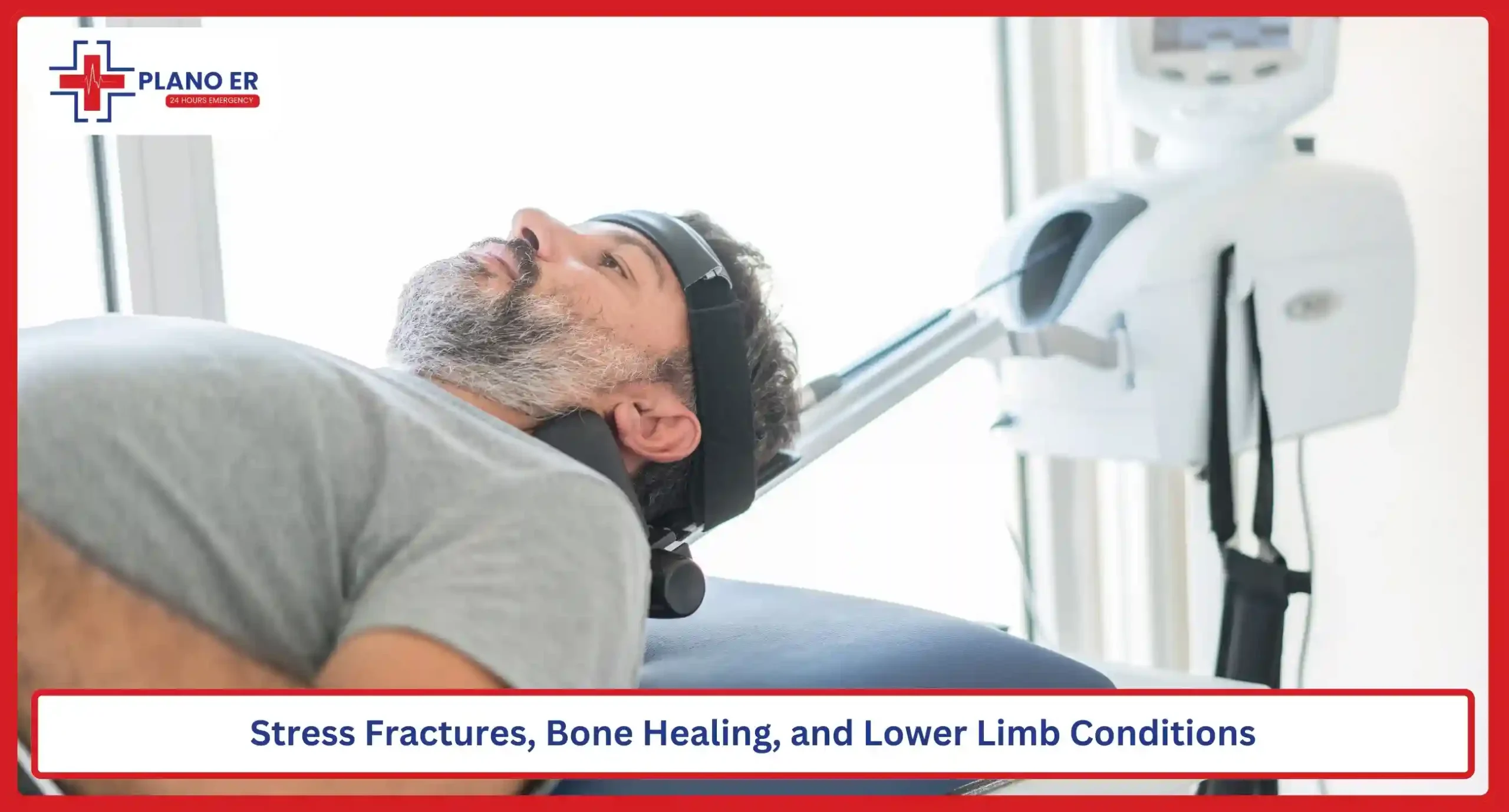
Stress fractures are usually small bone cracks that happen due to repetitive pressure or overuse, commonly affecting athletes and active individuals. People have this common concern: what does a stress fracture feel like? A few of its common signs are deep aching pain, swelling, tenderness, and discomfort that worsens with activity.
If such a condition is not carefully treated, then stress fractures may become more severe and require advanced orthopedic care. At times, people start feeling better with a bone stimulator, which helps encourage bone healing in slow-healing or nonunion fractures. Orthopedic procedures such as the Akin osteotomy and Cotton osteotomy are preferred to correct foot deformities and improve walking alignment.
Different injuries in muscles, such as soleus strain, can also affect mobility, causing calf pain, tightness, and difficulty walking. Early diagnosis and proper treatment can help reduce complications and support long-term recovery.
Final Thoughts on Skeletal Traction and Recovery
In a nutshell, it can be stated that skeletal traction is an important orthopedic technique, but it is adopted in severe injuries with proper care. It is used to stabilize fractures, improve bone alignment, and support healing after serious injuries.
From stress fractures and chest wall injuries to complex bone conditions, with early diagnosis and proper treatment, you can speed up the recovery process. Proper medical care, rehabilitation, and supportive therapies can help patients regain mobility, reduce pain, and improve long-term bone health.
Frequently Asked Questions (FAQs)
What is skeletal traction?
Skeletal traction is a medical treatment used to stabilize and align broken bones with the help of pins, weights, and pulleys.
What is skeletal traction used for?
It is used to reduce fractures, mostly in severe bone injuries.
Is skeletal traction painful?
Yes, some discomfort may occur, but pain is usually managed with medication and medical supervision.
How long does skeletal traction last?
Treatment duration varies from a few days to several weeks, based on the severity of the injury.
What does a stress fracture feel like?
A stress fracture often causes aching pain, swelling, tenderness, and pain.