

There are many viral infections that people normally do not know. However, it is important to learn about these hidden infections so that you can take the right precautionary actions. One such infection is mononucleosis, referred to as ‘mono’, called the ‘kissing disease’.
This type of infection is caused by the Epstein-Barr virus (EBV). It spreads through saliva and can be transmitted from one person to another while sharing drinks, kissing, or getting close to the infected person.
People who are diagnosed with mono or are suffering from the signs of mono have a common concern: how long is mono contagious? The right answer to it varies from person to person, its signs, severity, and how the body responds to the virus.
It is important to learn how long mono is contagious so that you can protect others from it and recover fast and safely.
What Is Mono?
It is a viral infection caused by the Epstein-Barr virus (EBV). It is most common in teenagers and young adults, but it can affect people of any age. It is transmitted through saliva and from close personal contact.
Below are a few common signs of mono:
- Severe fatigue and fever
- Sore throat
- Swollen lymph nodes
- Headache and body aches
- Enlarged tonsils
Because its signs are closely related to the flu, people often mistake it for the flu, strep throat, or other viral illnesses. This is the reason why it is important to get it diagnosed at an early stage so that appropriate, effective treatment can be initiated early.
Is Mono Contagious?
Yes, it is contagious during the early stage of illness, as at that time the signs are strongest. Mono can spread from one person to another for the first few months, even if the health starts getting better.
It is most contagious during the incubation period of 2-4 weeks. It is also the most contagious when the signs are active. Viral shedding continues for a few months, and in some cases, the saliva contains the virus for 6-18 months after getting the infection.
Since the virus remains in the body after recovery, EBV can become active without causing symptoms, allowing it to spread unknowingly.
If you are experiencing worsening symptoms such as severe throat swelling, high fever, or dehydration, the team at Plano ER is available around the clock for emergency evaluation.
How Does Mono Spread?
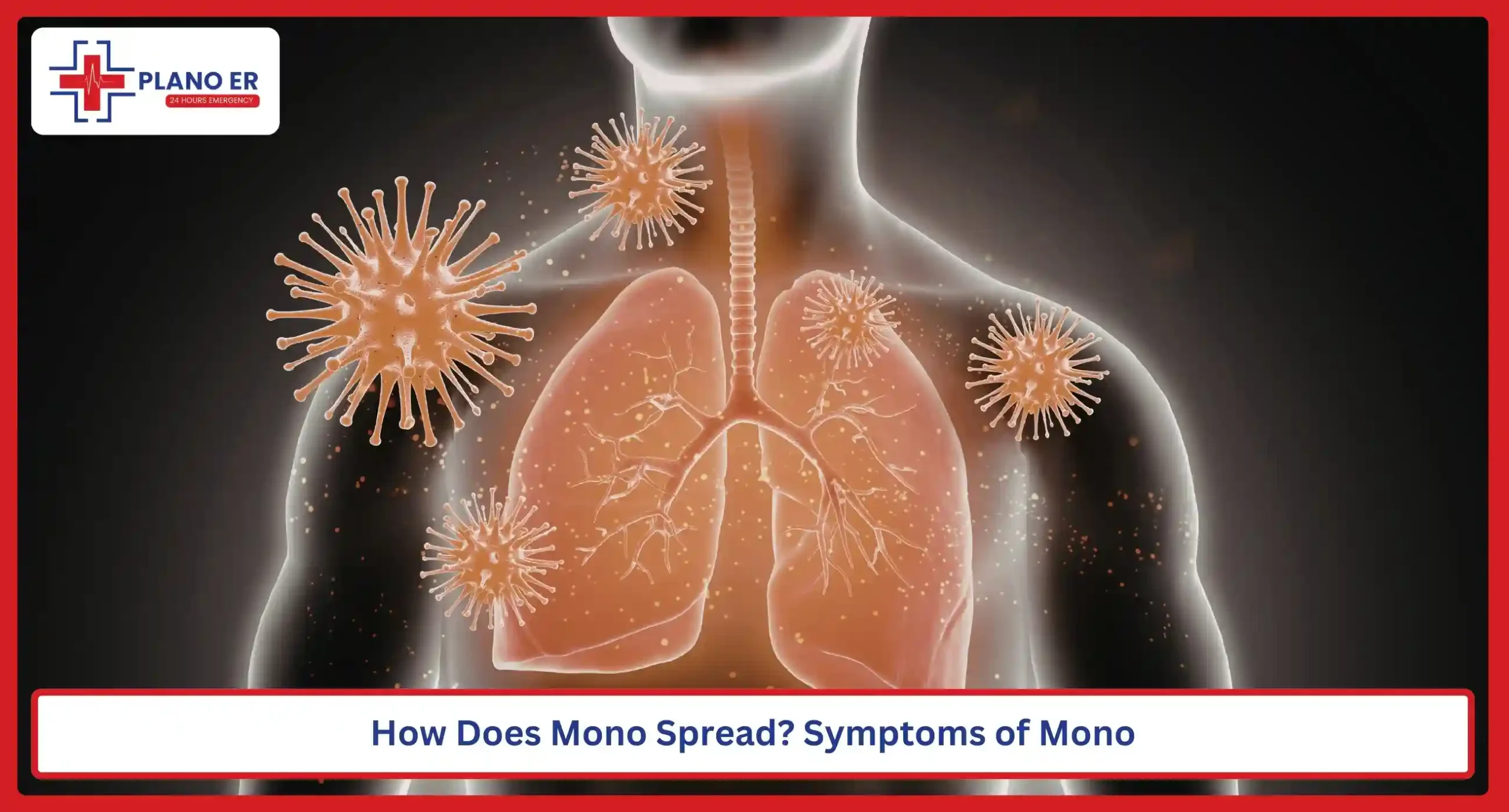
Mono usually spreads through saliva and other means of close contact with the infected person. One of its most common reasons is kissing, but it can also spread through sharing drinks or utensils, coughing, and sneezing.
Mono can spread through different places, such as schools, colleges, sports teams, and while doing household chores. Signs usually do not appear instantly, so an infected person can spread the infection without realizing that they are sick.
If you are experiencing a sore throat, fever, or swollen glands and are unsure whether your symptoms are caused by mono or another infection, read our related blog on How Long Are You Contagious With Strep Throat? Key Facts You Should Know to learn more about contagious periods, symptoms, and recovery.
Symptoms of Mono
The signs of mono can vary from person to person. Some might experience mild issues, whereas some might notice it for several weeks. One of its most common reasons is fatigue, whereas fever and sore throat are among its most long-lasting signs.
Below are a few common signs:
- Fatigue
- Fever
- Swollen glands
- Sore throat
- White patches on the tonsils
- Body aches
- Headache
- Loss of appetite
Some people may confuse its signs with other infections, such as flu, COVID-19, or signs of STDs involving sore throat or swollen glands. It is important to get proper laboratory tests done so that the issue can be identified early.
Mono vs Other Infections
Mononucleosis causes throat pain, swollen glands, and fatigue. Due to its signs, it is sometimes confused with other viral or bacterial illnesses. People who notice oral-related issues such as oral sores, bumps, or unusual throat symptoms, and confuse them with herpes sores, STD bumps, or HPV on the tongue.
While these conditions have similar symptoms, they are caused by different infections and require proper medical evaluation for diagnosis.
| Condition | Common Symptoms |
| Mono | Severe fatigue, fever, sore throat, enlarged tonsils, or headache. |
| Herpes | Painful blisters or open sores near the mouth or genitals |
| HPV on Tongue | Small painless bumps or wart-like growths on the tongue |
| STDs | Genital sores, discharge, burning sensation during urination, and std bumps |
If you are experiencing unusual mouth sores, throat symptoms, or bumps and are unsure whether they may be related to mono, HPV, or herpes, read our related blog on HPV vs Herpes: When to Seek Emergency Care to understand the differences, symptoms, and when to seek medical attention.
Visiting a healthcare provider can help in identifying the exact cause of symptoms and ruling out other infections.
Conclusion
In a nutshell, mono is a common viral infection that can spread easily through saliva and close personal contact. Normally, infected people recover within a few weeks; it is important to understand how long mono is contagious to prevent the spread of infection.
Mono can continue spreading for months, even after symptoms begin improving. People may remain contagious for a few weeks, and the Epstein-Barr virus can sometimes stay in saliva for up to 6 months or up to 18 months.
Symptoms such as severe fatigue, fever, sore throat, body pain, and enlarged tonsils should not be ignored, especially if they persist. Rest, hydration, and limiting close contact while sick can support recovery and avoid the chances of transmitting the virus to someone else.
Frequently Asked Questions (FAQs)
How long is mono contagious?
It can be contagious for a few weeks or even months after symptoms begin.
How does mono spread?
It mainly spreads through saliva, kissing, or sharing drinks and utensils.
What are the first symptoms of mono?
Common early symptoms include fatigue, sore throat, fever, and swollen glands.
Can mono come back?
The virus stays in the body and can recur, but symptoms usually do not return.
How long does mono fatigue last?
Fatigue may last several weeks or even months in some people.