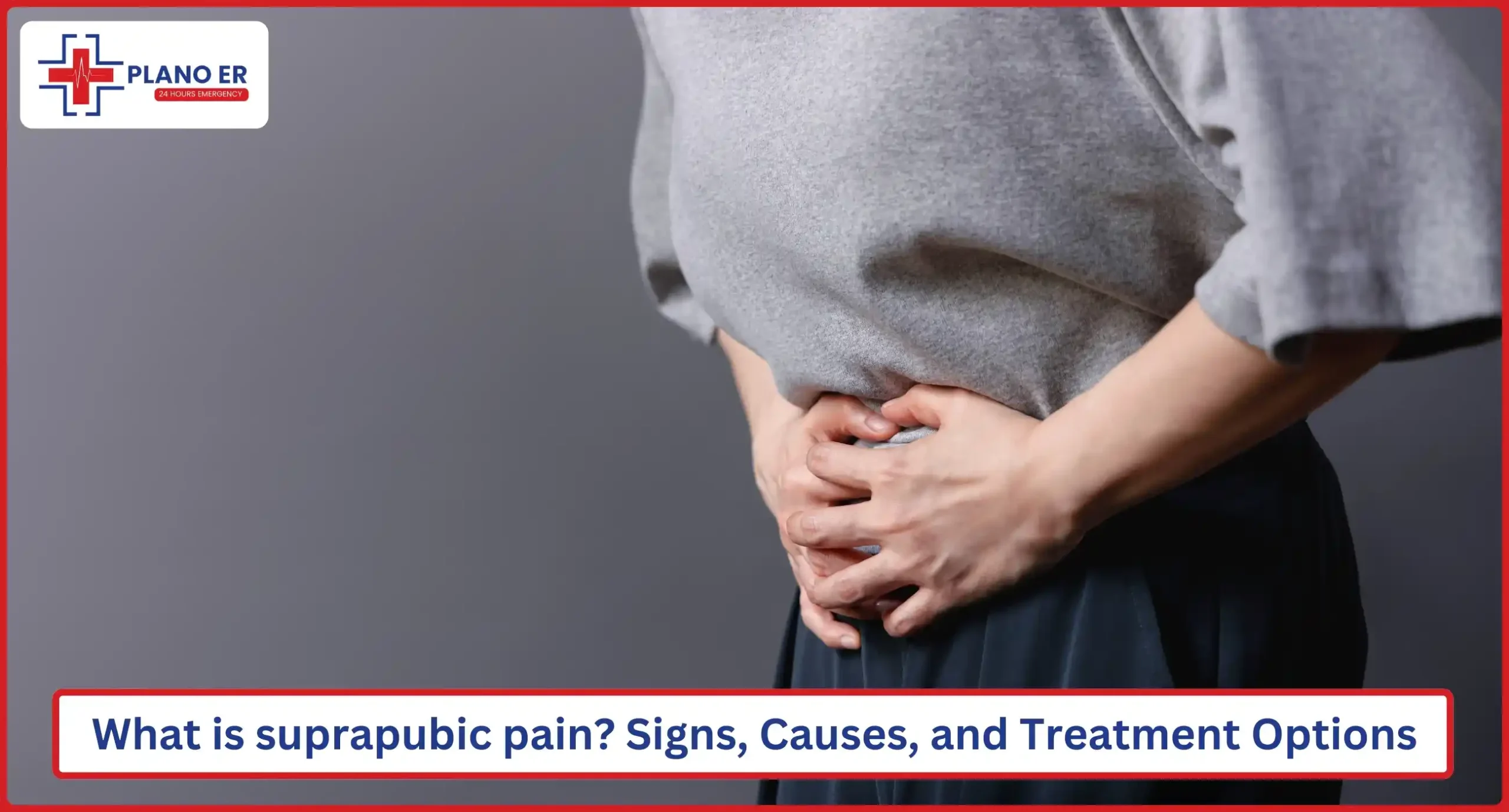
Discomfort in your abdomen can be an alarming situation, as this pain might indicate different issues. If you specifically feel a dull ache or sharp pain in the lower abdomen above the pubic bone, then it is a sign of suprapubic pain caused by underlying health problems.
Mainly, you experience this pain due to urinary tract infections, bladder distention, and other chronic bladder syndromes. Whether the pain is due to pelvic discomfort or issues within your bladder, it is important to understand its cause and location so that the right treatment can be adopted.
In this guide, we’ll elaborate on suprapubic pain so that you can understand its locations, signs, and causes and follow an appropriate recovery plan.
What is suprapubic pain?
Suprapubic pain is experienced in the lower central region of the abdomen, located just above the bladder. Medically, this pain is called suprapubic pain, ICD-10 code R10.30. This pain can be serious, and if you experience a dull ache or sharp pain sensation, then you should seek immediate medical help.
Pain in this region can be persistent until it is treated completely. This pain can also cause different underlying health problems. Mostly, it is caused by bladder-related issues. Discomfort or pain in the lower abdomen should never be ignored and should be immediately evaluated for underlying health factors.
If you or your loved ones ever experience such abnormal pain in the lower abdomen, then do not wait until it gets serious. Immediately visit an emergency care center for immediate action. At Plano ER, we have board-certified health professionals with fully equipped, state-of-the-art technology to instantly diagnose the root cause of the medical problem.
How is suprapubic pain caused?
Suprapubic pain can arise due to different underlying health factors. The majority of these reasons relate to bladder-related issues and problems with the reproductive organs. This pain is experienced directly above the bladder and is mainly due to bladder distention, an underdistended bladder, an interstitial cystitis diet, and other bladder syndromes.
Suprapubic pain differential diagnosis

In the majority of cases, suprapubic pain is caused by a urinary tract infection that causes intense pain in the bladder during urination. It is essential to instantly seek emergency UTI diagnosis and relief.
Septic arthritis
In rare cases, this pain is caused by septic arthritis in the pelvic joints, which results in lower abdominal pain.
interstitial cystitis
This is a chronic disease that results in bladder pressure. An interstitial cystitis diet plays a vital role in overcoming this problem. By painful bladder syndrome dietary modification, you can reduce the chances of bladder inflammation and pain.
distended bladder
A distended bladder caused by nerve issues results in pain in the suprapubic area. Whereas an underdistended bladder is caused by interstitial cystitis or dysfunction of the bladder.
Prostatitis (In Men)
At times in men, when the prostate gets inflamed, it causes suprapubic pain or discomfort in the bladder.
Gynecological Problems (In Women)
Different pelvic-related issues in females, such as inflammation and ovarian cysts, result in suprapubic discomfort.
Learning suprapubic pain differential diagnosis
The suprapubic pain can be diagnosed through examining different areas and figures. Doctors make use of various diagnostic methods to identify the root cause of suprapubic pain.
Here is a list of aspects doctors notice during suprapubic pain differential diagnosis:
- Check for infection in the bladder
- Inflammatory problems in the pelvic area
- Painful bladder syndrome
- Bowel obstruction
- Diverticulitis
- Endometriosis
- underdistended bladder
Doctors make use of different diagnostic examinations to understand suprapubic pain. At Plano ER, we offer all types of medical examinations, from lab testing to emergency ultrasound. Our laboratories are fully equipped to identify different problems quickly and accurately.
Suprapubic Pain in Women

Suprapubic pain in women is one of the most common complaints among women that causes pressure in the pelvic area and cramping in the lower abdomen. Since the issues in the suprapubic area are caused by the female reproductive organs, the pain is associated with issues in the female reproductive system.
Various gynaological and urological issues require immediate medical attention, as they might be connected to some underlying health factors. Problems within the ovaries, mammary glands, uterus, and vagina result in lower abdomen pain that causes discomfort in the suprapubic region.
It is always advised to take abdominal pain seriously, as a minor pain today could be the root cause of serious medical issues in the future.
Suprapubic pain symptoms
By knowing the early signs of suprapubic pain, you can identify the pain at the initial stage. This helps in initiating quick treatment before it gets worse.
Below are a few common suprapubic pain symptoms to watch out for:
- Bladder distention causing bloating in the bladder
- Burning or pain during urination
- Pressure in the pelvic area
- Frequent urination
- Pain radiating towards the back
- High fever, fatigue, vomiting, and chills
- Blood spotting during urination
Suprapubic pain treatment
Effective suprapubic treatment is initiated by identifying the root cause and following the right treatment. Whether it’s pain within the suprapubic area, distention of the bladder, or a UTI, an effective treatment followed by lifestyle changes helps in healing quickly and naturally.
Medications for UTIs
Antibiotics help in fighting the infection. With proper and timely use, you can overcome lower abdomen pain easily. In urgent cases, immediately get emergency UTI treatment in Plano, TX.
Dietary Modifications
By improving the diet, you can reduce the chances of getting infected with bladder-related issues. Reduce the use of harmful drugs, caffeine, acidic food, and alcohol.
Surgical Procedures
To get urgent bladder infection treatment in serious situations such as urinary tract infections, hernias, and inflammation of abdominal organs, doctors advise undergoing a surgical procedure.
Physical Therapy
Different physical therapies, such as pelvic floor therapy, help in relaxing muscle tension.
Don’t ignore suprapubic pain.

Suprapubic pain could be an alarming situation, whether it’s mild or severe; such lower abdomen pain should not be ignored. Understanding the different bladder-related issues can help you identify the problem and follow the right treatment.
Suprapubic abdominal pain ICD-10 could happen due to different issues such as distention of the urinary bladder, UTI, and interstitial cystitis. By getting diagnosed early and following the right treatment, you can recover soon.
Frequently Asked Questions (FAQs)
What causes suprapubic pain in men and women?
In men, this pain can be caused by prostatitis, whereas in females, it could be caused by gynecological problems.
Is suprapubic pain a warning sign of UTI?
Not primarily, but it could be a sign of UTI, as the signs of suprapubic pain are similar to those of UTI.
What is the difference between abdominal pain and pelvic pain?
Abdominal pain occurs between the chest and pelvis, where the pelvic pain occurs in the lower part of the abdomen, below the navel.
How to know if the pain is in the bladder or uterus?
Bladder pain typically occurs in the lower abdomen, often when the bladder is full or during urination. In contrast, the pain in the uterus is felt in the lower abdomen, especially during period cramps.
How to treat suprapubic pain?
Suprapubic pain can be treated in different ways, depending on how severe it is. Most commonly, it is treated with proper rest, medications, and physical therapy.